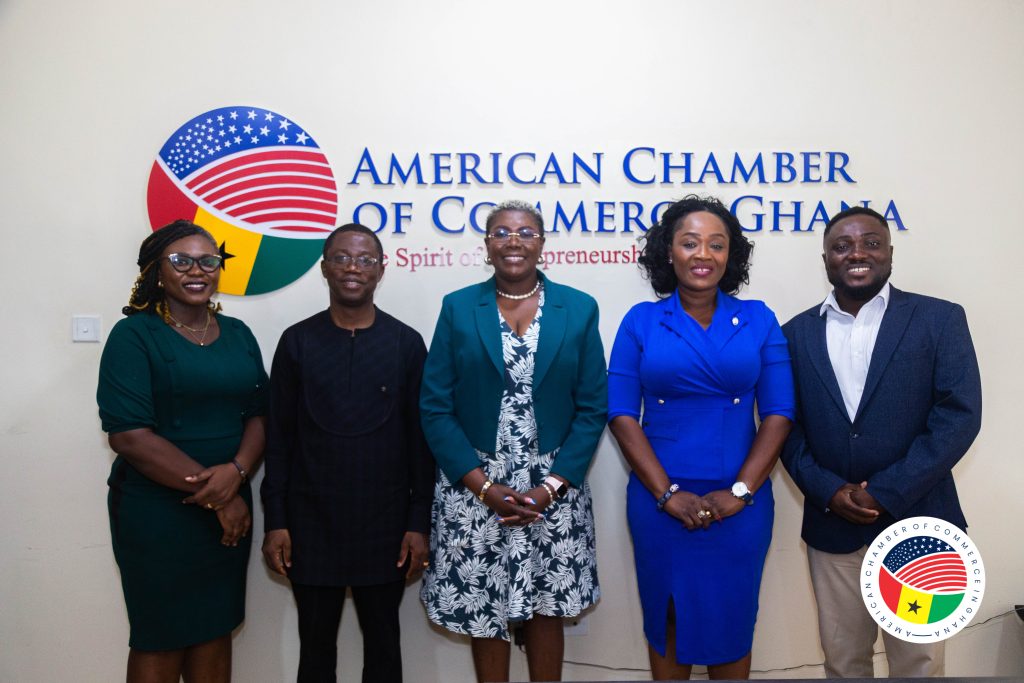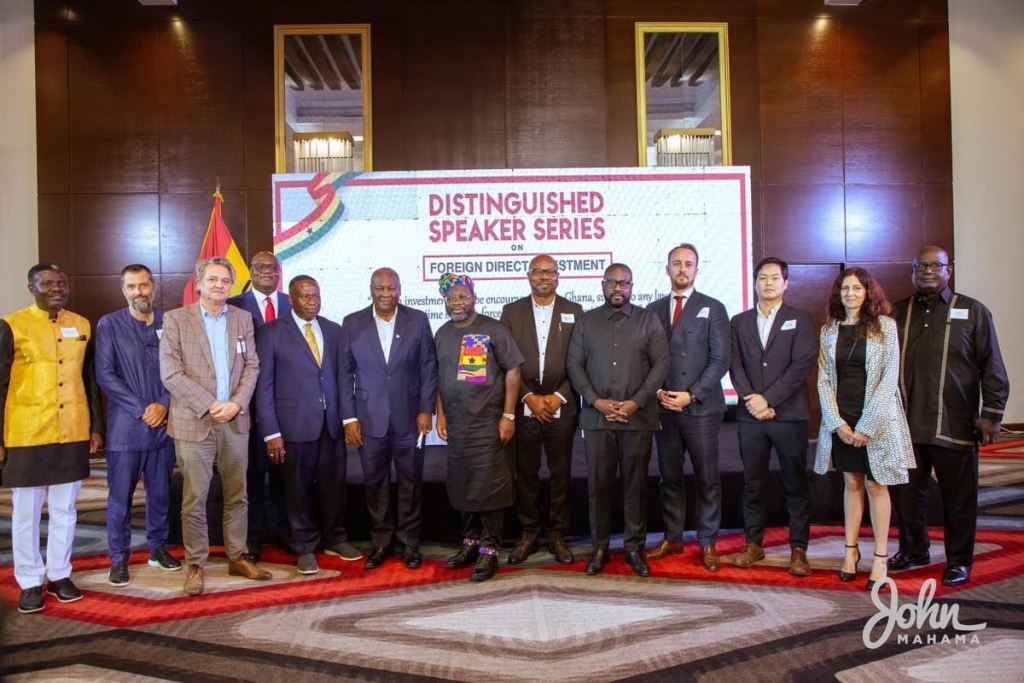

On Thursday, August 29, 2024, a consortium of reputable trade associations, led by the American Chamber of Commerce in Ghana, Ghana Netherlands Business & Culture Council, Spain-Ghana Chamber of Commerce, Ghana South Africa Business Chamber, Canada-Ghana Chamber of Commerce, Japan External Trade Office, and the Chamber of Commerce & Industry, France, launched the Distinguished Speaker Series at the Movenpick Ambassador Hotel in Accra.
This initiative aimed to foster high-level discussions on the future of Foreign Direct Investment (FDI) in Ghana. The speaker for the occasion was the flagbearer of the National Democratic Congress (NDC)- H.E. John Dramani Mahama.
The dialogue sought to address policies implemented by political leaders to attract and retain FDI, which had been instrumental in Ghana’s economic growth. FDI had contributed significantly to job creation, tax revenue generation, increased capital flows, technology and skills transfer, export development, and infrastructure enhancement. Since 1990, foreign investors had contributed approximately $47.2 billion to the Ghanaian economy, solidifying Ghana’s position as a major recipient of FDI in the subregion.
H.E. John Dramani Mahama outlined challenges hindering FDI inflows, including regulatory complexities, contract violations, macroeconomic instability, and corruption. He proposed policy interventions to address these challenges and attract more FDI, such as simplifying regulatory processes, ensuring contract sanctity, improving macroeconomic stability, reforming state-owned enterprises, providing incentives for investors, and strengthening investment promotion agencies.
The speaker identified specific sectors for targeted FDI promotion, including the extractive industry, digital economy, infrastructure, and agriculture. During the Q&A session, H.E. John Dramani Mahama discussed strategies used to attract significant FDI during his time in office, focusing on the oil and gas sector. He emphasized the importance of streamlining bureaucratic processes, coordinating government agencies, and utilizing debt service escrow accounts and public-private partnerships to finance infrastructure projects.
H.E. John Dramani Mahama emphasized the crucial role of Foreign Direct Investment (FDI) in economic growth and development, particularly for developing nations like Ghana. He highlighted several challenges hindering FDI inflows into Ghana, including regulatory complexities, contract violations, macroeconomic instability, and corruption.
H.E. John Dramani Mahama outlined a series of policy interventions to address these challenges and attract more FDI. These included:
* Simplifying regulatory processes and reducing bureaucratic burdens
* Ensuring contract sanctity and resolving payment issues
* Improving macroeconomic stability and reducing inflation
* Reforming state-owned enterprises
* Providing incentives for investors
* Strengthening investment promotion agencies
H.E. John Dramani Mahama identified specific sectors for targeted FDI promotion, such as the extractive industry, digital economy, infrastructure, and agriculture.
Following the keynote speech, there was a fireside chat moderated by Mr. Joe Mensah, Senior Vice President for Kosmos Energy. During the Q&A session with H.E. John Dramani Mahama, the former President discussed strategies used to attract significant FDI during his time in office, particularly focusing on the oil and gas sector.
H.E. John Dramani Mahama highlighted the importance of streamlining bureaucratic processes and coordinating government agencies to facilitate investment. He mentioned the use of debt service escrow accounts and public-private partnerships (PPPs) to finance infrastructure projects without government funding. Additionally, the speaker explained how state-owned enterprises were incentivized to attract FDI by granting them more autonomy and access to private sector financing.
H.E. John Dramani Mahama emphasized the importance of effective governance, bureaucratic efficiency, and innovative financing mechanisms in creating a favorable investment climate.
The Executive Secretary of AmCham Ghana, Simon Madjie Esq, inquired about the government’s tardy payments to companies for goods and services, as well as the inconsistent localization policies that were jeopardizing Ghana’s attractiveness as an investment destination.
Stay tuned for the announcement of the next speaker in the Distinguished Speaker Series (DSS) on FDI.
[unitegallery DSS1]

 By By Albert Ludwig Botchway, AmCham Communications