Webinar: Accessing Co-Investment Opportunities and Exporting Under AGOA

The Chamber on June 16, 2020, collaborated with USAID and the West Africa Trade & Investment Hub to host a webinar to discuss the Trade Hub’s Co-Investment Opportunities and how companies can take advantage and export to the United States under the African Growth and Opportunity Act (AGOA). The event forms part of the ongoing AmCham Money Series.

AmCham Ghana Executive Secretary, Simon Madjie, reiterated the chamber’s commitment to assisting companies in doing business and help provide vital information to mitigate the impact of the new coronavirus.

The Trade Hub is a five-year trade and investment facilitation program that seeks to improve private sector competitiveness in West Africa through its $60 million Co-Investment Fund.

The program makes it possible for applicants to access grant funding from $250,000 to $2 million.  In Ghana currently, there is $8.5 million of grant funding (approx. 48.7 million Cedi) available for companies interested in co-partnering with the Trade Hub to generate new private investment, create jobs, and increase exports.

The aim is to co-invest in activities that contribute to; creating new jobs, generating high levels of private investment, increasing the value of exports and/or sales, empowering women and the youth, and introducing innovations to modernize agriculture.

Private sector companies, research institutions, universities, and non-profit/for-profit organizations looking to grow and upgrade their businesses, expand corporate social responsibility projects, or conduct research and development activities to pursue market and technological innovations in the agriculture sector can apply.

In addition to its co-investment partnerships, the Trade Hub also provides technical assistance to businesses so they can benefit from the African Growth and Opportunity Act (AGOA). AGOA was established to promote increased trade and investment between the U.S. and sub-Saharan African countries resulting in significant growth in total two-way trade between Sub-Saharan African countries and the United States.

AGOA/GSP represents  23% of total US-bound duty-free exports from AGOA beneficiaries and currently, Ghana is the 4th leading exporter.

The Trade Hub can assist companies in the eligibility process to export under AGOA, and also facilitates access to U.S. buyers for interested companies. Click to Download Presentation

Stream Presentation 

AmCham Hosts The Maiden Money Series Featuring Standard Chartered Bank

The chamber hosted the maiden AmCham Money Series featuring Standard Chartered Bank Ghana, to discuss among other issues, the effects of coronavirus on the country’s economy, investing during and post COVID-19, and the $1 billion SC bank financing for companies.

The event was the first of series of webinars to be hosted by the chamber to provide critical information to help businesses mitigate the impact of the pandemic.

Speakers at the first AmCham Money Series included Jojo Bannerman, Head of Financial Markets Sales at SC Ghana Limited, Xorse Godzi, the Country Head for Commercial Banking at SC Ghana Limited, and Setor Quashigah, Head of Wealth Management at SC Ghana Limited.

Jojo Bannerman highlighted the country’s economic sectors that have been impacted by the pandemic. Though he cited the Fiscal Gap of GHS 11.4bn (2.9% of GDP) and the worsening of Fiscal Deficit from -4.7% to -6.6% (SCB Research -7.8%; IMF -6.4%), the disruptions in global supply chains and the shortfalls in petroleum receipts of GHS 5.679 bn (assume 30 $/bbl average price) as some of the negative impacts of the virus. He mentioned there were some gainers.

He said with the new trend of working from home, companies have had to acquire gadgets and data plans for employees. This has positively impacted the business of companies operating the Information & Communication sector, he said.

Other gainers include the food value-chain and retail sales, which picked in March 2020 due to panic buying that preseeded the partial lockdown.

Mr. Bannerman also said companies are adopting what is termed the new normal by shifting to telework (Work from home/ Flexi-Work schedules), education & online certification, and digital commerce and marketing (accelerate the use of digital payment solutions).

Xorse Godzi, the Country Head for Commercial Banking at SC Ghana Limited, shared the bank’s response to the pandemic in terms of relief. The Standard Chartered Bank Group made available at least USD 1 billion financing commitment at preferential rates to pharmaceuticals and medical supplies companies, healthcare providers such as hospitals and pharmacies, and non-medical companies that can support the fight against the virus.

Local clients of the bank can also access this fund, according to Xorse, over USD 10 million has been approved with additional potential opportunities of over USD 20 million.

In response to the President’s Address and Bank of Ghana interventions, the bank has reduced interest rates and offered repayment tenor extensions for relevant existing clients. They have also put a freeze on fees for relevant transactions within Retail Banking.

Standard Chartered Bank Ghana is also supporting vulnerable communities in Ghana to mitigate the impact of the pandemic.

Head of Wealth Management at SC Ghana Limited, Setor Quashigah, talked about investing during and post COVID-19. She Shared tips on growing wealth and advised investors to know their risk profile, invest for the long term, and be disciplined; stay the cause. Mrs. Quashigah also said properties and family finances must be protected through insurance.

You need a plan to invest. According to Setor, you must assess your financial position to know your net worth, be mindful of your periodic obligations, invest only the part of the Net Liquid assets you do not need in the short term, use income investing strategies to fund your recurrent expenses, build a portfolio of short, medium and long term investments, and diversify.

Mrs. Quashigah also shared some exciting Standard Chartered Bank products, learn more here https://www.sc.com/gh/invest/

ABC Nigeria And AmCham Ghana Discuss AfCFTA Implementation Post Covid-19

The American Business Council, Nigeria, in collaboration with the American Chamber of Commerce, Ghana, hosted a webinar to discuss AfCFTA Implementation Post Covid-19 with the Secretary-General of the African Continental Free Trade Area Secretariat, Wamkele Mene.

AfCFTA provides the opportunity for Africa to create the world’s largest free trade area, with the potential to unite 1.3 billion people, in a $2.5 trillion economic bloc and usher in a new era of development.

The main objectives of the AfCFTA are to create a continental market for goods and services, with free movement of people and capital, and pave the way for creating a Customs Union.

Wamkele Mene briefly described the origin of the AfCFTA, which is essentially the product of the AU’s 2012 Boosting Intra -Africa Trade Action Plan which currently is at 18%.

He conceded that tariffs alone are not enough to encourage trade within Africa; this has to be done in conjunction with re-examining the economic structure of Africa; Leveraging on regional value chains; improving infrastructure, which currently at a deficit of about 100 billion U.S dollars and producing more goods or adding value to raw material.

With regard to the operationalization of the Secretariat and the agreement, Mene explained that the July 1st start date for trading has been put on hold until the pandemic is under control. 51 Countries have signed unto the Agreement and 28 Countries have so far ratified it as State parties.

Key Aspects of the Agreement Includes;

  • Increase and encourage the production of goods/services and the establishment of regional value chains to benefit all Countries on the Continent, create jobs and lift people out of poverty
  • Harmonization of customs processes and procedures on the Continent, to create a respected rule-based system for Countries to comply
  • Implement rules of origin
  • Implement a dispute settlement mechanism

Medium-Term Objectives of the Secretariat

  • Establishment of the Secretariat and staffed with the best and brightest Africans
  • World-class implementation of the Agreement
  • Credible dispute settlement mechanism for fair, impartial, transparent, and non-partisan of disputes to enhance investor confidence.
  • Establishment of value chains in two or three areas namely; automobile or agro-processing or the labour intensive value chains on the Continent
  • Encourage young Africans and Women in business and trade
  • Industrial Development Forum
  • Establishment of Fund for Investment in Value Chain

The long term goal of the secretariat is to increase intra-African trade from the current 18% to over 50% by 2030.

Wamkele Mene cautioned against willful lack of compliance with the rules by Member Countries as one of the challenges that may impede the development of AfCFTA. He further encouraged Countries to see the implementation of the Agreement as the economic relief required to derive economic growth after the coronavirus pandemic.

AmericaTowne Holdings Joins AmCham Ghana

AmericaTowne® Holdings, Inc. a world-class global company focused on international trade and infrastructure development has joined AmCham Ghana as a Gold Member.

AmericaTowne® goal is through exporting, funding, and investment to develop innovative businesses and opportunities that help people and countries grow.

They have a team of dedicated, highly skilled, and exceptionally talented senior staff working full-time for AmericaTowne.

The company’s Senior staff includes experienced members with PhDs/Drs., a JD/law degree, CPAs and financial analysts; MBAs, and successful business owners who have worked for the World Bank, the United Nations, major USA and Chinese companies, and top Fortune 25 international industrial companies.

AmericaTowne® offers 13 innovative programs designed to help people, communities, and countries develop, grow, and prosper.

  1. US Capital Markets Equity Funding Program
  2. Stock Offerings*
  3. US Capital Markets Membership Services
  4. China Silk-Road and Infrastructure Projects
  5. Export Service Program
  6. International Trade Centers
  7. ATI Modular  & Smart Technology
  8. Export Bond Program
  9. Procurement Partnership
  10. Study Abroad Program
  11.  Ex-Im Bank Funding Program – USA, China, Hong Kong China
  12. USA EB-5 Program
  13. Business Entrepreneurial & Innovative Concepts Program (BEIC)

Learn more about AmericaTowne here.

American Companies in Ghana Support the Government in the Fight Against COVID-19

Accra, GHANA 15 April 2020. The American Chamber of Commerce (Amcham) Ghana, is providing significant financial, technological and logistical resources to support the Government of Ghana’s fight against the novel coronavirus (COVID-19) pandemic.

“AmCham Ghana welcomes measures to combat the coronavirus, which will ensure that the virus does not spread further and protects at risk groups from COVID-19. The Chamber is poised to support the government to address logistical constraints faced by Ghana’s health sector while monitoring the impact of the pandemic across the country. We are also actively working to support frontline workers and are committed to supporting the government’s overall response to COVID-19,” Ayesha Bedwei, President of AmCham Ghana remarked.

In March 2020, the Chamber conducted the COVID-19 Business Impact Survey. The aim of the survey was to assess the impact of the outbreak and to highlight potential outcomes for businesses.

The survey which covered a wide range of industries including manufacturing, oil & gas, transportation and education, found that:

  • 50% of businesses have had their operations severely impacted by COVID-19.
  • Only 35% of businesses had plans in place to preserve business continuity and build enterprise resilience during a pandemic.
  • 85% of the businesses surveyed would experience supply chain disruption should movement continue to be restricted within the country.

In addition to the government’s efforts to minimize the economic impact of the pandemic, several U.S businesses are making significant contributions to the fight against COVID-19 across Africa and Ghana.

The Mastercard Foundation has committed approximately GHS90m to support micro, small, and medium-sized enterprises (MSMEs) and start-ups in Ghana during the economic downturn caused by COVID-19. The foundation is working with the National Board for Small Scale Industries (NBSSI) to support three million youth 70 percent being young women, over the next 10 years.

Newmont Ghana has provided US$100,000 to support the Noguchi Memorial Institute for Medical Research and the Kumasi Center for Collaborative Research in Tropical Medicine to procure COVID-19 testing kits. Newmont is supporting the Asutifi and Birim District Assemblies, and the Ahafo North Municipal Authority to support the local authorities’ efforts to fight the pandemic. Additionally, Newmont Corporation has established a US$20 million fund to help host communities, governments and employees combat COVID-19.

The Coca Cola Company and the Coca Cola Foundation have committed over US$120million to curb the spread of COVID-19. The specific allocation to Ghana is currently unknown and will be announced shortly. In addition, the company in partnership with its NGO partners, has contributed resources towards public education and has provided personal protective kits and beverages to all frontline workers.

Johnson & Johnson (J&J) has provided GHS 100,000.00 to support the Government of Ghana’s COVID-19 Fund. At a global level, J&J is mobilizing resources to develop a vaccine which could potentially be approved under emergency authorization by 2021. J&J and its partners have committed over US$1billion to co-fund COVID-19 research, development and clinical trials.

Globally, Mastercard has committed US$25 million in seed funding to the COVID-19 Therapeutics Accelerator, a global initiative in collaboration with Wellcome and the Bill & Melinda Gates Foundation to speed-up the response to the COVID-19 pandemic by identifying, assessing, developing, and scaling-up treatments.

The Visa Foundation has pledged US$ 210 million in funding to support frontline NGOs and small and micro enterprises that have been financially impacted due to the pandemic. US$ 10 million of the funding will be used to provide international emergency assistance to frontline public health charities and global food aid. US $ 200 million will be provided over a five- year period to assist small and micro-enterprises globally to support the economic advancement of women.

Microsoft has made freely available one of its Office 365 Applications-Microsoft Teams-a videoconferencing, chat and team collaboration platform to help businesses, schools and individuals with remote working and learning navigate these challenging times.

IBM is supporting remote working and distance education efforts through its online learning platform (www.digitalnationafrica.com) to provide free online training on new technologies with certification and online job search engine.

AmCham Ghana commends the government’s efforts to address the COVID-19 crisis. For updates on support from American companies in Ghana’s fight against COVID-19 visit www.amchamghana.org/covid-19-support

###

For more information, contact:
Simon Madjie,
Executive Secretary, Tel: 0244146585,
American Chamber of Commerce, Email: executivesecretary@amchamghana.org

AmCham – AGA Africa Akwaaba Reception For Visiting US Attorneys General

AmCham Ghana and AGA Africa on Tuesday, March 3, hosted the visiting Attorneys General from the United States. The AGs were in the country to participate in the 2nd annual Attorney General Alliance Conference.

The delegation was made up of Letitia James of New York, Karl Racine of Washington, D.C., Denise N. George of Virgin Islands, Keith Ellison of Minnesota, Aaron Ford of Nevada, and Kwame Raoul of Illinois.

The reception allowed the visiting Attorneys to interact with business and legal professionals in the AmCham community, and establish relations to further strengthen the collaboration between Ghana and the United State, particularly the diaspora, to improve the country’s legal system.

Also present at the reception were the U.S. Ambassador to Ghana, Stephanie S. Sullivan, AmCham Ghana President, Ayesha Bedwei, Former AmCham Presidents, Phillipe Ayivor and Mona Bowd, AmCham Ghana founding member, Herbert Morrison, and other members and associates of the chamber.

Mona Boyd, CEO of Landtours Ghana, shared her experience as an African-American returnee and talked about her company’s work in providing a great experience for visiting Africans from the diaspora.  Learn More About Landtours

The AGA Africa Conference is primarily focused on tackling transcontinental crime.  Issues including human trafficking, counterfeit medicines, cybersecurity, and money laundering.

[unitegallery AGreception]

U.S. – Ghana Digital Forum

AmCham Ghana, on Monday, March 2, held the U.S. – Ghana Digital Forum on the theme; Securing Ghana’s Cyberspace for Future Digital Growth.

The forum was an AmCham IT committee meeting with government agencies and other stakeholders to gain a better understanding of each other’s activities and perspectives in securing the country’s cyberspace.

Speaking at the event, Deputy Minister for Communications, Vincent Sowah Odotie (MP), shared some policies and programs that are being implemented by the government of Ghana to build a resilient and robust digital ecosystem.

He mentioned the government’s efforts in fighting cybercrime through capacity building in the judiciary, and the development of the country’s incident response capabilities with the establishment of the National Computer Emergency Response Team at the National Cyber Security Centre.

“Ghana has also ratified two international conventions namely the African Union Convention on Cybersecurity and Data Protection (Malabo Convention), and the Convention on Cybercrime (Budapest Convention), making her the 5th country to ratify to both treaties,” Hon. Odotie added.

Other speakers at the event included AmCham Ghana President, Ayesha Bedwei, and the U.S. Ambassador to Ghana, Stephanie S. Sullivan, who stressed the importance of developing new habits to deal with cyber threats.

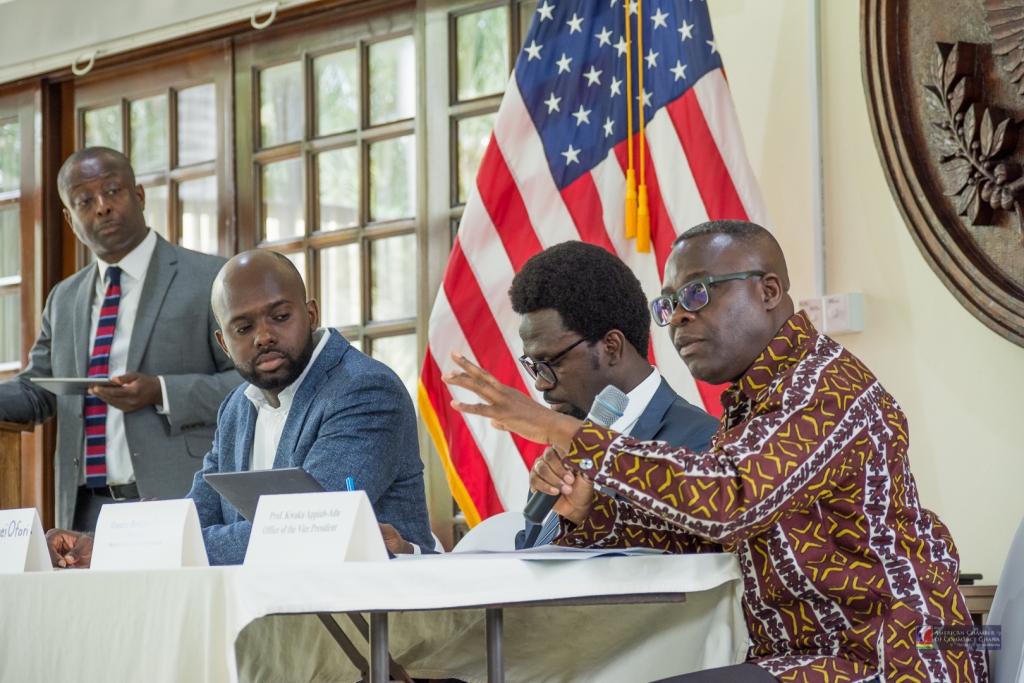
The forum also featured a panel discussion on the Cyber Security Bill, fake news, the role of data privacy/protection in securing communication and data storage, the state of the nation’s connectivity infrastructure, and the government’s initiative to establish Ghana as a leader in ICT innovation in the sub-region by 2023.

The panel was made up of Mr. Owusu Bediako-Poku, Director of Operations at the National Cyber Security Centre, Mr. Kwaku Kyei Ofori, Deputy Director-General at the National Information Technology Agency, and Prof. Kwaku Appiah-Adu, Head of the Delivery Unit, Office of the Vice President.

The session was moderated by Franklin Asare, Country Director at Oracle / AmCham IT Committee Chairman.

Also present at the forum were executives from VISA, Uber, PwC, IBM, Emergent Technology, National Information Technology Agency, KPMG, Oracle Corporation, American Tower Corporation, National Cyber Security Centre, Office of the Vice President, the Bank of Ghana, and representatives from other AmCham member companies.

[unitegallery DigitalForum]

AmCham Development Financing Forum

The chamber, in collaboration with the United States Agency for International Development (USAID) on Thursday, February 27, 2020, held a forum to discuss financing development through the U.S. Development Finance Corporation (DFC). 

James Lykos, Primary DFC Liaison for USAID/Ghana, took participants through the institutional structure, tools, and capabilities of the DFC. He also explained the eligibility requirements of the program.  

The DFC is a $60 billion program to invest in sectors ranging from critical infrastructure, energy, technology to health care, and financing for small businesses and women entrepreneurs in Low-income (LICs) or lower-middle-income (LMICs) countries. 

“The DFC is equipped with a more than doubled investment cap of $60 billion and new financing tools such as equity financing, debt financing, political risk insurance, and technical development.

“With the $60 billion cap, the DFC would be shared among Africa, Latin America, and Asia, with each continent receiving approximately $20 billion under the initiative,” he said.

He stated that the DFC consolidated and modernized the Overseas Private Investment Corporate (OPIC) and the Development Credit Authority (DCA) of the United States Agency for International Development (USAID).

The initiative is designed to help businesses to expand into emerging markets, finance solutions to the most critical challenges facing the developing world and reinforces US foreign policy and national security interests.

Click here to download the presentation for more information on the DFC. Email James Lykos, Primary DFC Liaison for USAID/Ghana at jlykos@usaid.gov for specific questions about how the DFC can apply to your projects. 

[unitegallery DFF]


US Embassy Relaunches BVAP On Pilot Basis

AmCham Ghana, the U.S. Embassy in Ghana, and PwC on Thursday, January 16, 2020, relaunched the Business Visa Appointment Program (BVAP) on a pilot basis to streamline the visa appointment process for qualified companies.

Potential BVAP companies will be nominated by the U.S. Embassy Foreign Commercial Service, Economic Section, and Foreign Agricultural Service, for approval by the Consul General.

This program is for full-time employees of qualified companies traveling for business purposes.  It does not cover accompanying family members, or for employees traveling for personal reasons.

Employees are required to complete a visa application, pay the visa fee, and use the online appointment system to book a visa interview, even if the interview date is after the date of travel. The Consular Section will not approve a BVAP request when these steps have not been taken.

An approved BVAP request does not guarantee a favorable visa adjudication. It is up to the discretion of the interviewing Consular Officer whether an applicant qualifies for a visa and whether the visa should be limited.

The Embassy believes this program will be mutually beneficial and would help companies secure favorable visa appointment dates for their workers. The program is currently being run on pilot basis with 10 companies and would be open to other qualified companies in due course.

[unitegallery BVAP20]

AmCham Ghana Holds the 2020 Economic Outlook Forum

The American Chamber of Commerce, Ghana, on Friday, January 10,  held the 2020 Economic Outlook Forum to provide members with insights on the 2020 Budget Statement of the Government of Ghana, the implications of tax and fiscal policies on businesses as well as highlight compliance with existing and emerging legal and regulatory policies.

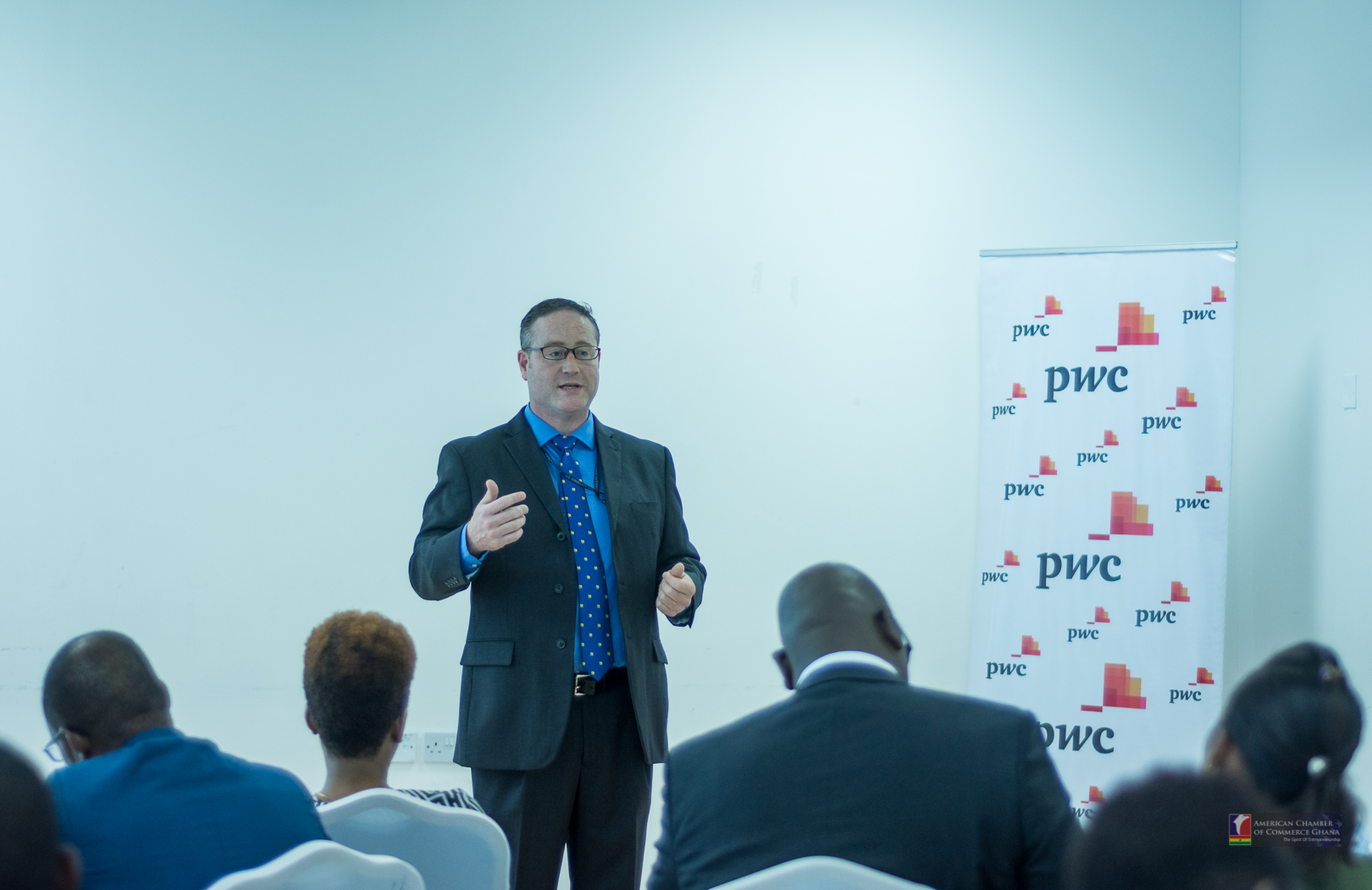
Abeku Gyan-Quansah, Tax Partner at PwC, presented Ghana’s 2020 Economic Outlook with emphasis on the 2020 Budget Statement and its impact on business, the state of the economy, the new companies act, and the proposed tax exemption bill.

Mr. Gyan-Quansah, in his presentation, noted that the Government of Ghana expects to achieve a real GDP growth (including oil) of 6.8%, an end of period inflation of 8%, and an overall fiscal budget deficit of 4.7% in 2020. He stated that the government’s expenditure for 2020 is estimated to be GH¢84.5 billion, and its total revenue is estimated to be GH¢67.1 billion resulting in a deficit of GH¢17.4 billion.
According to him, although from experience, governments are prone to overspend in an election year, the overall fiscal deficit in 2020 is expected to remain within the 5% threshold imposed by the Fiscal Responsibility Act (2018) which requires fiscal deficit to be up to 5%.

He mentioned that of the GH¢67.1 billion revenue expected in 2020, the government intends to generate GH¢51.5 billion from taxes alone (GH¢26.6 billion from income and property tax, GH¢19.1 billion from taxes on goods and services and GH¢5.8 billion from international trade tax). He cautioned that given that Ghana’s economy is largely informal and the fact that 2020 is an election year, the government will pursue companies rather than individuals to be tax compliant in 2020.

He also stated that the government’s anticipated GH¢26.6 billion revenue from direct taxes represents a 20% increase from the revenue generated in 2019. And to achieve this growth in revenue, it is likely the government will introduce new taxes in addition to existing measures. The new measures, he said, could include:

  • increase in the tax-free band for individuals to ensure that the minimum wage for 2020 is tax-exempt;
  • increase in personal reliefs such as marriage relief, child education relief, personal educational relief, and old age relief;
  • renewal and extension of the National Fiscal Stabilization Levy (NFSL); and
  • a 5% tax on the accounting profit before tax of selected entities;
  • a requirement for taxpayers to disclose their aggressive tax planning arrangements under the relevant Base Erosion and Profit Shifting (“BEPS”) Action Point.

For indirect taxes, Mr. Gyan-Quansah noted that the government intends to introduce new policy measures in addition to existing ones to achieve its 2020 revenue target. The new policy measures include:

  • the renewal and extension of the Special Import Levy for five years;
  • strengthening the regulatory framework for taxation of the digital economy;
  • Value Added Tax (VAT) exemptions for fund management companies; and
  • the Automative Manufacturing Development Policy which offers three to ten years of tax holidays as well as VAT and Special Import Levy exemptions for businesses in the automotive industry for vehicles.

He explained further that the government will introduce tax-related administrative measures to enhance revenue mobilization. According to him, the tax administrative measures include:

  • a Revenue Administration Regulation which includes a voluntary disclosure procedure to waive penalties on voluntary disclosure by taxpayers and an Alternative Dispute Resolution to resolve tax disputes between taxpayers and tax administration;
  • reforming the Ghana Revenue Authority to make it more efficient and productive; and
  • developing a comprehensive revenue policy and strategy.

He added that Ghana now has a Tax Exemptions Bill with clear procedures for obtaining tax exemptions, but the bill is yet to be passed into law, although the government had intended to pass it in June 2018. He, therefore, called on parliament to speed up processes to pass the bill. He also noted that the Tax Exemptions Bill, if passed into law, will repeal any existing enactment related to tax exemptions except for enactments in income tax and the VAT.

Constance Ameyartey, Chartered Secretary, PwC, briefly educated members of the chamber on major changes in the new Companies Act 2019 (Act 992). She noted that, apart from companies operating in regulated industries, the new Companies Act grants companies the option to file a registered constitution upon registration with the Registrar of Companies. She added that the Companies Act 2019 (Act 992) also ensures easy identification of the actual legal form of a registered company.

She also explained that under the new Companies Act, a person appointed a director of a company must among other things consent in writing, should not be an ex-convict or found culpable for any criminal offense within the preceding five years. According to her, the new Companies Act also outlines specific qualifications and duties for secretaries that companies must comply with. Also, the new Act stipulates that auditors can be appointed by a company for six years and can be reappointed after another period of six years. She further explained the provisions under the new Companies Act on beneficial ownership, dealing with major transactions, and unclaimed dividends.
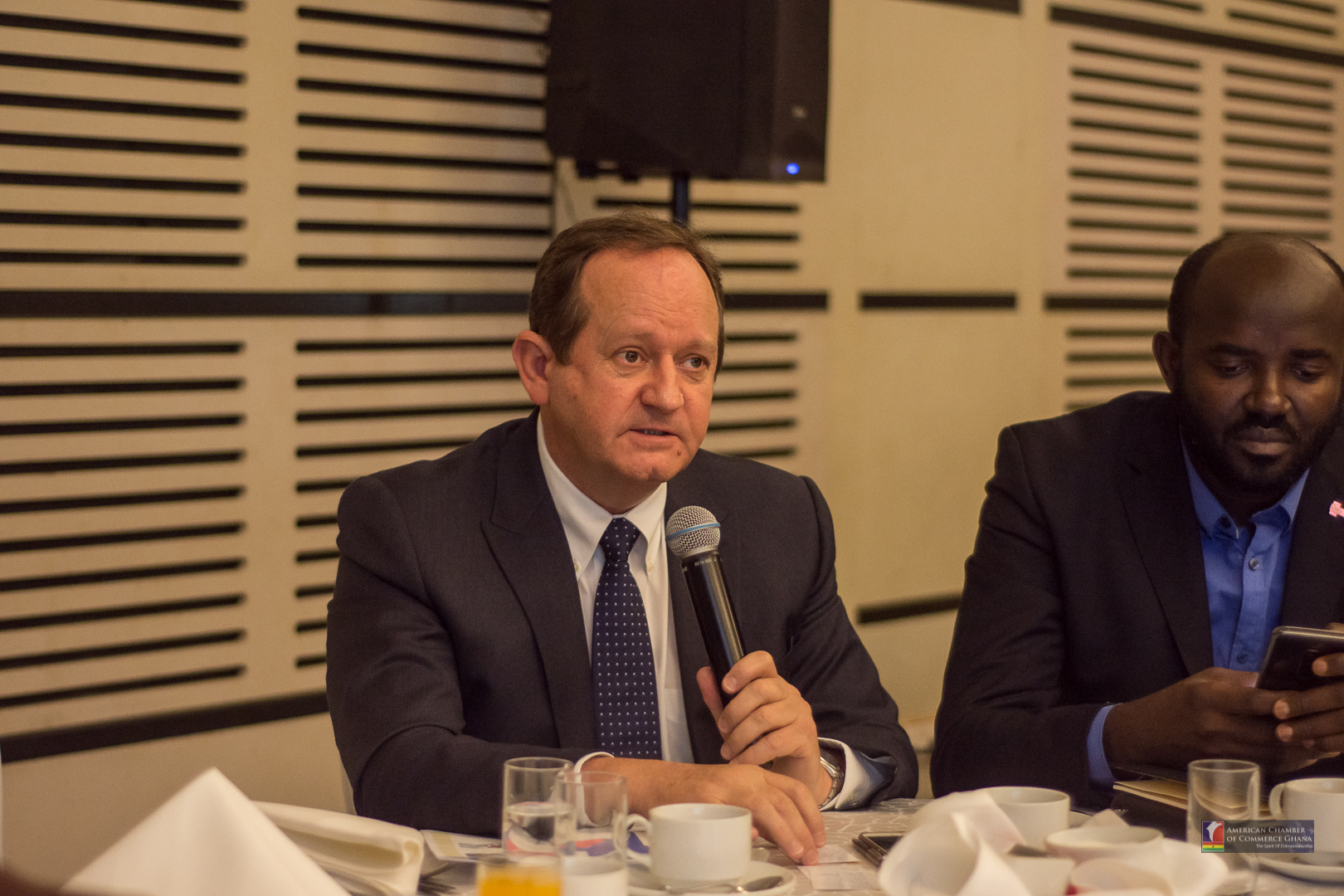
Finally, Mr. Gyan-Quansah cautioned members of the Chamber to comply with all tax regulations in the country with particular emphasis on payments and revisions of annual returns with Ghana Immigration Service; PAYE reconciliation and payment of Quarter 1 taxes; statement of estimated tax payable and payment of Quater1 taxes; income tax returns and transfer policy return; employer’s annual tax deduction schedules and individual income tax return for employees; and annual returns at the Registrar General’s Department.

After the presentation, members of the Chamber asked questions on the stability of the Ghanaian currency, revision of tax laws to help support local companies, protection of minority shareholders, and the role of directors under the new Companies Act.


[unitegallery 2020EOF]