Ghana’s Local Content Regulations Must Be Win-Win for Investors and Ghanaian Businesses-AMCHAM – EBO Advocates

MRACH 29, 2018. The American Chamber of Commerce in Ghana (AMCHAM) and the European Business Organization (EBO) have reiterated their commitment to seeing the successful implementation of Ghana’s local content policies and regulations, stating that such policies and regulations must ensure win-win situation for investors and Ghanaians.

“AMCHAM and EBO members are interested in finding the right and capable local partners to work with” comments echoed by AMCHAM’s Executive Secretary, Simon Madjie, and EBO’s ExecutiveDirector, Nico Van Dar Staaldein at a joint event to deliberate on “Creating an Impactful Local Content Regulations for Ghana” held in Accra. Local content regulations have become topical in the oil and gas sector in Ghana, where operators see an emergence of multiple local content laws and regulations which they believe have the potential to affect their investments.

The event had a panel comprising Kwasi Abeasi, Chairman, Board of Directors of the Ghana Investment Promotion Centre (GIPC); Nana Osei Bonsu, CEO of Private Enterprise Federation; George Brakoh, Regional Manager, Local Supplier and Contractor Develpment, Newmont Ghana; David Addo Ashong, Founding Partner, Ashong Benjamin and Associates and Senyo Hosi, CEO of Chamber of Bulk Oil Distributors.

The panelists agreed that local content policies and regulations are important in bringing value and benefits to all stakeholders of the business-including shareholders, employees, suppliers and locals. The discussions bordered on policy coherence and predictability of fundamental condition required by investors.

Kwasi Abeasi was of the view that local content policies and regulations were important for certain industries, indicating that “local content regulations are genuine requests to share the benefits of businesses with the local population.”

Nana Osei Bonsu of PEF highlighted that local content policies usually cover four key elements: local contracts to provide local services and goods; providing local employment opportunities; local equity participation; and technology transfer. He stated that in the mining sector where Ghana has zero equity in companies operating in the sector, local content regulations were intended to share the value generated in the mining sector with Ghanaians. Nana Osei Bonsu cited the good example of Technip FMC, an upstream oil and gas service provider,that had invested in training local engineers, instead of using mostly foreign engineers.

Senyo Hosi of the Bulk Oil Distribution Chamber indicated that given Ghana’s infrastructure shortfall, huge investments is required from the private sector to fill the gap. He indicated that while the country increased its investment attraction activities, some of the local content policies had the potential to turn investors away. He cited policy incoherence regarding local content policy that had given investors wrong signals. He stated that local content policies had been helpful in promoting Ghanaian participation in the downstream oil and gas sector, however, he also noted that those foreign investors who had trail-blazed those sectors like Shell and Total, must be protected from inimical local content policies as they had over the years built local capacity.

George Brakoh of Newmont Ghana stated that local content policies must have a fine balance between meeting the supply needs of investors and the competence of local suppliers. In his view, companies like Newmont tend to benefit when they are able to obtain their required supplies locally. However, he stated that having supplies of poor quality have ripple implications in their supply chain. George recounted that Newmont had invested over the past 11 years in local content policies and have started reaping the benefits.

David Addo Ashong; a legal practitioner, indicated that most of his clients who are investors have raised concerns about an emergence of multiple local content regulations which he said is quite confusing. Also, according to him, there is a worrying situation where some of the local content policies are targeting ownership and equity participation which could turn investors away. He suggested that Ghana should consider a comprehensive local content policies.

Nana Osei Bonsu encouraged businesses to engage policy makers through their business chambers and raise red flags on implementation challenges with policies and regulations such as the local content laws.

Participants at the event also raised concerns about the cost of complying with the increasing number of local content regulations especially in the oil and gas sector. They also raised concerns about some new local content regulations that seemed to have retrospective effect especially on companies that had already made investment. They argued that existing contracts must protected to ensure continuity and investor confidence.

This AMCHAM-EBO joint event is to create a platform for dialogue among investors on issues that affect their business with the appropriate authorities capable of delivering solutions.


Signed:

Simon Madjie                               Nico C.M van Staalduinen

Executive Secretary                          Executive Director

AMCHAM GHANA                           EBO GHANA


[unitegallery LCE1]

AmCham Member Spotlight | Herbalife Nutrition of Ghana Limited

Starting from the trunk of Mark Hughes’ car, Herbalife was launched in February 1980 with the selling of the “original” weight-loss programme. Herbalife went international in two years as it opens in dozens more countries with sales already topping the $2 million mark and climbing.

The Ghana subsidiary, Herbalife Nutrition of Ghana Limited was incorporated in November, 2011, as the first market in West Africa selling and marketing the company’s range of nutritional and dietary supplement products through a network of independent distributors.

Herbalife Nutrition products includes; Herbalife’s Weight Management range which is scientifically proven as an effective way to help you control your weight together with an active lifestyle, Herbalife Energy and Fitness products which are designed to help you feel refreshed and energized so you can get the most out of your day and Herbalife’s Targeted Nutrition range which has the right products to help you on your way to better long term health. Click here to access the full range of Herbalife Nutrition products. 

Mr. Frederick Amissah who is the Ghanaian Country Director of Herbalife Nutrition of Ghana Limited had a conversation with the Executive Secretary of the Chamber, Mr. Simon Madjie, watch what he has to say about Herbalife Nutrition below.

Implications of the Continental Free Trade Agreement on Businesses in Ghana

“Our peoples, our business community and our youth, in particular, cannot wait any longer to see the lifting of the barriers that divide our continent, hinder its economic take-off and perpetuate misery, even though Africa is abundantly endowed with wealth,”  AU Commission Chair Moussa Faki Mahamat.


Introduction

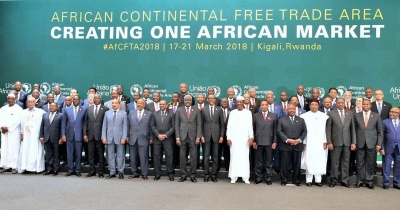
On March 21, 2018, 44 African countries signed the Africa Continental Free Trade Agreement (CFTA) in Kigali, Rwanda, setting the tone for what is expected to be one of the largest free trade areas in the world (the continent’s combined GDP is US$2.5 and has a projected population of 2.5billion by 2050). The CFTA will come into force when parliaments of least 22 out of the 54 African countries ratify the agreement.


Objectives of the CFTA

When in force, the CFTA will create a single continental market for goods and services, with free movement of business persons and investments, and thus pave the way for accelerating the establishment of the Customs Union. The agreement will also eliminate tariffs and boost intra-African trade by 52.3 per cent through the elimination of import duties and tariffs on 90% of goods traded within the continent. Intra-Africa trade under the CFTA will bring better harmonization and coordination of trade liberalization and facilitation and instruments across the Regional Economic Communities and across Africa in general. The CFTA is also expected to enhance competitiveness at the industry and enterprise level through exploitation of opportunities for large scale production, continental market access and better re-allocation of resources.

Components of CFTA

Three key components of the CFTA has been agreed: Protocol on (i) Trade in Goods which addresses the elimination of tariffs and quantitative restrictions on imported goods, (ii) Trade on Services to ensure transparency and provide for liberalization of the services sectors on the continent and (iii) Rules of Procedure and Settlement of Dispute to address trade disputes when they arise. The next phase of negotiations after implementation of the agreement is   the protocol for the protection of intellectual property rights, investments and competition policies.


Expected Impact of the Agreement

UNCTAD has indicated that a fully implemented CFTA would add US$ 17.6 billion (2.8 per cent) to Africa’s overall trade with the world and would stimulate Africa’s exports by US$ 25.3 billion (or 4 per cent). The highest positively impacted sectors according to UNCTAD would be agriculture and food, with a projected growth of 9.4 per cent. Industrial exports would see a boost of US$ 21.1 billion, a projected growth of 4.7per cent. UNCTAD also indicated that, a fully implemented CFTA would initially negatively impact customs revenue resources, it would however, augment real income for Africa by US$ 296.7 million (or 0.2 per cent) as a result of stimulated exports.


Potential Benefits for Business on the Continent

The African Trade Policy Center of the Economic Commission for Africa (ECA) in association with the African Union Commission compiled the following as meaning of the agreement in practical terms;

  • Elimination of Tariffs and Non-Tariff Barriers: African businesses, traders and consumers will no longer pay tariffs on a large variety of goods that they trade between African countries; Traders constrained by non-tariff barriers, including overly burdensome customs procedures or excessive paperwork, will have a mechanism through which to seek the removal of such burdens;


  • Cooperation and Harmonization Among Border Institutions: Cooperation between customs authorities over product standards and regulations, as well as trade transit and facilitation, will make it easier for goods to flow between Africa’s borders; Through the progressive liberalization of services, service suppliers will have access to the markets of all African countries on terms no less favourable than domestic suppliers; Mutual recognition of standards, licensing and certification of service suppliers will make it easier for businesses and individuals to satisfy the regulatory requirements of operating in each other’s markets;


  • Establishment of Regional Value Chains: The easing of trade between African countries will facilitate the establishment of regional value chains in which inputs are sourced from different African countries to add value before exporting externally; To protect against unanticipated trade surges, State Parties will have recourse to trade remedies to ensure that domestic industries can be safeguarded, if necessary; A dispute settlement mechanism provides a rule-based avenue for the resolution of any disputes that may arise between State Parties in the application of the agreement; Upon conclusion, the “Phase two” negotiations will provide a more conducive environment for recognizing African intellectual property rights, facilitating intra-African investment, and addressing anti-competitive challenges.


        Implications for Ghana

  • There is the urgent need to re-consider our manufacturing and agro-processing policies to reflect the new opportunities within the free trade area. Ghana’s pharmaceutical sector stands to benefit immensely from this initiative, as the sector appears competitive by exporting within the Sub-Region. This agreement will make it much easier for them to consider other regions of the Continent.


  • This Agreement will also have significant impact on the ability of the Country to attract FDI’s beyond the extractive industry. FDI’s upon successful implementation of this Agreement will now choose the Countries with minimum restrictions to the ease of doing of business, since from those countries; they can export to other parts of the continent. Ghana will be required to carry out robust business regulatory reforms and improvement in the ease of doing business, if we are to position the Country as one of the best places to do business on the continent.


  • In line with these reforms, Ghana must begin to explore the opportunity of working with other countries in West Africa to jointly pitch to investors. Instead of businesses putting up complete manufacturing plants in different Countries, this Agreement should make it possible for countries to jointly negotiate with Businesses to put different components of their manufacturing activities in their countries, instead of setting up full manufacturing plants in different countries to produce the same products.


  • Finally, Ghana must now operationalize its International Trade Commission (GITC) to deal with the possible incidents of dumping, which is likely to occur when the CFTA is fully operational.
The African Heads of States and Governments pose during African Union (AU) Summit for the agreement to establish the African Continental Free Trade Area in Kigali, Rwanda. (AFP)

This article is written by Simon Madjie, Executive Secretary of the American Chamber of Commerce in Ghana, to provide information to Chamber Members. The writer relied on data and information from the African Union, The Economic Commission on Africa & UNCTAD.

Courtesy Call by Officials of Japanese Embassy

Masamichi Yamashita,  First Secretary and Head of Economic Section and  Mitsuyoshi Asada, Researcher from the Japanese Embassy in Ghana paid a courtesy call on the American Chamber of Commerce in Ghana. The visit was to have talks with the Executive Secretary of the Chamber, Mr. Simon Madjie and to familiarize themselves with the operations of the Chamber.

Mr. Asada expressed great satisfaction of with reception received and said he looks forward to more meetings of this nature and future collaborations.

Harley Davidson Dealership Opens in Ghana

U.S. Ambassador to Ghana, Robert P. Jackson was joined by Ghana’s Deputy Trade Minister, Carlos Ahenkorah to open the official Harley Davidson dealership in Ghana. The dealership is the first of its kind in West African and third to South Africa and Morocco.

In Ambassador Jackson’s words, “The presence of this iconic American brand, speaks to the opportunities that are prevailing themselves here in Ghana. ” He also said it shows that Ghana again is leading the way in opening up business opportunity across the region and continent at large.

Harley Davidson was founded in MilwaukeeWisconsin in 1903. The company has survived numerous ownership arrangements, subsidiary, periods of poor economic health and product quality, as well as intense global competition, to become one of the world’s largest motorcycle manufacturers and an iconic brand widely known for its loyal following.

Moto Co Ltd are the owners of the H-D franchise in Ghana and their 780 square metre facility located in Roman Ridge, Accra, will offer a full range of new model bikes and test rides. To complete the Harley® experience, an authentic Harley-Davidson® store has been added for all your official clothing and accessories.

The dealership also offers an on-site servicing garage with fully trained mechanics and a complete inventory of spare parts and accessories that can be used to service and customize the bikes.

“From the time you sit on these bikes, you will feel the power,” Ambassador Robert P. Jackson assured.

[unitegallery Harley]

Trade and Investment Meeting with Members of National Black MBA Association, Inc.

Members of the National Black MBA Association had a trade and investment meeting with members of the American Chamber of Commerce, Ghana to gain insight into the investment climate in Ghana and the viable sectors to invest in. The meeting which was held at the AH Hotel in Accra was attended by the president of AmCham Ghana and business executives from AmCham member companies.

The National Black MBA Association which is the Largest Network of Black Professionals was conceived in 1970 to help Blacks coming into the corporate sector, largely for the first time, share experiences and insights to help make the journey easier. NBMBAA® has a deep and rich history of enriching the lives of Black youth and professionals that they continue to celebrate today.

The visiting NBMBAA members were briefed on the various laws and regulation guarding investment and trade in Ghana, tax laws and procedures of registering and operating businesses in the country. They were also given an insight into the viable sectors to invest in.

In his remarks, Mr. Joe Mensah, president of AmCham Ghana said the agricultural sector is one of the most viable sectors in the country and it makes good economic sense to invest in that sector. He reiterated some works that his company, Kosmos Energy has done in the sector and said “you will smile to see your return triple within a short period.”

They were also advised to stick to the rules and avoid taking short cuts and paying bribes to have processes expedited, as doing so could result to losing their investments or businesses entirely in some cases.

The NBMBAA members are in the country to familiarize with the way things are done in  order to help and do business as well. They are in the country under the auspices of the former Accra Mayor and Member of Parliament, Hon. Alfred Oko Vanderpuije.

[unitegallery AmChamNBMBAA]

AmCham Luncheon with the IGP on Security and Ease of Doing Business

“Our country has been blessed and often time when people talk about investing in the country, they talk about the peaceful nature of the people. That could never have happen if we didn’t have a force that really ensure that we are safe and the environment is safe for people to invest.” Mr Joe Mensah, president of AmCham Ghana said this in his remarks at a luncheon meeting organized by the chamber to discuss “Security and Ease of Doing Business” with the IGP.

The meeting was to engage with the Ghana Police Service, gain an insight into their operations and the ‘Transformation Agenda’ being driven by the current IGP, David Asante-Appeatu. Security is essential to having and maintaining a vibrant investment environment which will attract investors and drive economic growth, and the IGP couldn’t agree more.

He said in his remarks that, “There is no doubt an effective, efficient and a very accountable police service in this country will serve as a deterrent to criminals.” The IGP went on to say “It is also going to boost investor confidence that will result in economic growth.”

The Ghana Police is currently undertaking a transformation agenda to retrain, re-tool and make the police force a 21st century force. This Mr. Appeatu said is necessary because, crime is getting more sophisticated and the police need to transform in order to combat crime effectively.

The police he said can’t do this alone. He called for more hands on deck and urged the business community to play some role in whichever way they can to compliment the police. Mr. Joe Mensah also shared same sentiments.

In his opinion, Mr. Mensah said “The transformational agenda that they are talking about is something that is important to every business in the country. Ghana prides itself for being a peaceful place but if we don’t work closely with the police to continue to focus on that and continue to improve it, at some point, people will catch up with us and then we can’t brag about that anymore.”

Mr. Appeatu also shared some steps already taken by the Ghana Police Service in their quest to transform. He said some research has been conducted and results showed that if the middle class or inspectorate level is well equipped to coach and supervise the other ranks, it will go a long way to reduce misconduct in the police service.

The IGP assured that the transformation agenda is geared towards making the police force more efficient, effective and accountably. This process he said is a continuous one. “The transformation agenda does not end. It will continue as the demographics change, but I can assure that it will be a world class one.”

According to Mr. Joe Mensah, individual companies can make it a pledge to adopt a police station in the country and help them fight crime by supporting with funds. “We have a lot of American companies in Ghana who have been partnering the police and helping them. What we are saying is that, it can be expanded to reach all police stations that need support,” he stressed.

[unitegallery AmChamIGP]

AmCham Member Spotlight | KEK Insurance Brokers Limited

The company under AmCham Ghana’s spotlight for this month is KEK Insurance Brokers Limited. This company is Ghana’s number one insurance brokers since 1992.

KEK insurance brokers limited is a local insurance broking firm with substantial international links providing enhanced broking services to several local and multinational firms in all sectors of the economy. The company was registered as a limited liability company in 1985, and obtained the license to operate as an insurance broking and consultancy firm in 1990. The company since its establishment has competently handled insurances of well-placed local and multinational companies.

[unitegallery KEK]

The company has been continuously adjudged by the National Insurance Commission as the leading insurance broking firm in Ghana since 1992. Their services include;

Accident (General) Insurance

  • Group Personal Accident
    • Workmen’s Compensation

General Business

  • Assets-All-Risk
    • Bonds
    • Burglary
    • Consequential Los
    • Contractors’ All Risk
    • Directors & Officers Liability
    • Electronic All Risk
    • Fidelity Guarantee
    • Fire & Allied Perils
    • Goods in Transit

 Click to access full service list

AmCham Luncheon to Discuss Ghana’s Economy – “Moving from Stabilization to Growth”

For Ghana to move from stabilization to growth there must be the political will and discipline to drive that agenda. These were the underlining themes at a forum organized by the American Chamber of Commerce, Ghana (AmCham) and Ghana Association of Restructuring and Insolvency Advisory (GARIA) to discuss Ghana’s Economy – “Moving from Stabilization to Growth.”

Dr. Henry Kerali, World Bank Country Director for Ghana in his remarks said “while Ghana has been standing still, others were moving on,”  and this has caused the nation to fall in most global rankings related to doing business. Dr. Kerali further stated that even though latest statistics have indicates some positive changes in the economy; corruption, delays at the ports and the prolong period of filing and seeking justice at the Courts still makes it unattractive for investors to come into the country.

According to Dr. Kerali, food inflation continues to rise due to the high import of food into the country. This backs fellow panelist, Mr. Ishmael Yamson’s point that government needs to invest more in the agriculture and manufacturing sector to drive real growth of the economy. Even though the economy is projected to grow at 6.8% this year, Mr. Yamson is of the opinion that “the growth that has been projected is going to come from oil and gas and not from agriculture, manufacturing and the areas that create avenues for job.”

He went on to say many governments have talked about moving the economy from stabilization to growth, but that is yet to be achieved because of the lack of political will and discipline to drive that agenda. Mr. Yamson also reiterated that government need to prioritize and clearly define what they want to do and what the private sector can take up.

According to him, it was not prudent for the government to keep financing SOEs that were not making any returns. “It does not make sense to see these SOEs only accumulate debt when there is a sector that can run them effectively and make money for the state through the payment of taxes,” he stated while calling on the government to allow the private sector to take charge of some ailing SOEs.

“Capital sits with the private sector and not the government, hence the need for directions that will enable the private sector to play its role to create jobs and pay more taxes to accelerate the national development agenda,” said Mr. Yamson. He also believes it is not a bad thing for the government to provide the private sector with incentives, since this will only drive them to invest more into the country.


Ms. Ayesha Bedwei, a tax partner at PwC Ghana and co-panelist said the high level of lawlessness and indiscipline has been an impediment on the growth path of the nation. She said for things to change “we must apply the law equally, that’s the only way to ensure discipline in our country.” Ms. Bedwei also said we must apply ourselves better and enforce tax laws which will compel defiant companies to pay their taxes. She also called for the widening of the tax net to increase government’s revenue.

The four year Presidential tenure does not help issues according to Dr. Henry Kerali. He said this system forces ruling government to formulate and implement policies with the primary aim of being re-elected. This he said has to change if the nation wants to drive a growth lead agenda.

Mr. Yamson also expressed concern about how multinationals were accused and seen as companies that only came in to milk the economy at the expense of the country. He said, “When they come, it is our people who sit with them to negotiate the deals and, therefore, when something goes amiss, we need to hold those Ghanaians who lead the negotiations and not the multinationals because they are not charity organisation; they are in to make profit but can’t act until they have an agreement.”

The event which was held at the Mövenpick Ambassador Hotel in Accra ended with a Q&A and a feedback session with some members in the audience suggesting that, the public sector need to be made more effective to compliment the works of the private sector.

[unitegallery AmChamEconomy2017]

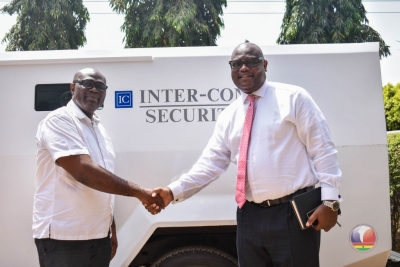
Inter-Con Security System Ghana Joins the Chamber

Premier global provider of integrated security services, Inter-Con Security Systems has joined AmCham Ghana. The company delivers a comprehensive suite of customized security solutions to Fortune 100 companies, government institutions, diplomatic missions and organizations worldwide. Inter-Con which is a privately held, American-owned Minority Business Enterprise (MBE) has met all requirements is now a Member of the Chamber.

Founded in 1973, today, Inter-Con employs more than 25,000 security professionals operating across four continents while delivering over 65 million manhours of security services annually. Inter-Con provides a wide range of security services. Core competencies include: customized physical security, security program development and management, electronic security, security consulting and training, and specialized services.

Inter-Con’s services covers several sectors spanning Aerospace and Defense, Consumer Goods and Services, Critical Manufacturing, Education, Energy & Utilities, Financial, Government and Diplomatic, and Healthcare.

Visit www.icsecuritygh.com for more

Contact: 

Inter-con Security System, Inc,

H/NO C81/16 Dideibaa Street Abelemkpe

P.O.Box 2047b, Keneshie, Accra – Ghana

+(233) (0)302- 761-971/2/3

+(233) (0) 540-108-199

Fax: (+233)(0) 302-762-314