AmCham Ghana Private Meeting with U.S Congressional Delegation

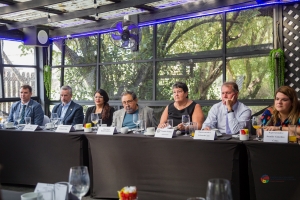
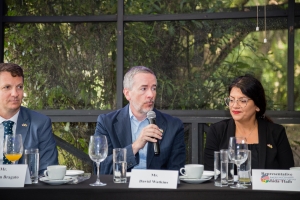
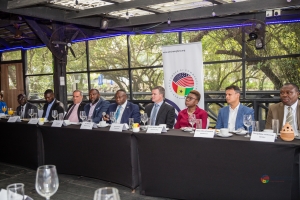
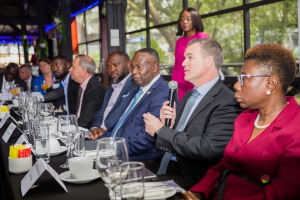
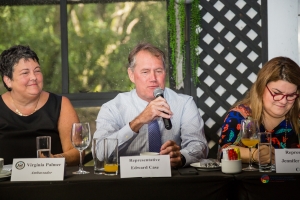
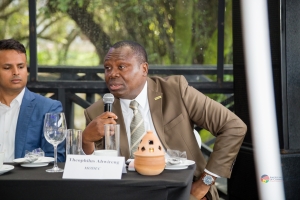
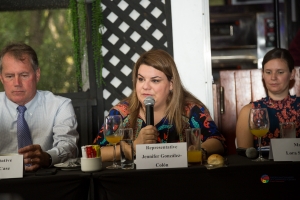
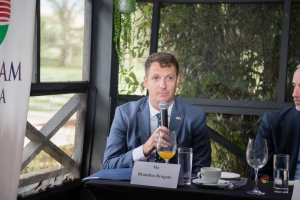
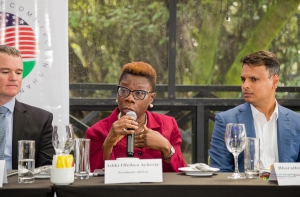
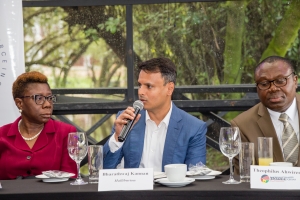
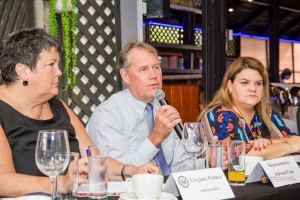
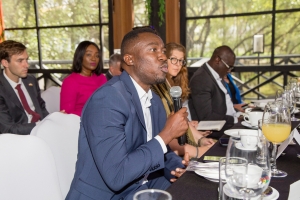
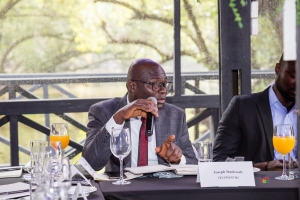
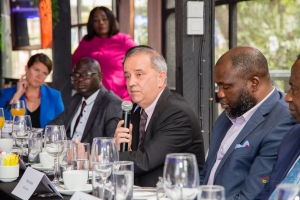
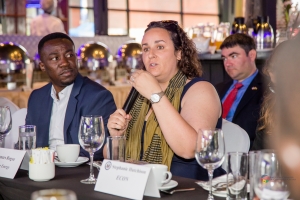
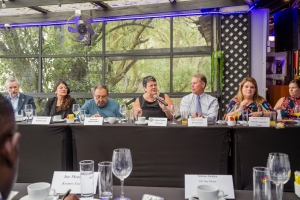
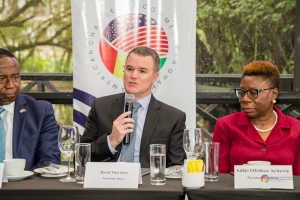
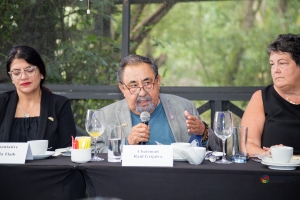
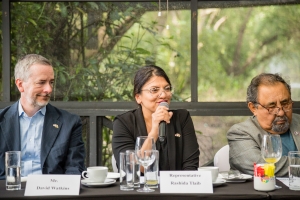
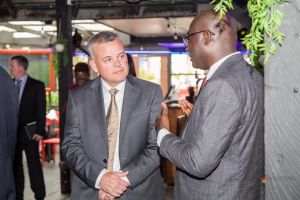
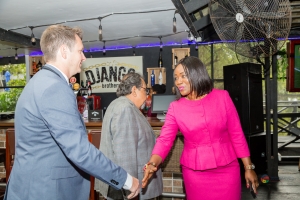
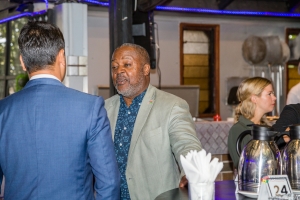
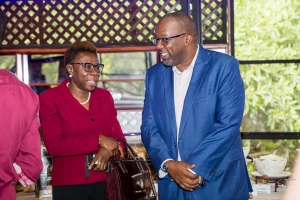
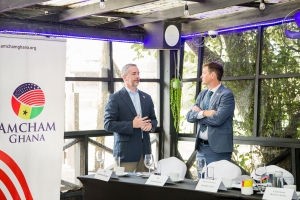
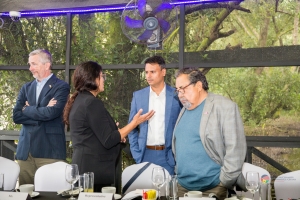
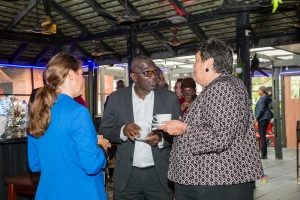
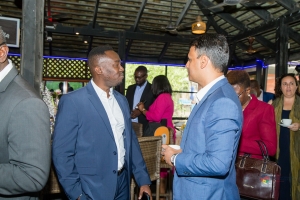
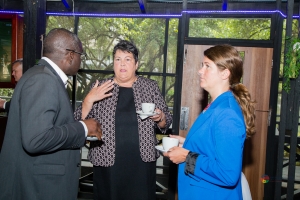
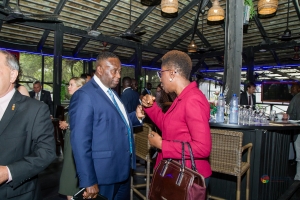
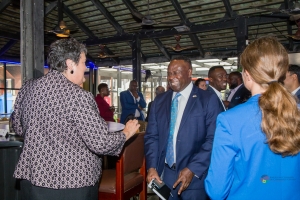
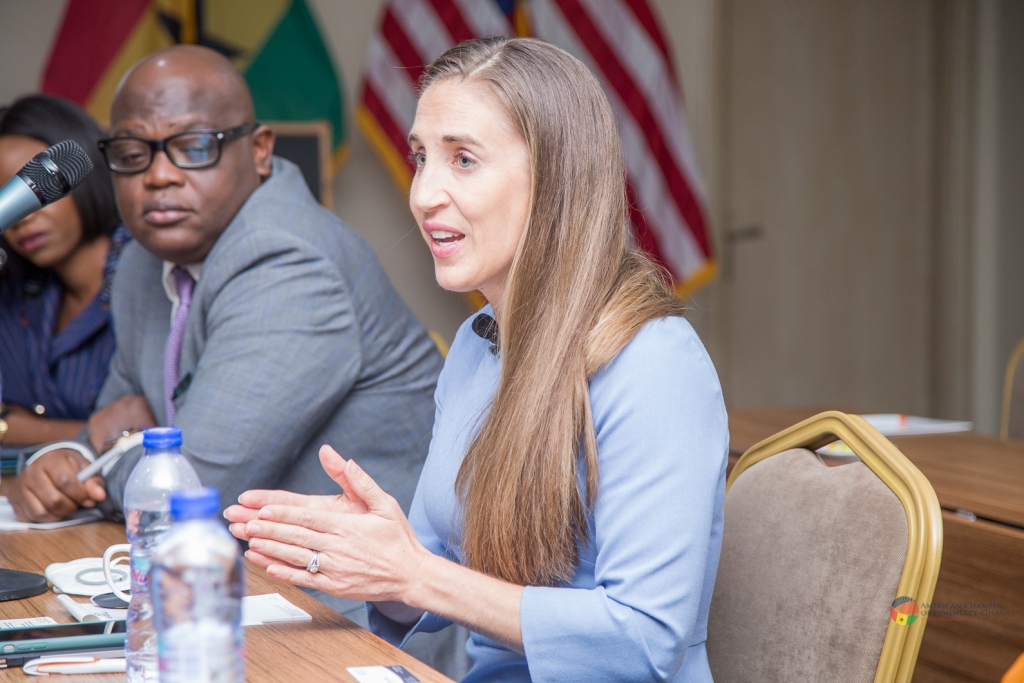
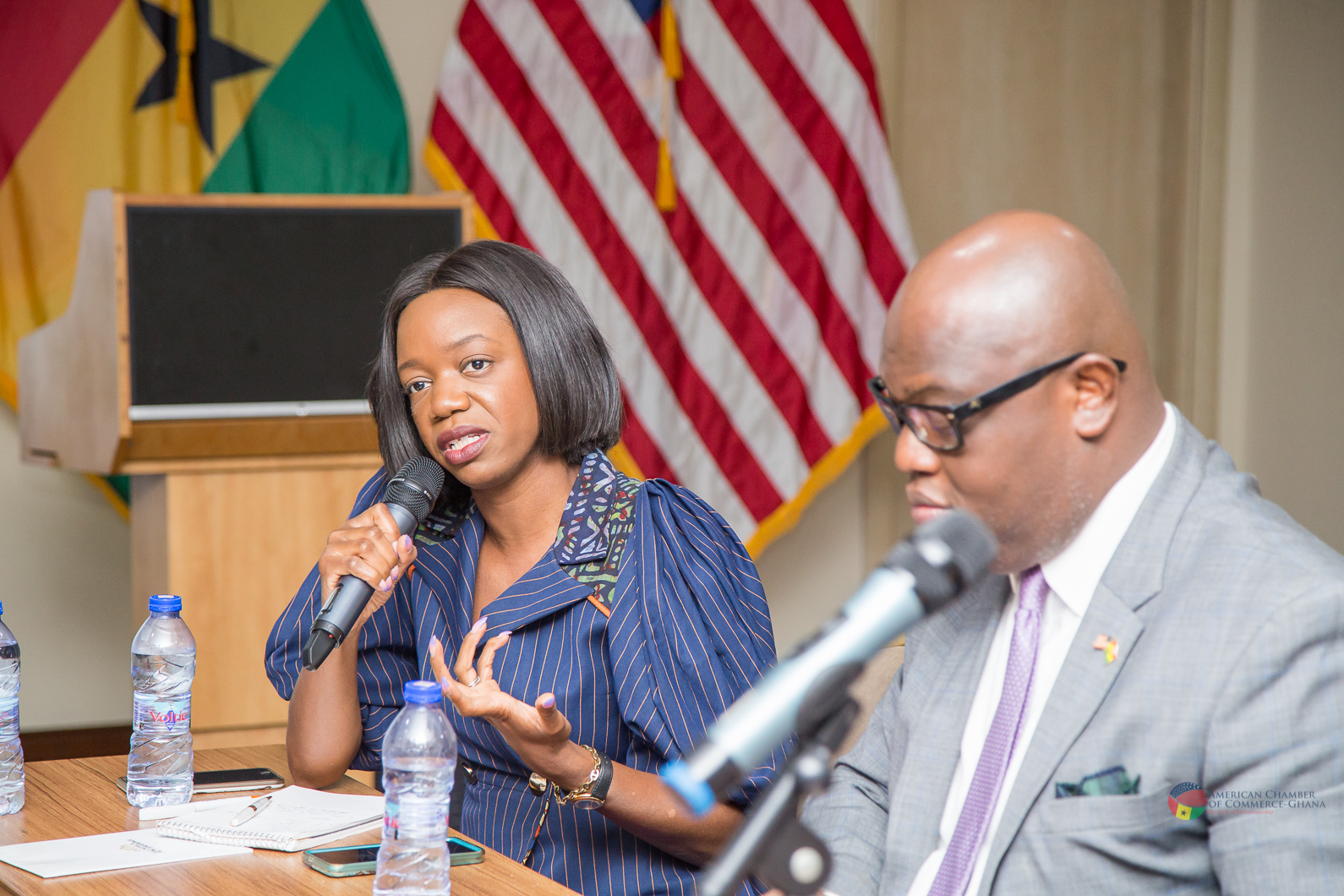
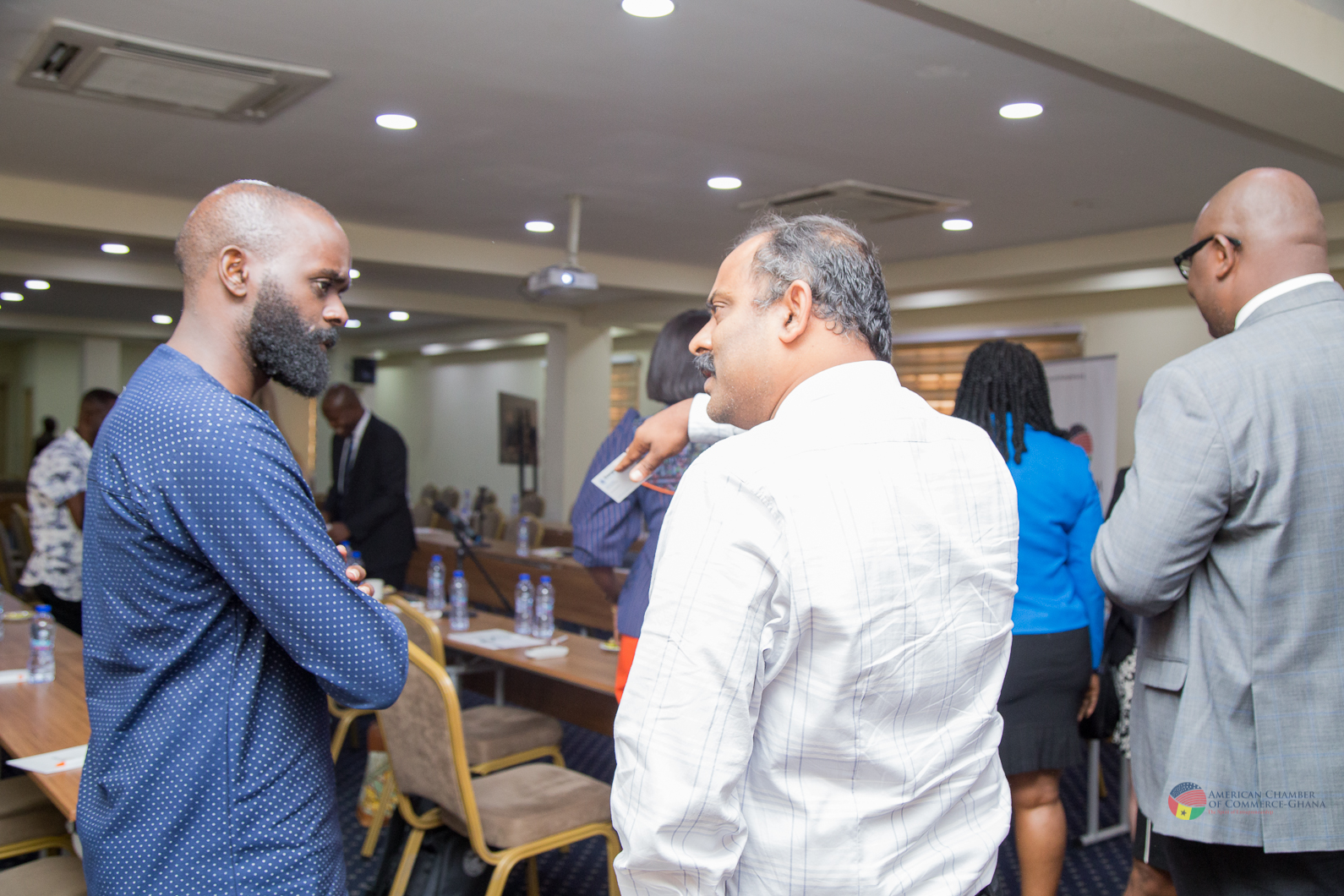
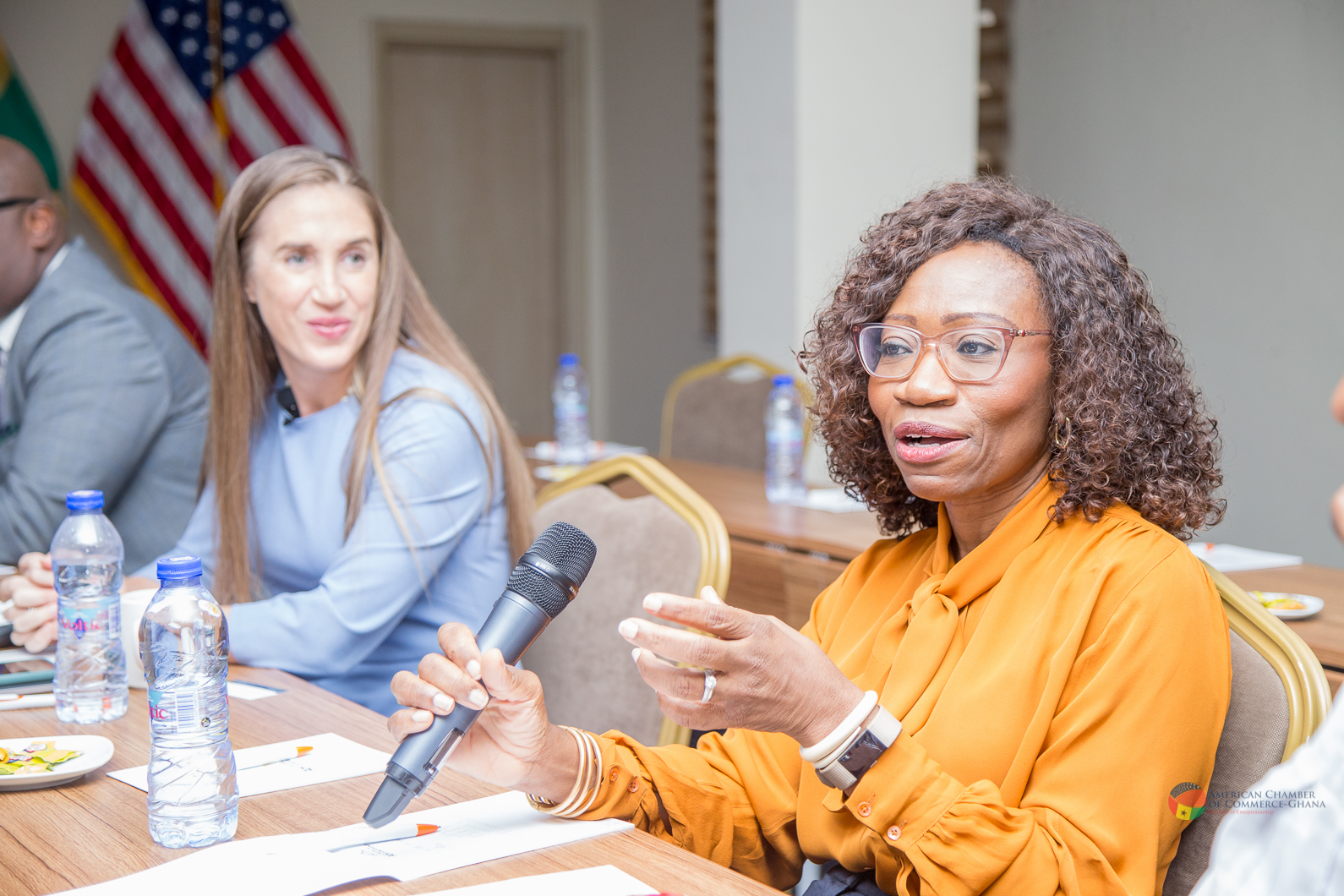
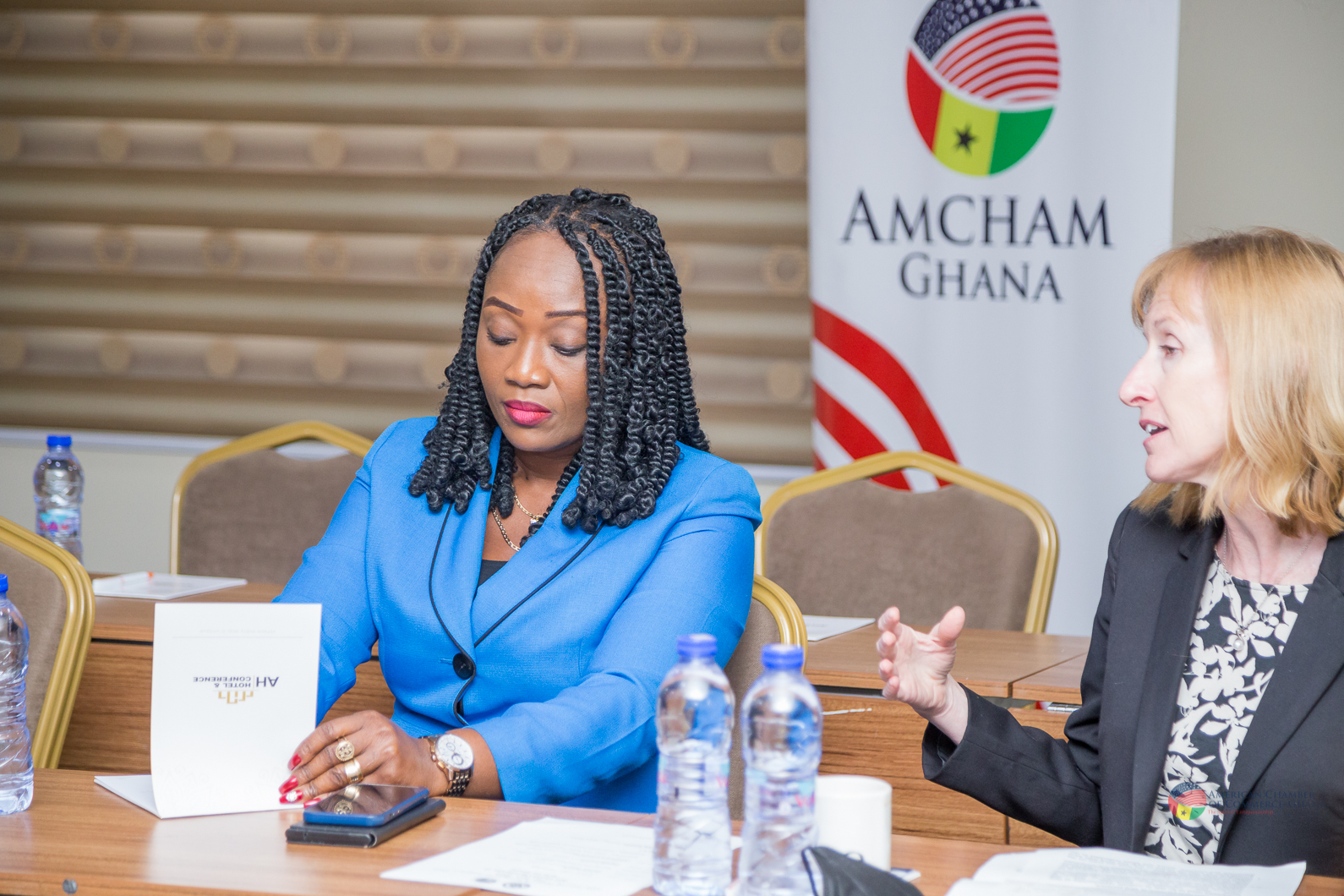
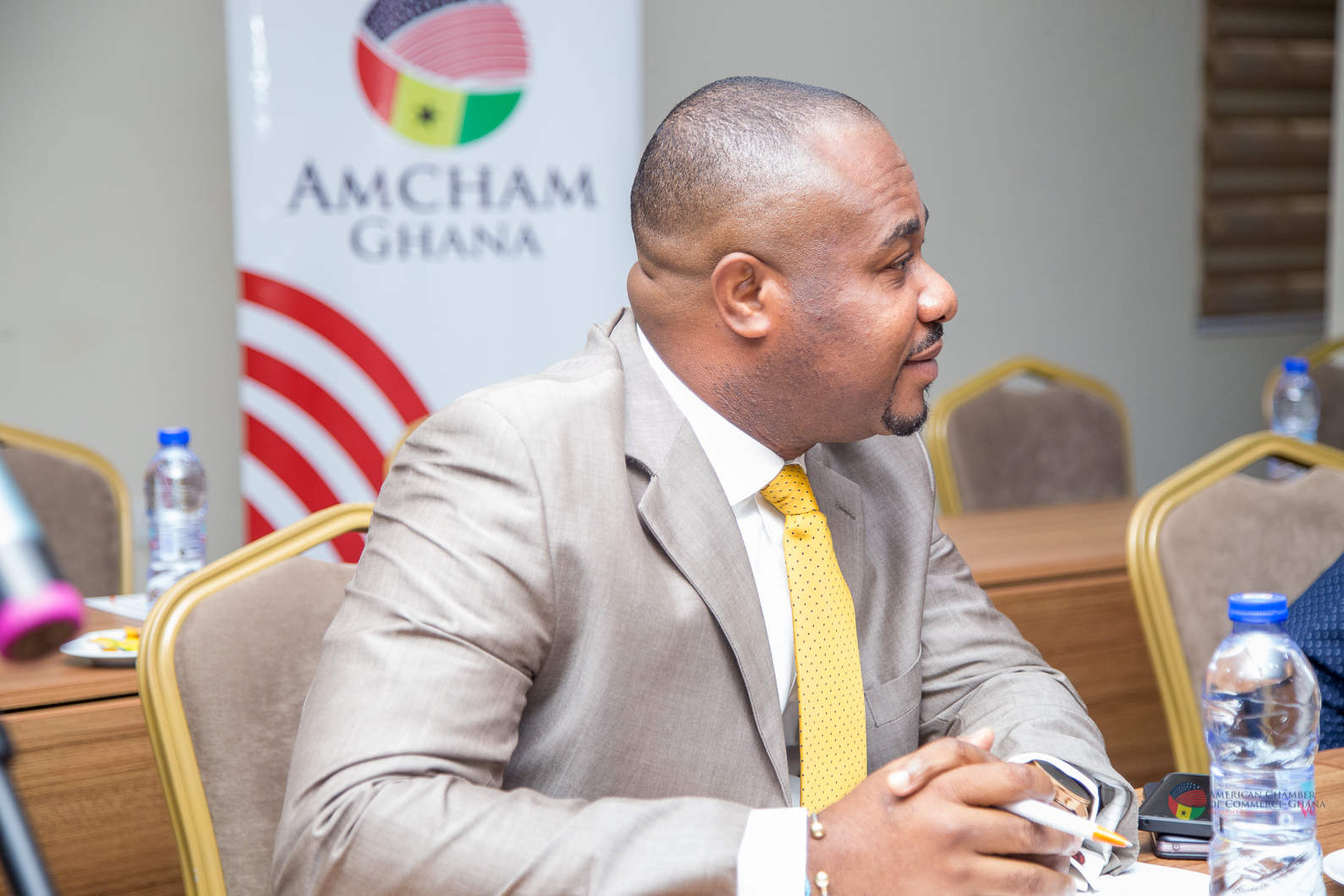
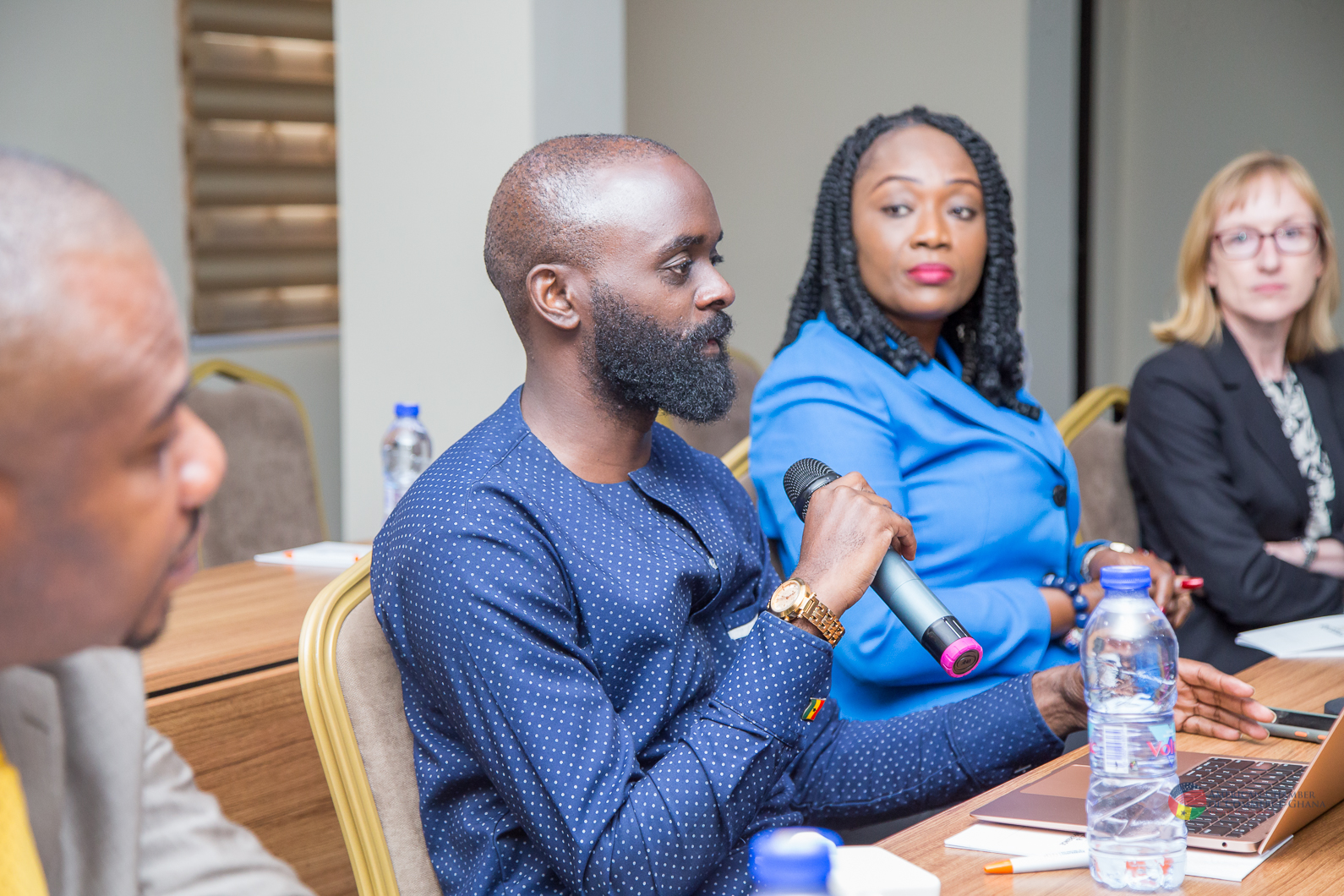
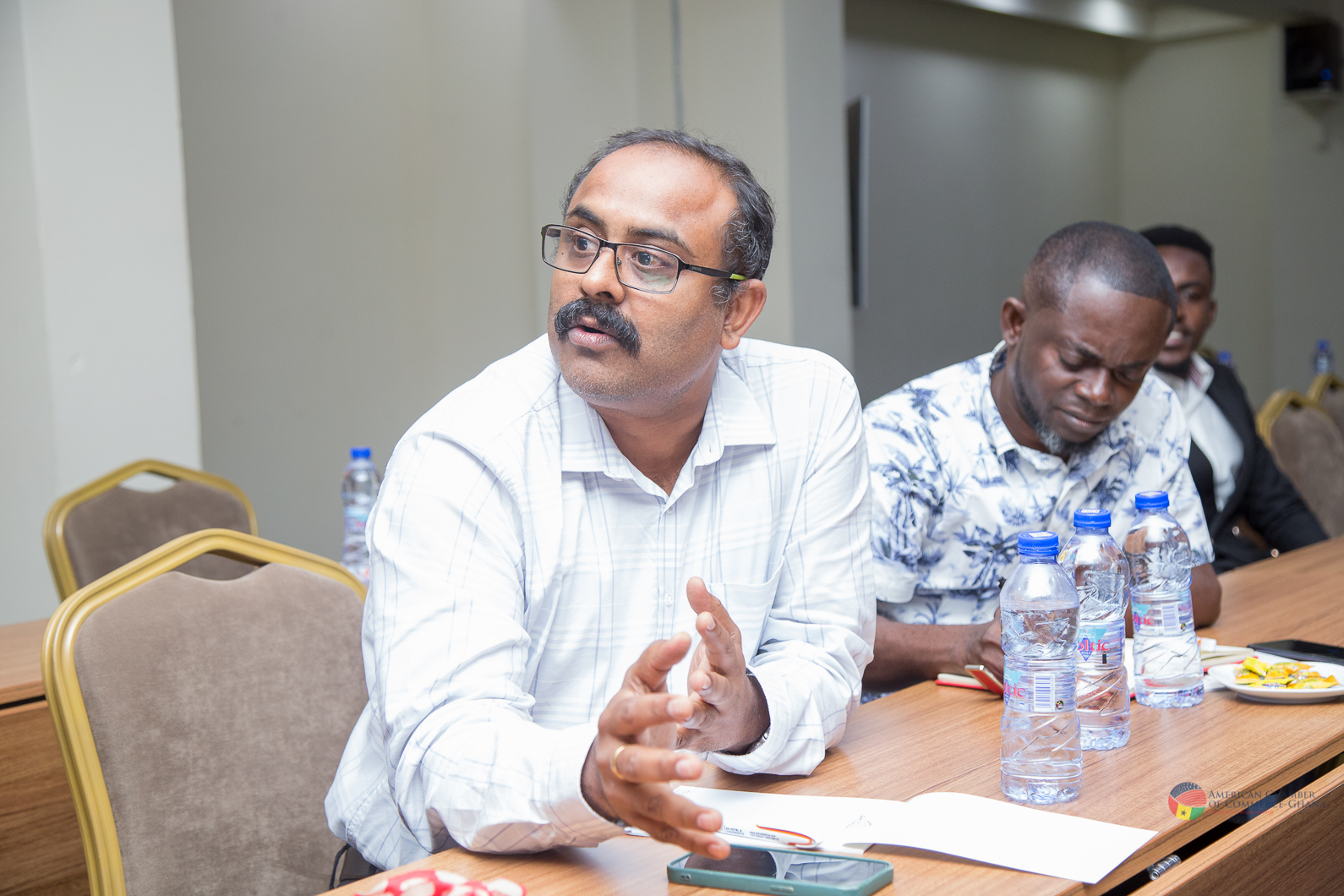
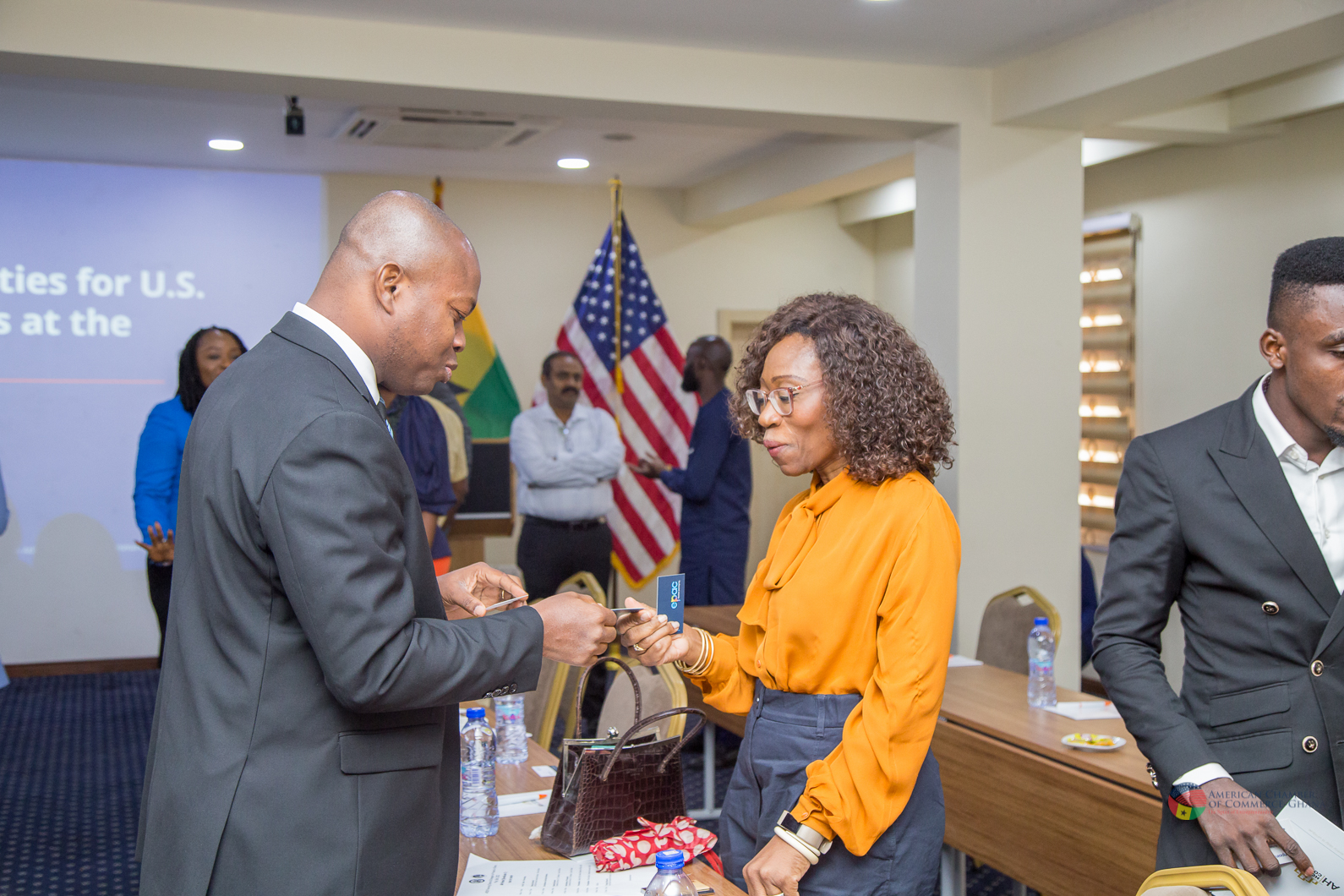
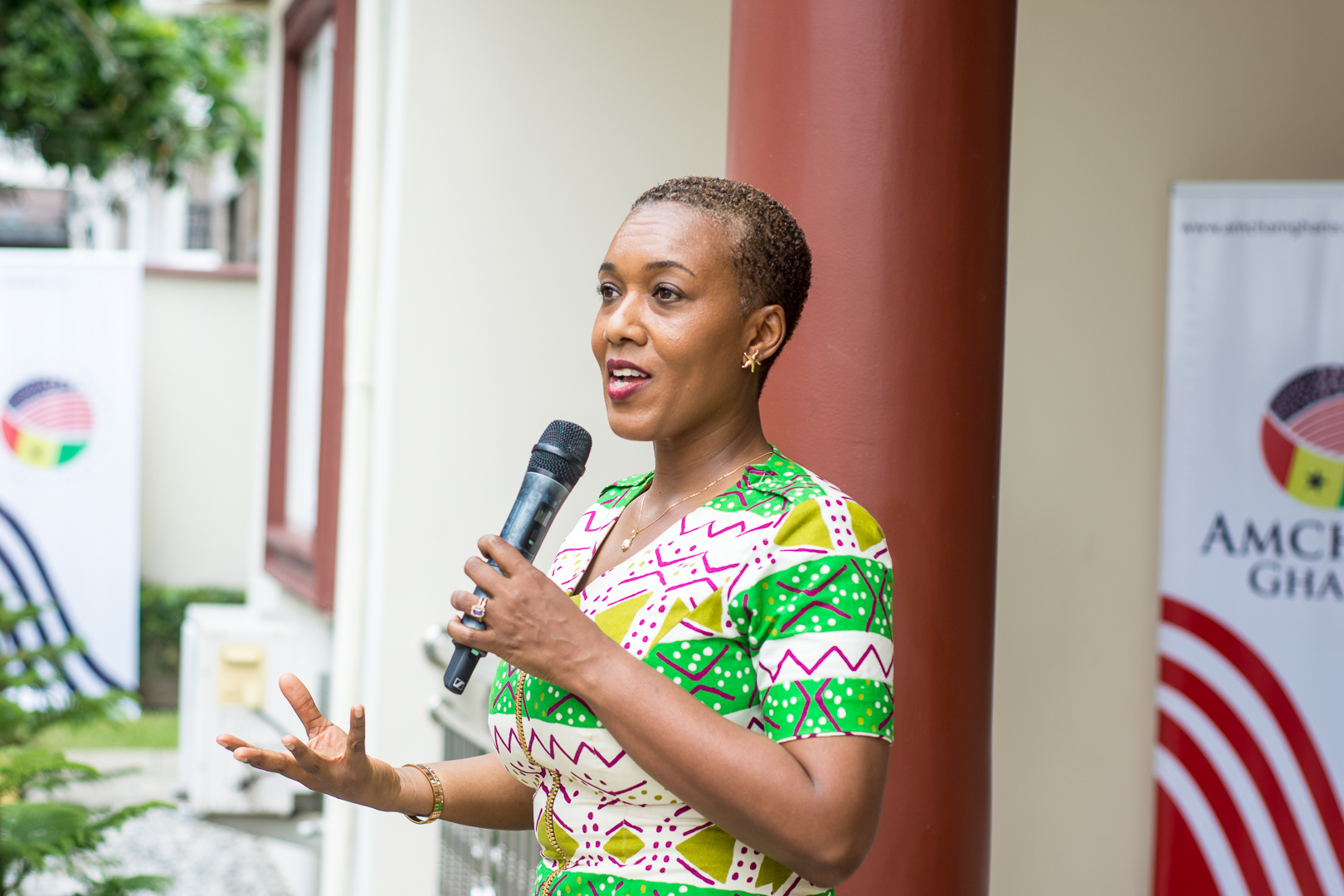
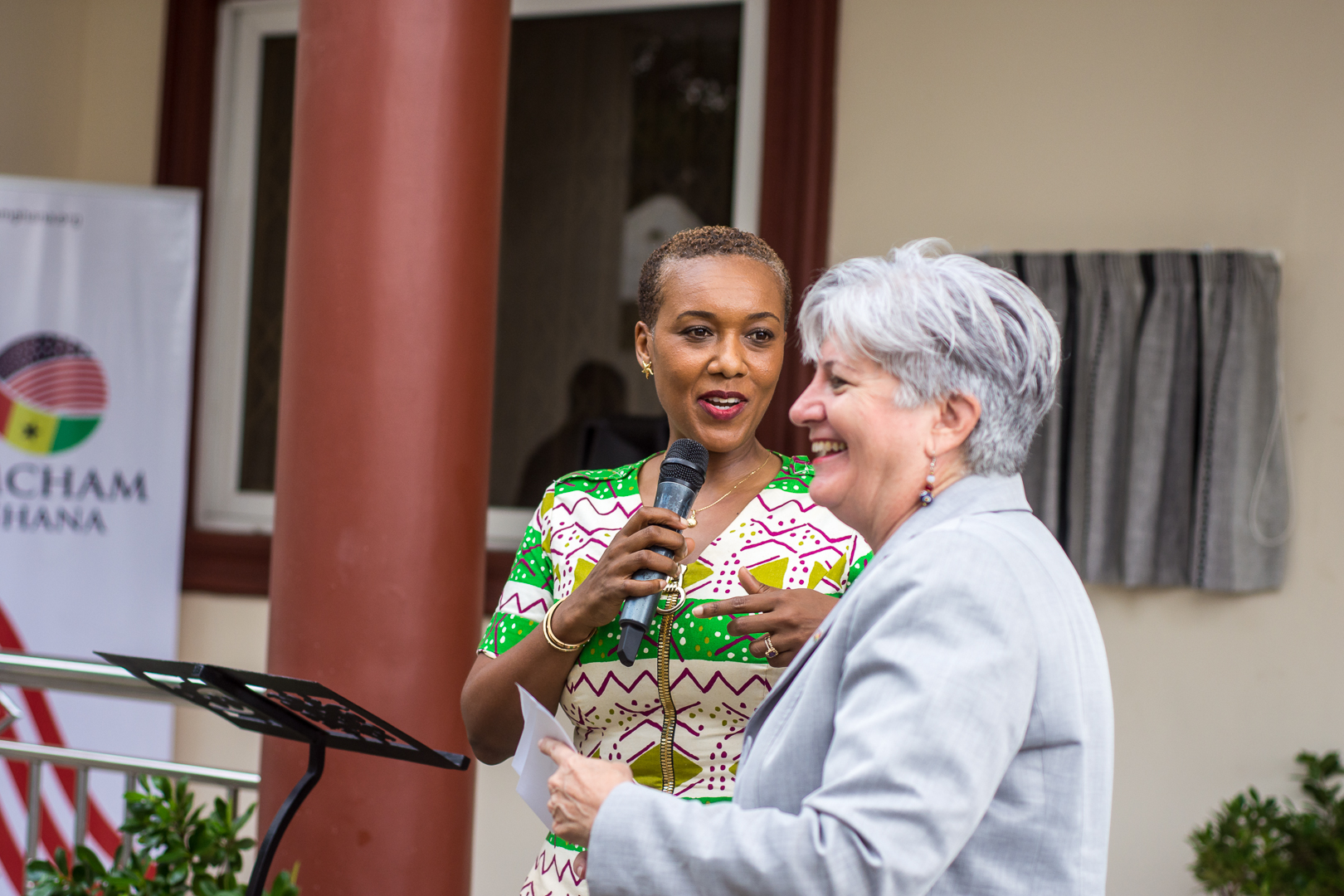
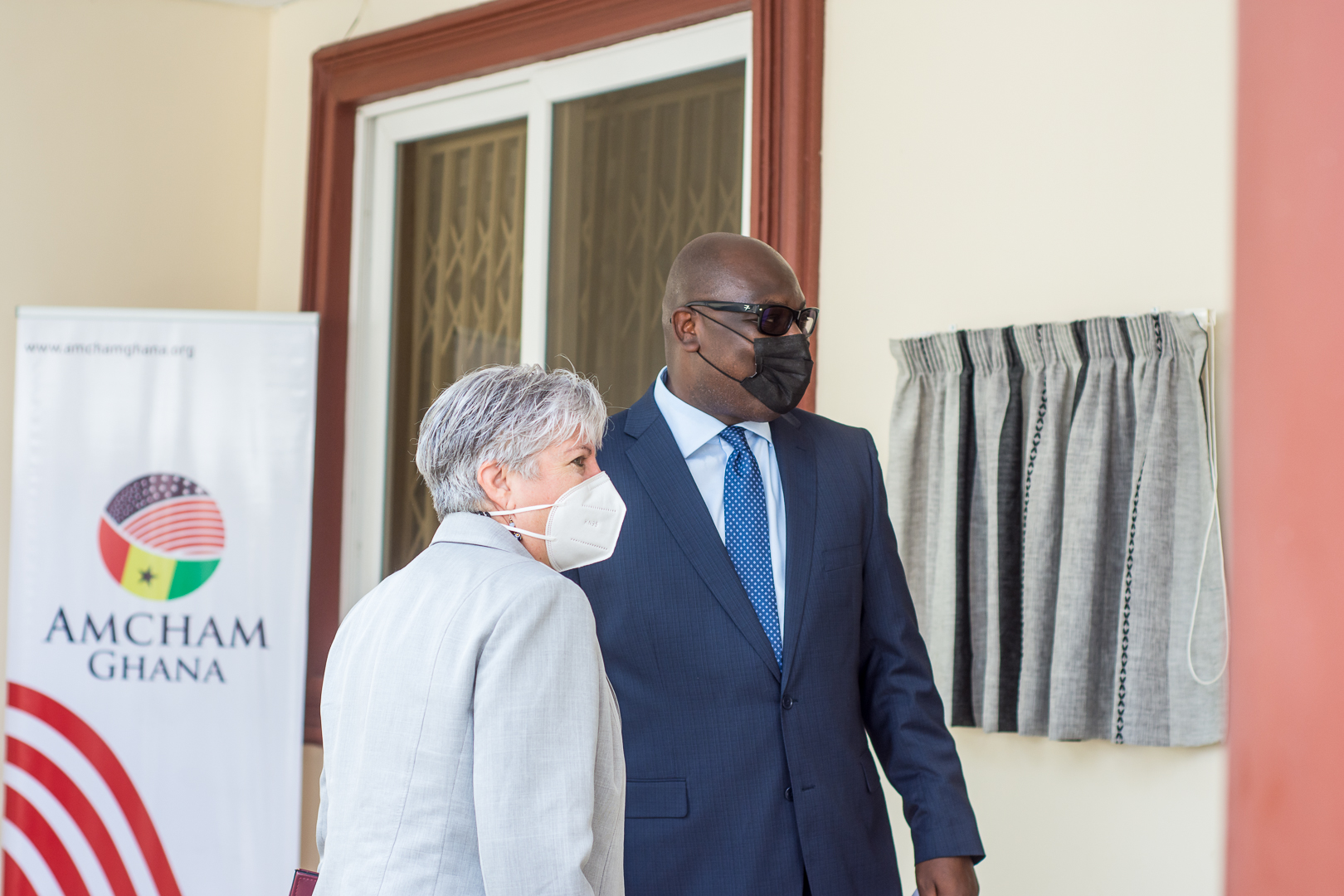
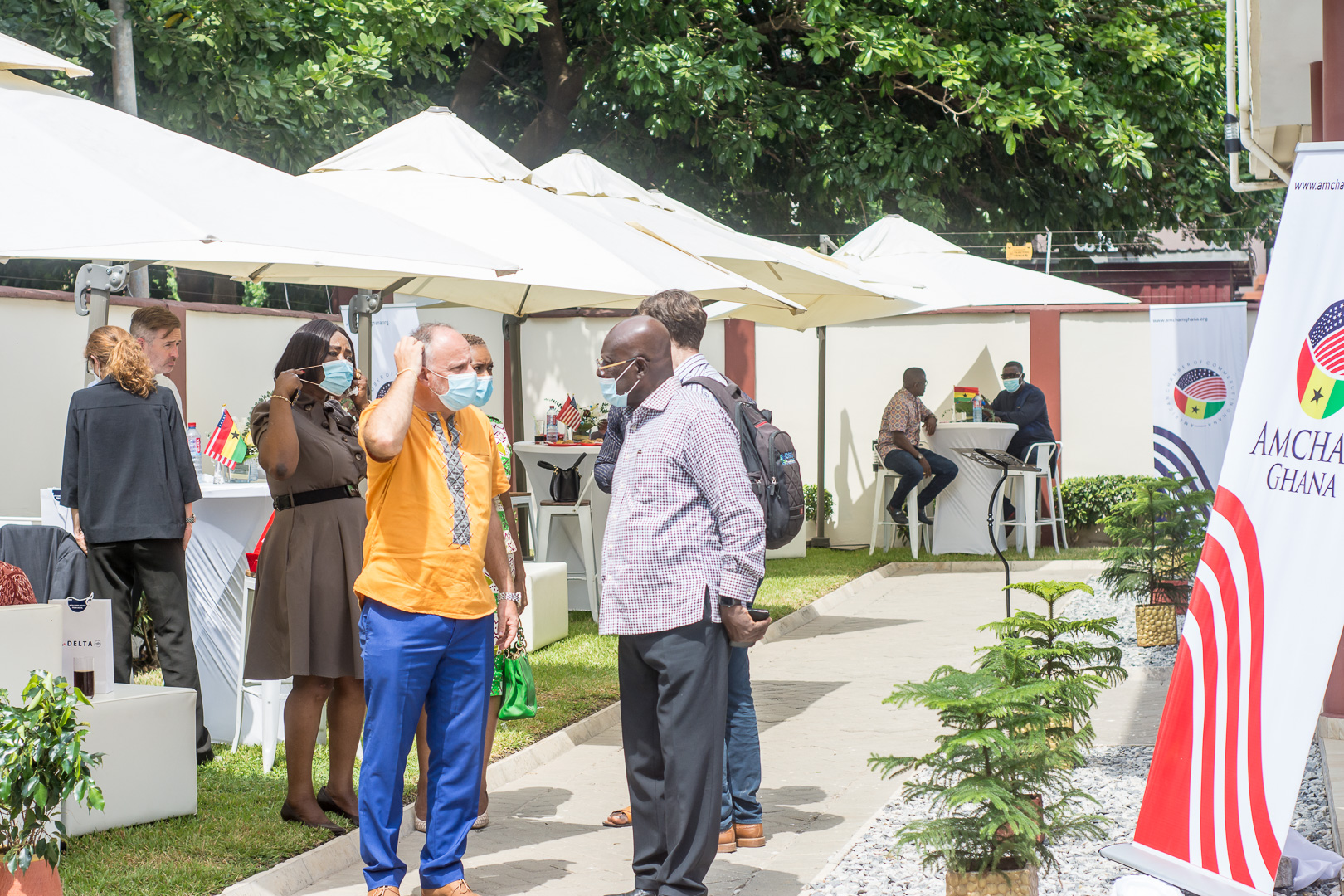
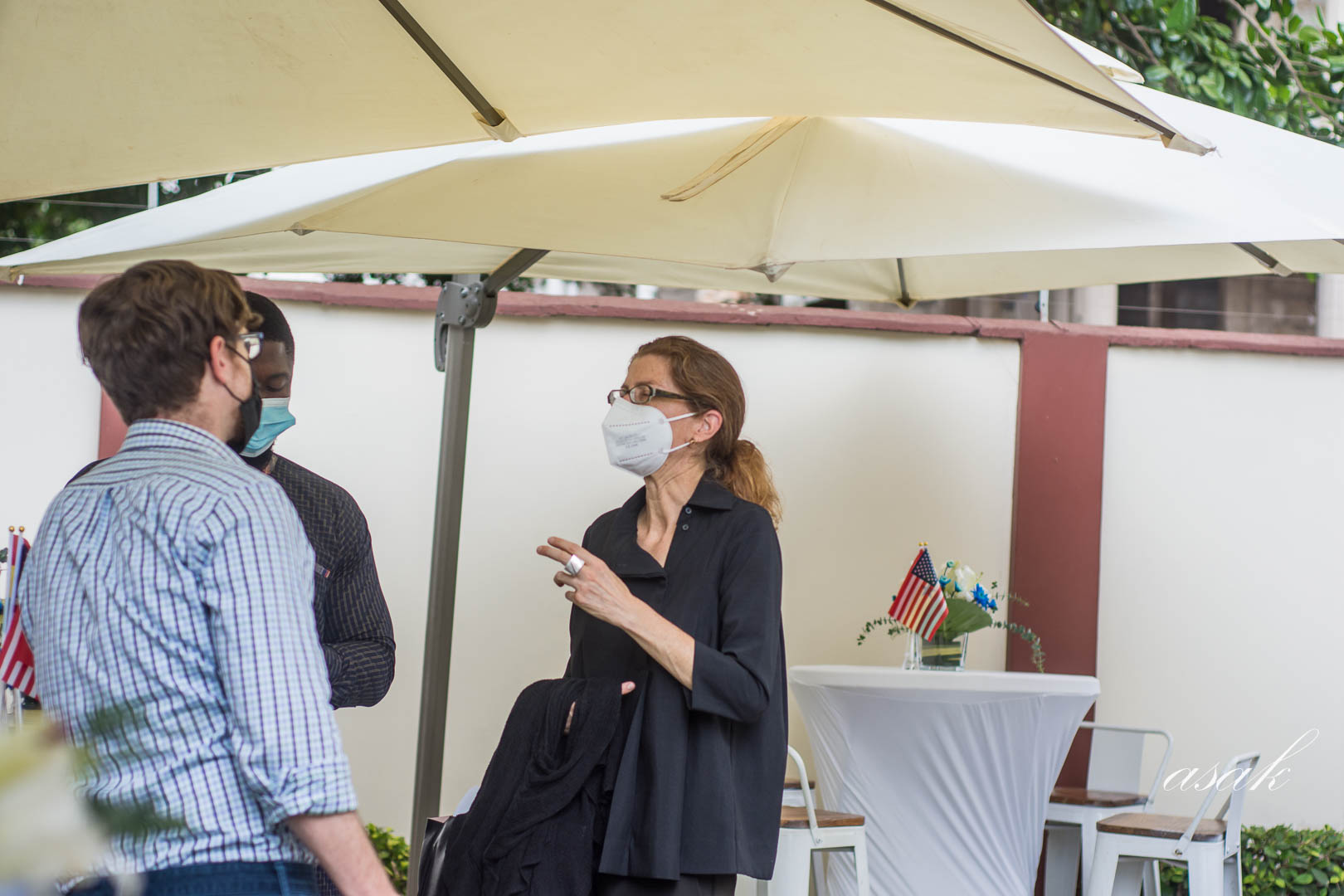
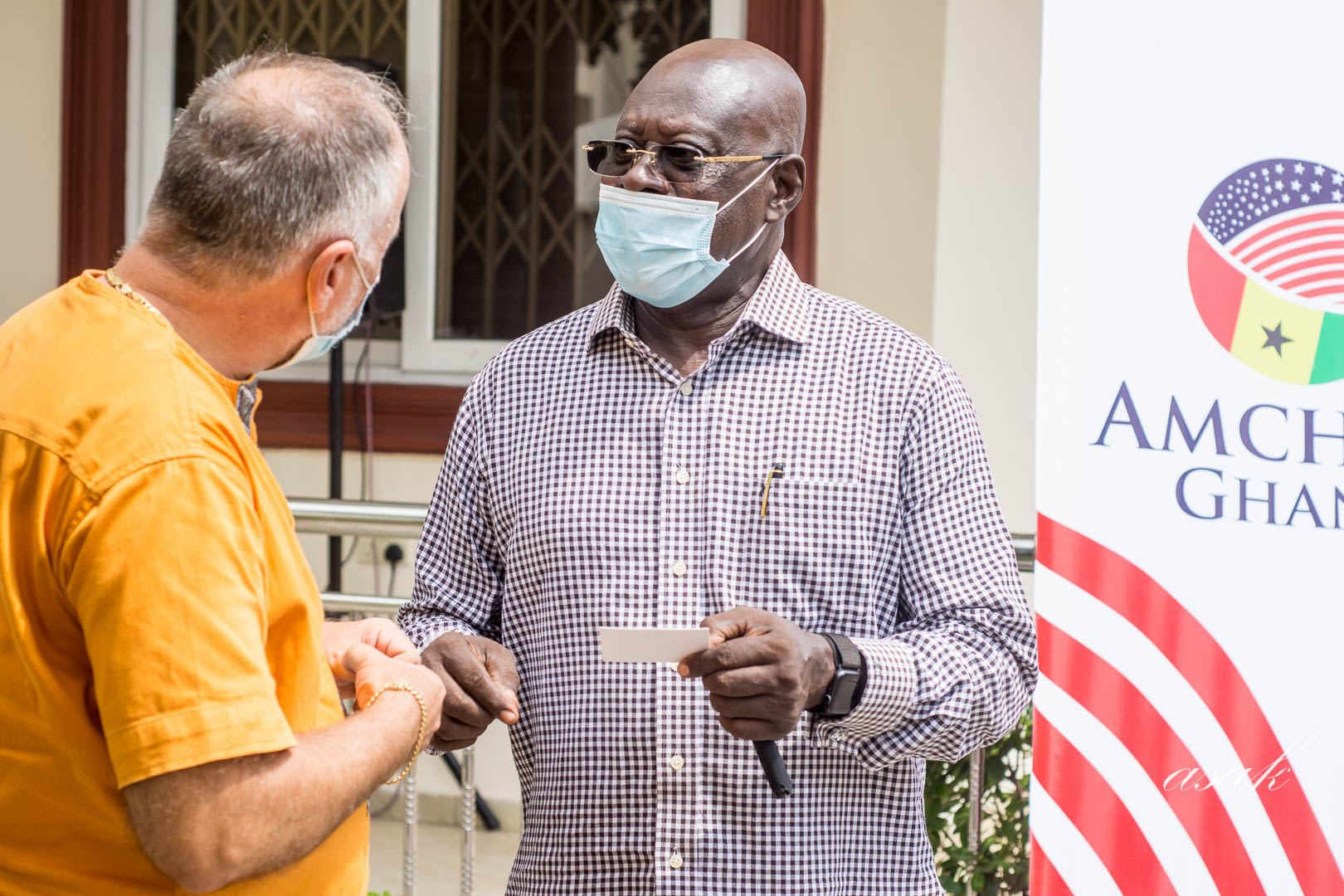
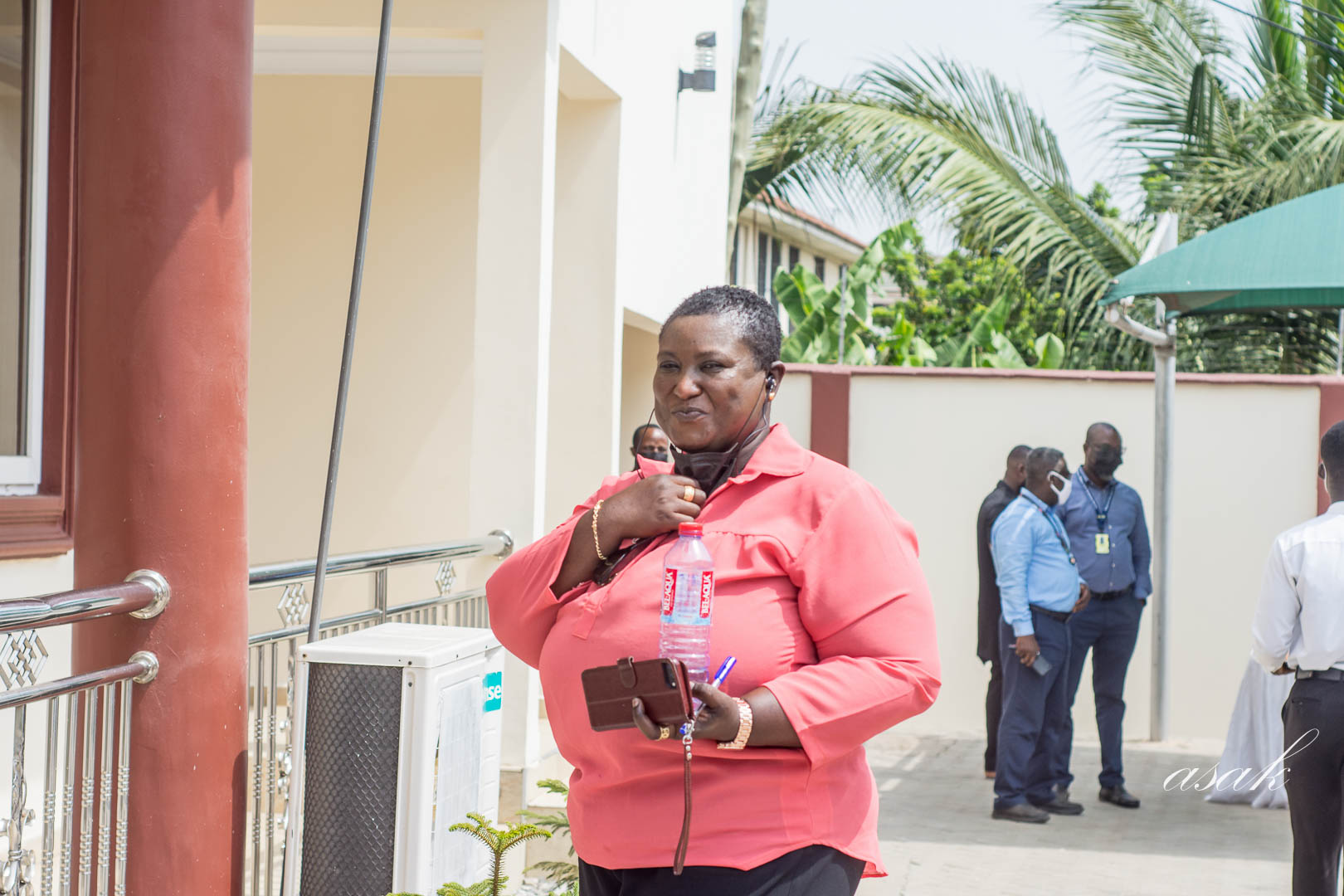
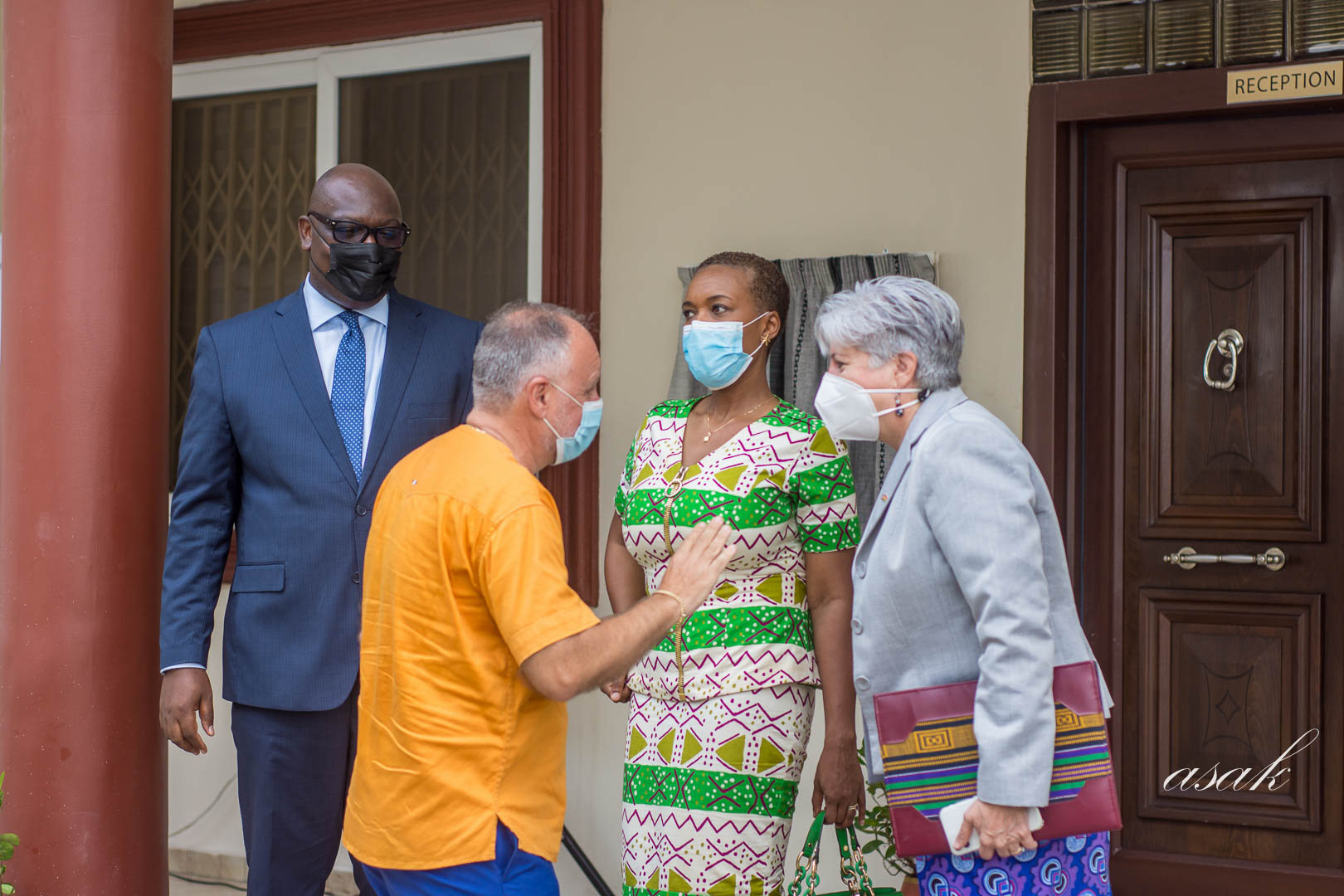
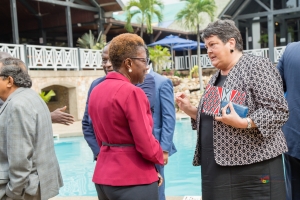
AmCham Ghana, on Monday, September 12, 2022, hosted a private meeting between visiting U.S Congressional Delegation, the U.S. Ambassador to Ghana, Virginia E. Palmer, and Executives of AmCham Ghana member companies to discuss issues of sustainability and environmental protection in the extractive industry, as well as further strengthing U.S. – Ghana relations and advocating for improved regulations to enhance the ease of doing business.

The U.S. Congressional delegation included Chairman Raúl Grijalva, House Natural Resources Committee (D-AZ), Congresswomen Jennifer Gonzáles Colón, House Natural Resources Committee (R-PR), Congressman Edward Case, House Natural Resources Committee (D-HI), Congressman Gregorio Kilili Camacho Sablan, House Natural Resources Committee (D-NMI), and Congresswoman Rashida Tlaib, House Natural Resources Committee (D-MI).

AmCham Members companies present at the meeting included, Joe Mensah, Senior Vice President & Head of Ghana Business Unit at Kosmos Energy, David Thornton Regional Senior Vice President at Newmont Africa, Adiki Ofeibea Ayitevie, Vice President, Sustainability & External Relations at Newmont Africa, Bharathwaj Kannan, Sr. Area Manager for North West Africa at Halliburton, Evans Sam, Operations Administrator at Boart Longyear, Theophilus Ahwireng, Chairman/Managing Director at MODEC Production Services Ghana JV Limited, Baafour Asiamah-Adjei, CEO at Genser Energy, Frances Rogoz, VP of Project Development at Genser Energy, Anna Klapper, VP External Communications at Genser Energy, Prince Agbeibor, Country Manager, Ghana & Ivory Coast at Schlumberger, Selom Akaba, New Units Projects Director Sub-Saharan Africa at GE Gas Power, Mark Pritchard, Country Manager at The Coca-Cola Bottling Company Of Ghana Limited, and  Joseph Dankwah, Business Development & Sales Manager -TechnipFMC Ghana, Equatorial Guinea & Ivory Coast.

2022 US – Ghana Business Forum | Leveraging AfCFTA to Promote U.S-Africa Commercial Partnerships

The U.S Chamber of Commerce and the American Chamber of Commerce, Ghana, will organize the 3rd high-level meeting between US and Ghanaian Government Officials and Businesses on the official visit of the Deputy Secretary of Commerce, Don Graves. The U.S.-Business Forum is aimed at deepening diplomatic and commercial partnerships between Ghana and the United States for the successful implementation of the African Continental Free Trade Agreement (AfCFTA). The theme for the 2022 U.S.-Ghana Business Forum is: “Leveraging the AfCFTA to Promote U.SAfrica Commercial Partnerships.” This event is in line with the drive by the AfCFTA Secretariat to engage the private sector, the African diaspora, and other strategic partners for the effective implementation of the Agreement.

When: Thursday, June 16th, 2022
Time: 9:00am-1:30pm
Where: Kempinski Hotel Gold Coast City, Accra

Click Here To Register

The forum will have plenary sessions with high-level government officials as speakers; and panel discussions on pertinent topics including Customs Modernization and Supply Chain Solutions to Promote Manufacturing Within the AfCFTA Zone; and Building Sustainable Digital Economy as a driver and an enabler for successful implementation of the AfCFTA.

Speakers at the forum include Honorable Ken Ofori-Atta (Minister of Finance) Deputy Secretary Don Graves (U.S Department of Commerce) Deputy Assistant Secretary Akuna Cook (U.S Department of State) Scott Eisner (President -U. S-Africa Business Center of the U.S Chamber of Commerce) Ayesha Bedwei IBE (President- American Chamber of Commerce in Ghana) and captains of the U.S-Ghana business community. The 2022 Forum aims to strengthen trade and investment, promote business partnerships, and opportunities between U.S. and Ghanaian businesses and review the manufacturing and digital sectors as enablers for the implementation of the single market project in Africa. At the end of the conference, it is expected that U.S.-Ghana commercial partnership will be projected and enhanced, focused on improving the investment climate in Ghana and the African continent.

Participants will be brought up to date on the latest trends in trade and investment on the continent and will have the opportunity to share their experiences and identify specific investment opportunities for future transactions. The Forum is organized by the American Chamber of Commerce (AmCham) Ghana U.S. Chamber of Commerce, and the U.S Embassy in Accra.

Africa Development Bank(AfDB) Financing Options and Strategies for Projects in Ghana

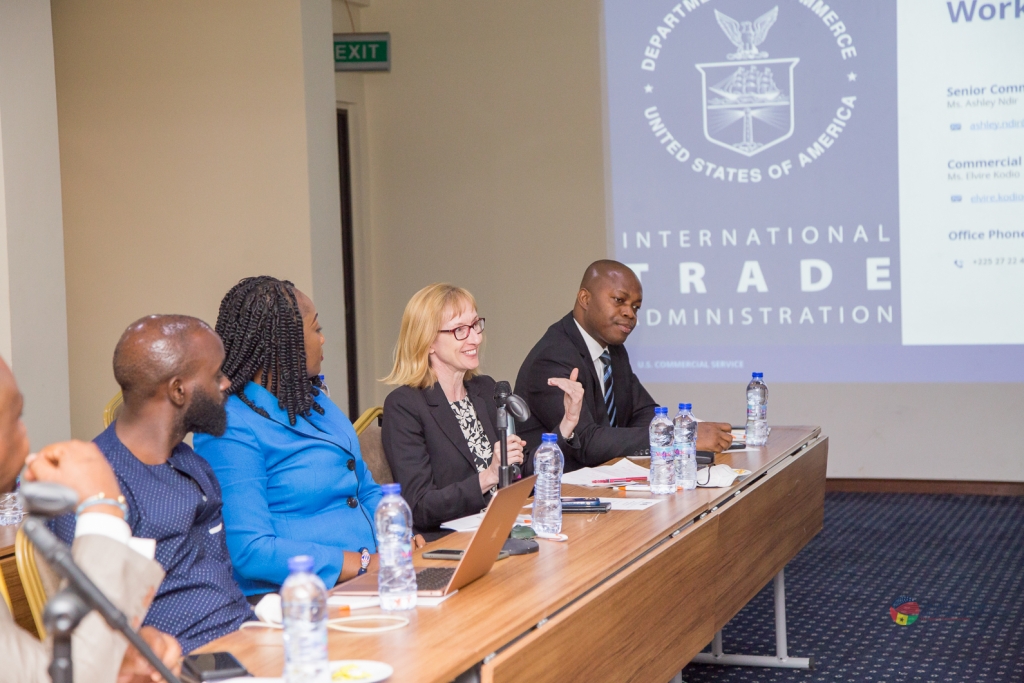
The Chamber, on May 26, 2022, hosted , Senior Commercial Liaison to the African Development Bank Group, and Elvire Yéré Kodio, MBA, Commercial Specialist to the African Development Bank, for discussions on the bank’s priority areas and strategy in Ghana and also how companies can properly position themselves to engage the bank.

The meeting was on the sidelines of AfDB’s 2022 Annual Meetings held in Accra.

Ashley Ndir presented the 0pportunities for U.S. companies, steps companies must follow for a successful engagement with the bank, and AfDB’s strategy for Ghana.

The AfDB Group provides assistance through two main windows – the African Development Bank (AfDB), which lends at market-based rates, and the African Development Fund (ADF), which provides grants and concessional financing to the least developed countries of the continent. The Bank also manages Trust Funds. ​

Opportunities available at the bank includes Project Procurement, which allows the country’s government to borrow funds from the AfDB Group for a public works project (goods, works, services), Corporate Procurement, with this AfDB Group itself, runs a competition for services, goods and works for its internal needs, and finally, Private Sector Financing, this allows the U.S. and other AfDB member country private sector firms partner with AfDB Private Sector Operations on financing solutions in support of private sector activities.​

The AfDB has provided financing for projects in various sectors of the Ghanaian economy, including the transport and Agricultural sectors, with the majority of funding.

This event was held in collaboration with the U.S. Embassy in Ghana and the U.S. Commercial Service.

Click Here to Download Presentation


AmCham Ghana Commissions Its New Secretariat

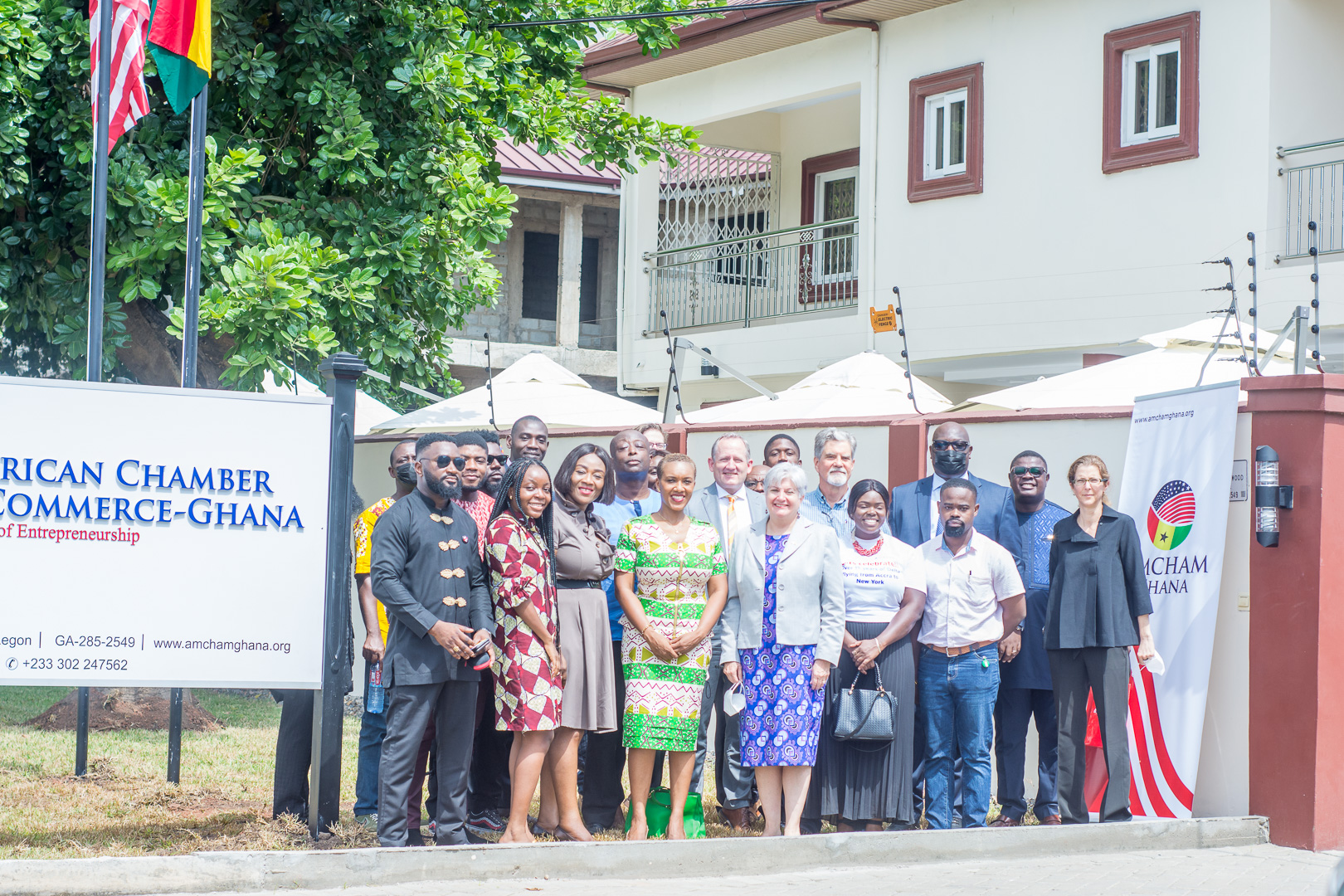
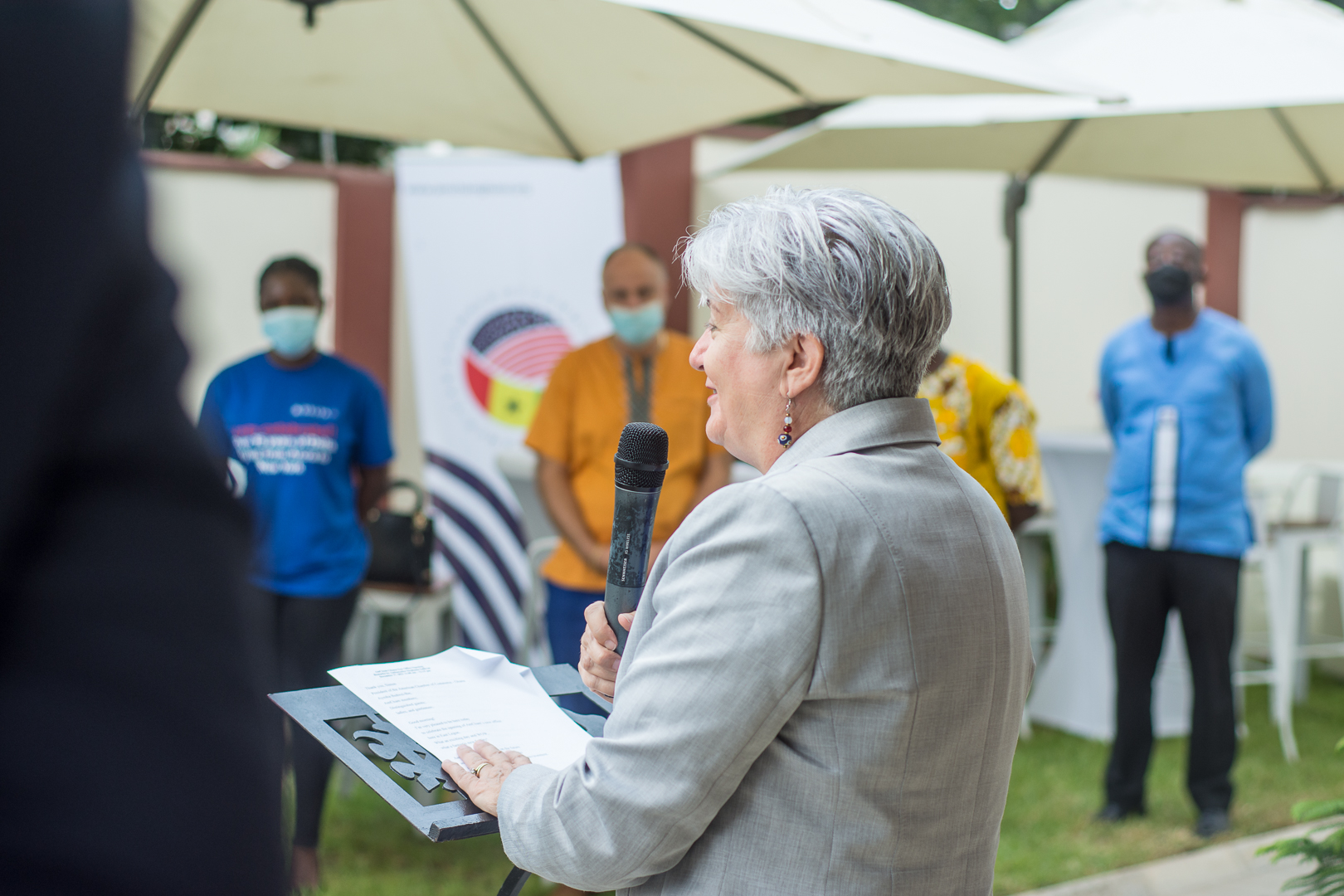
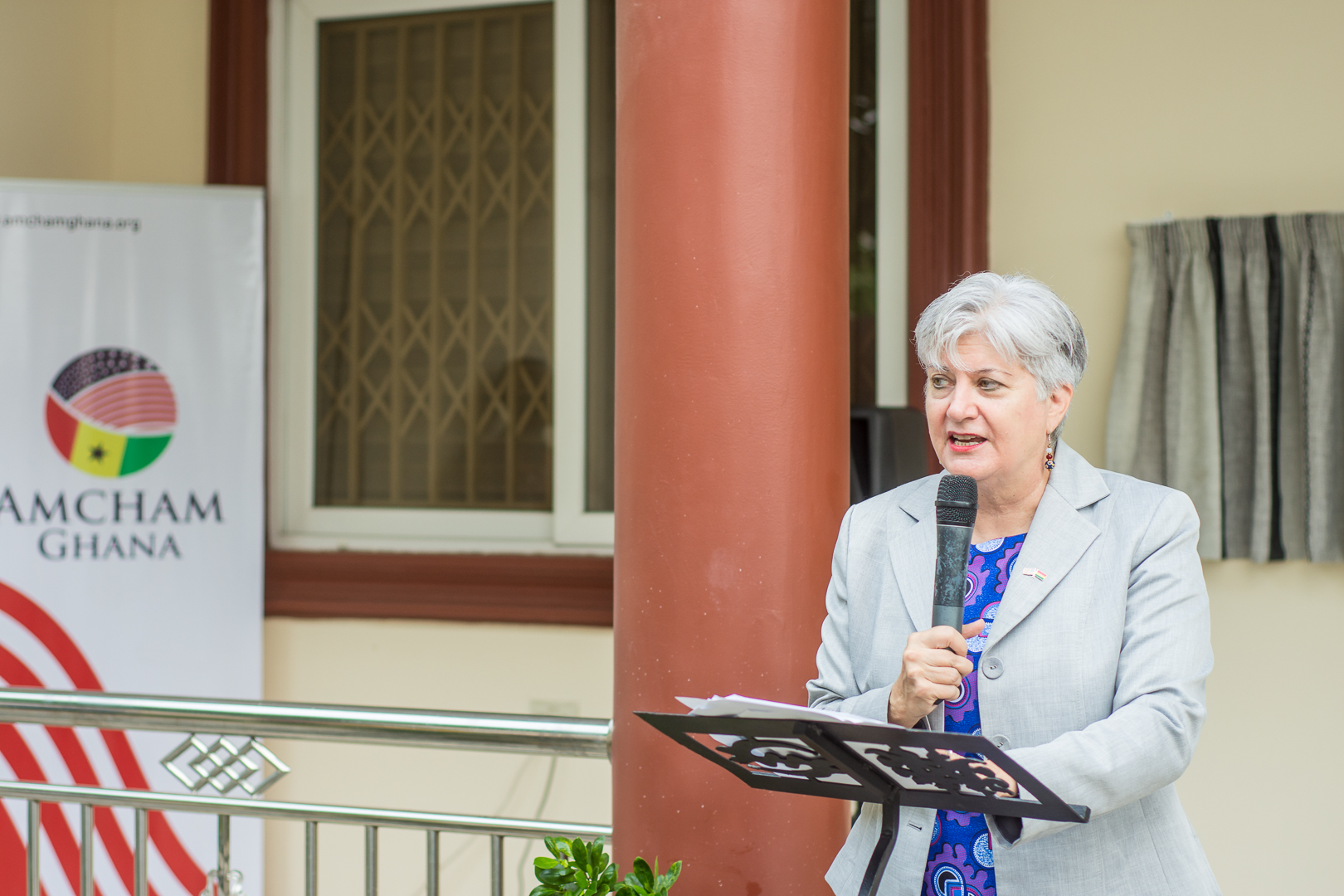
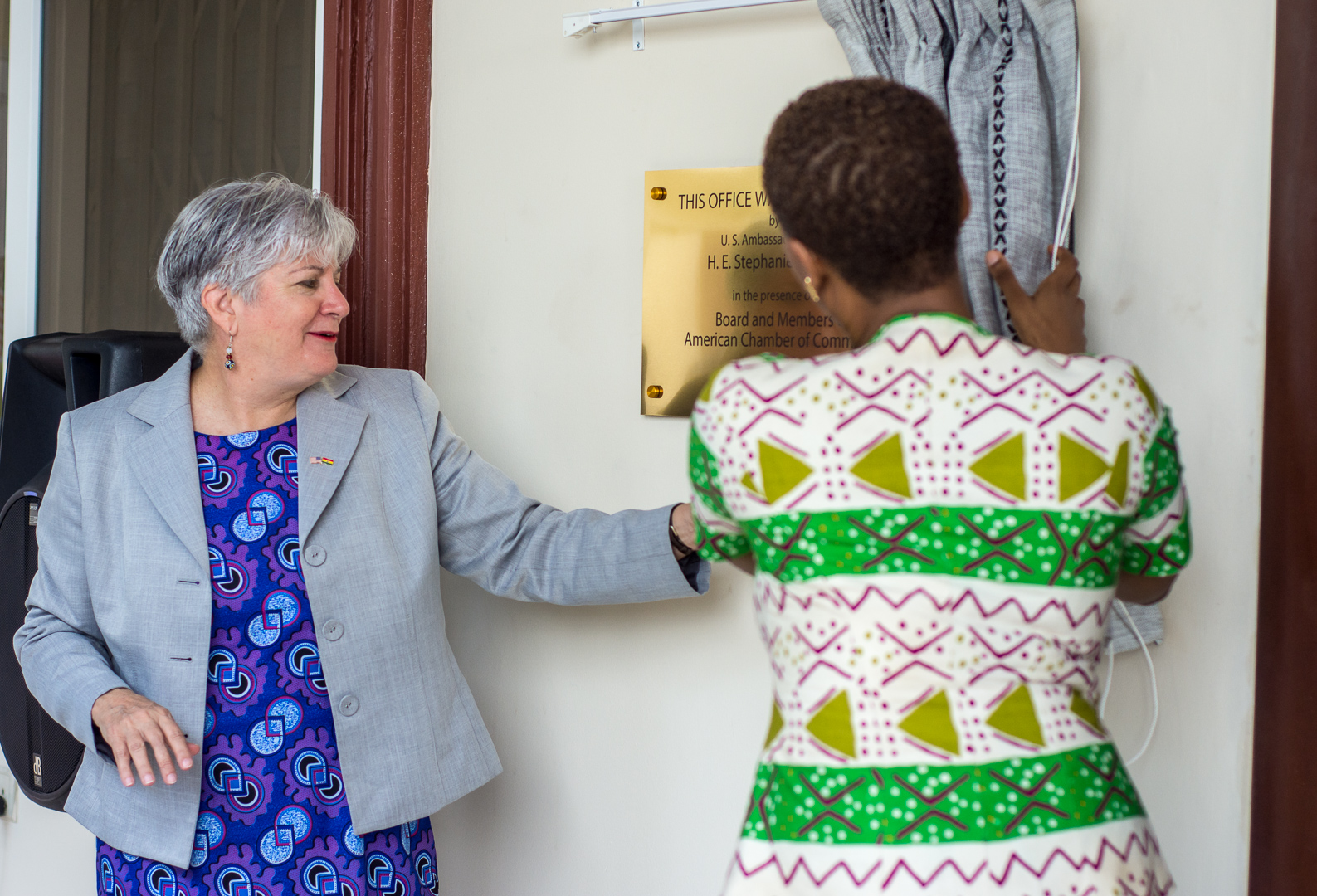
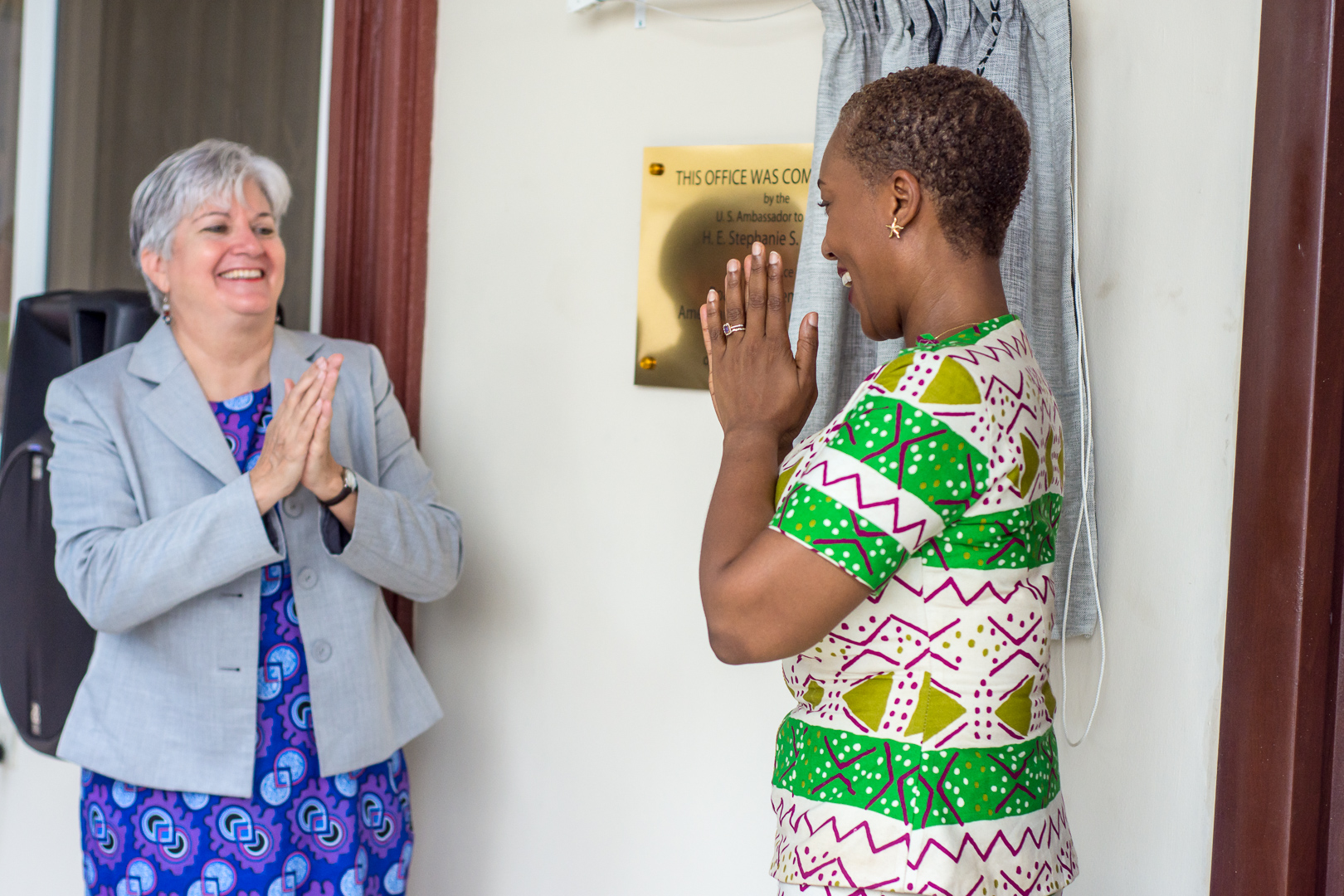
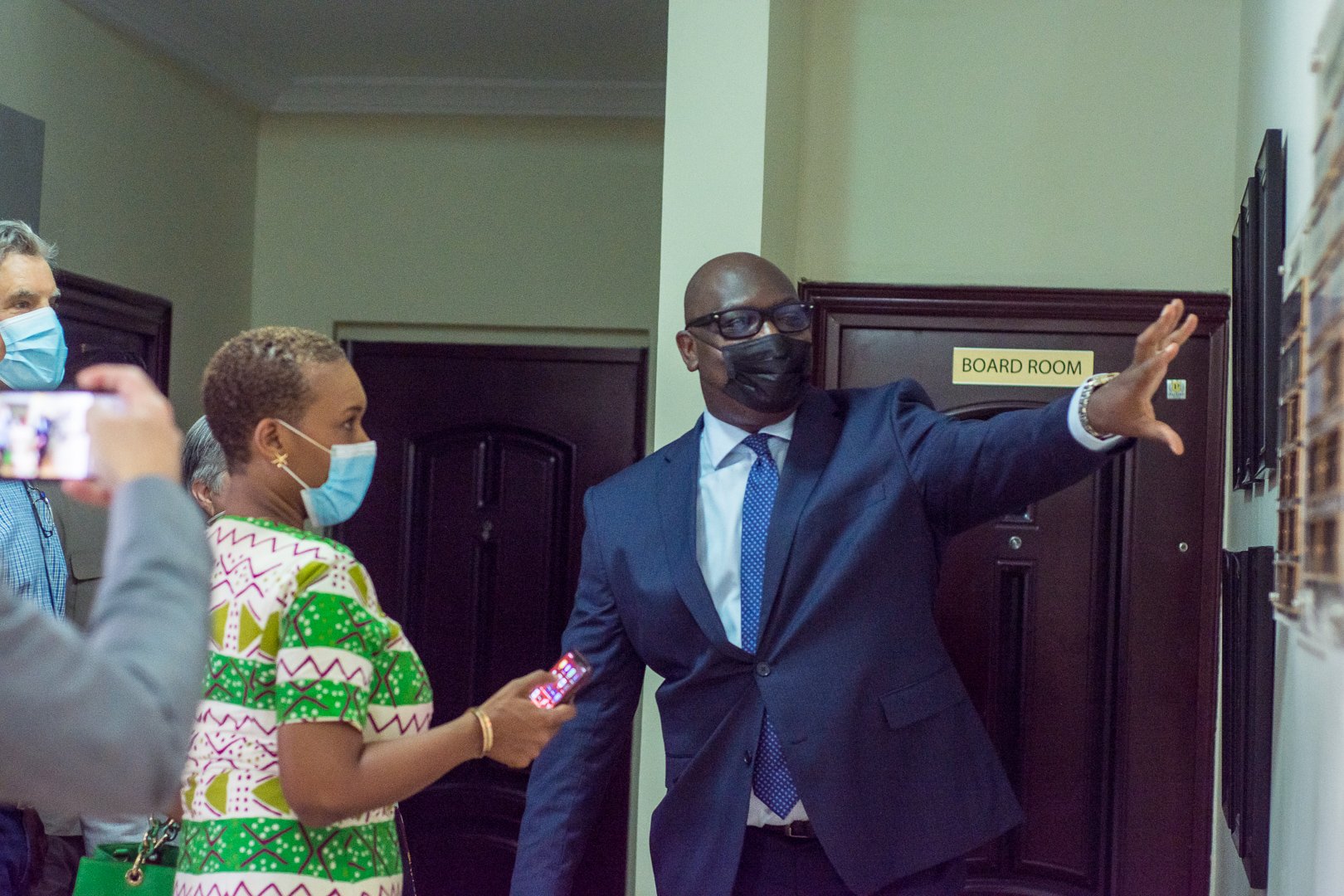
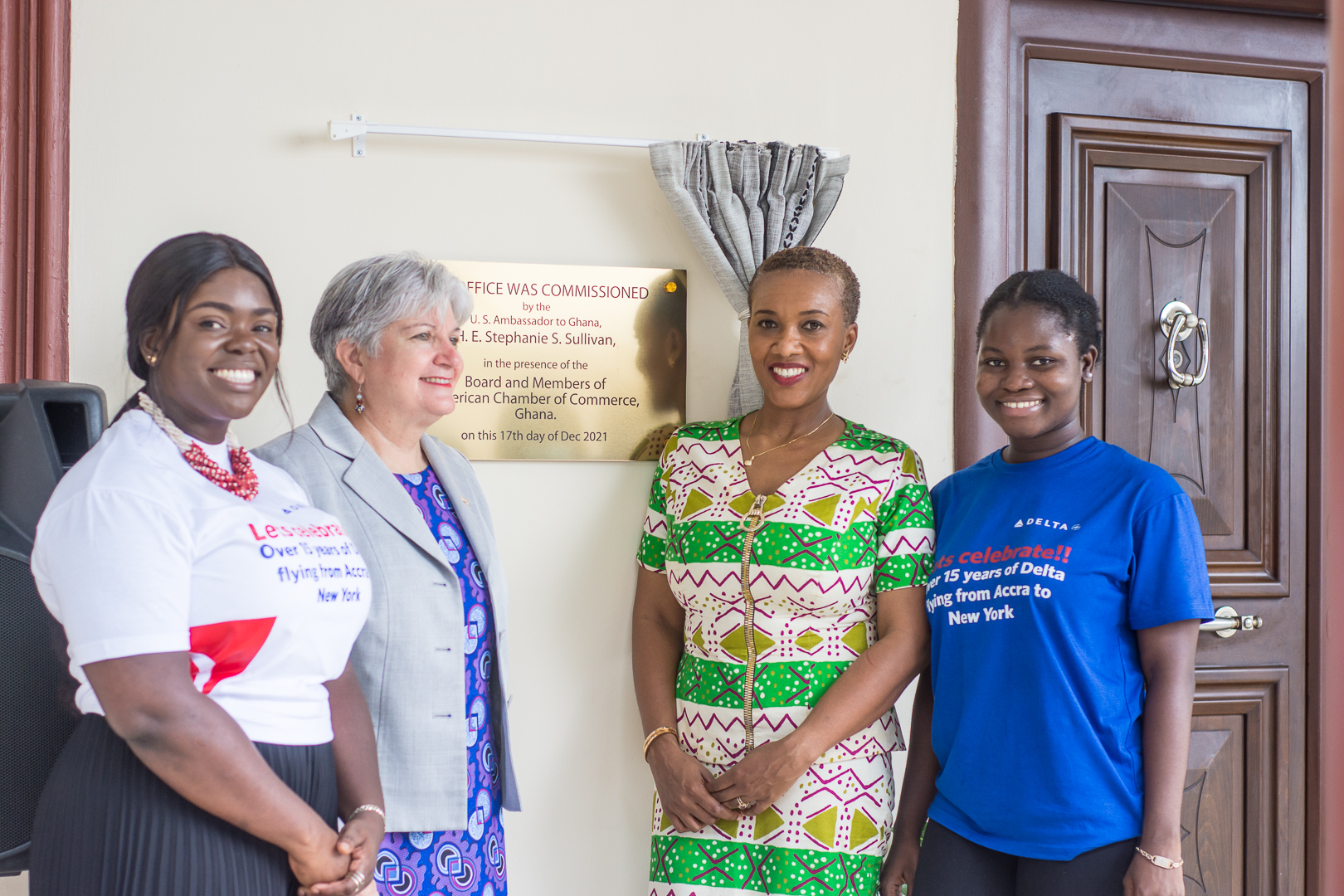
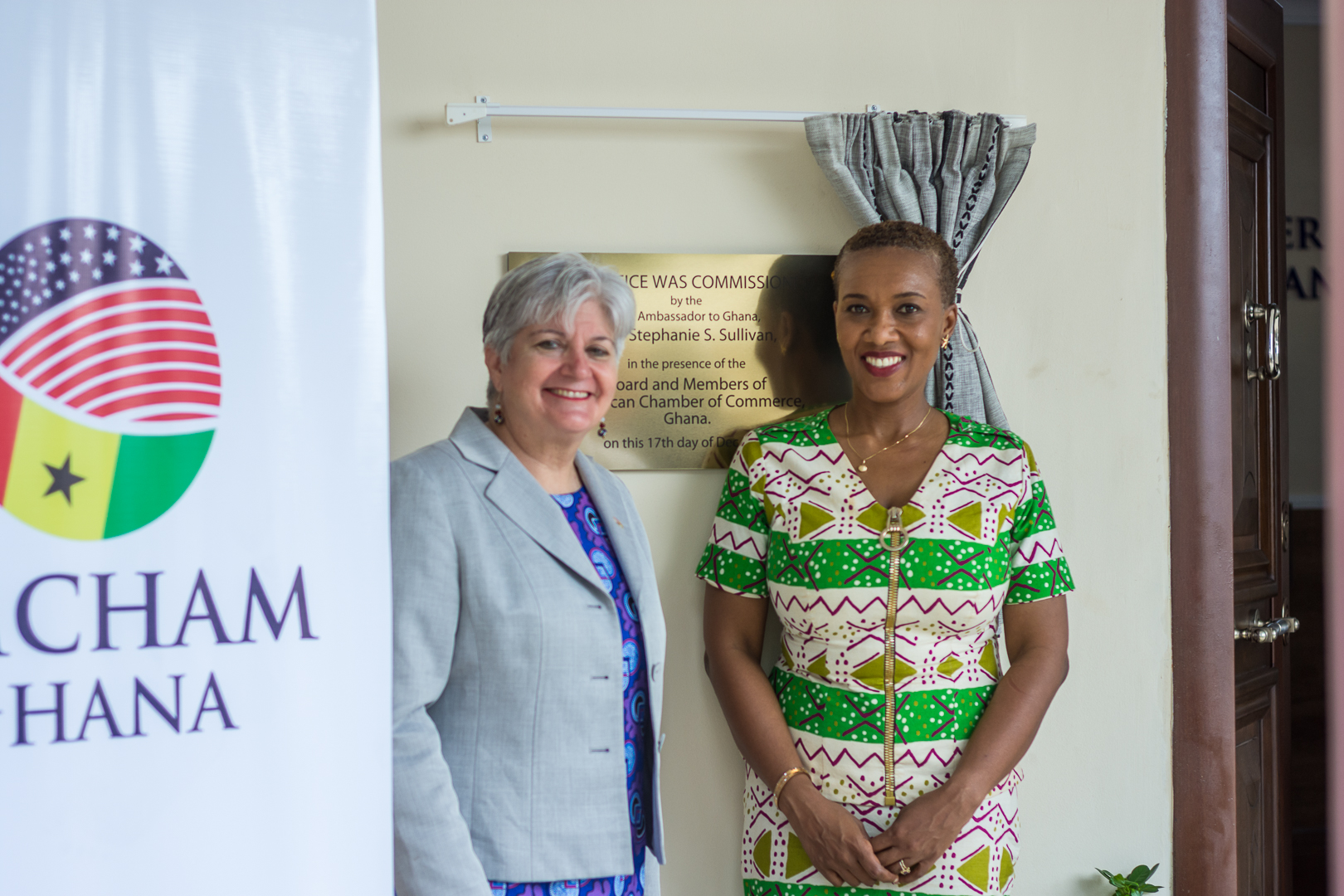
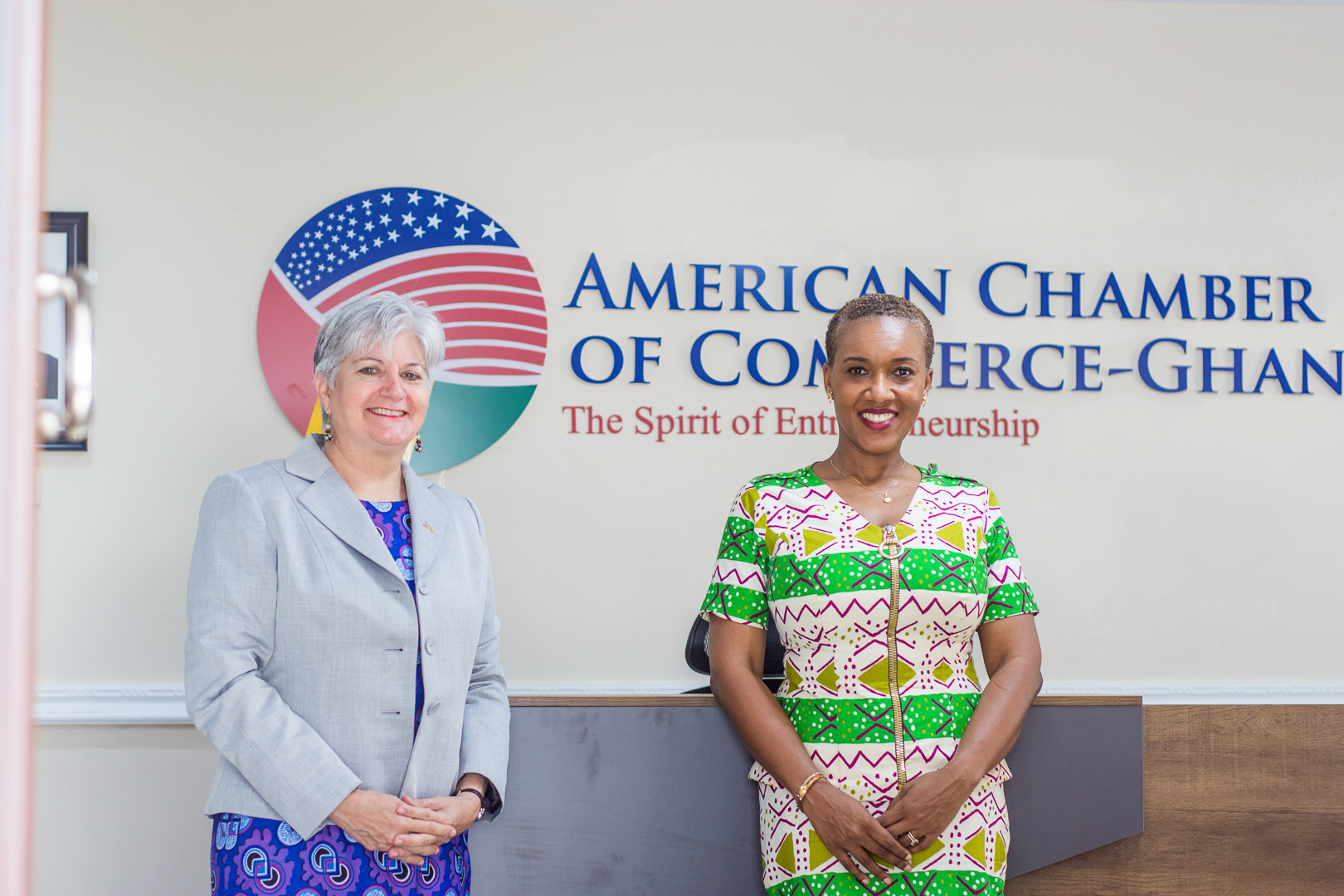
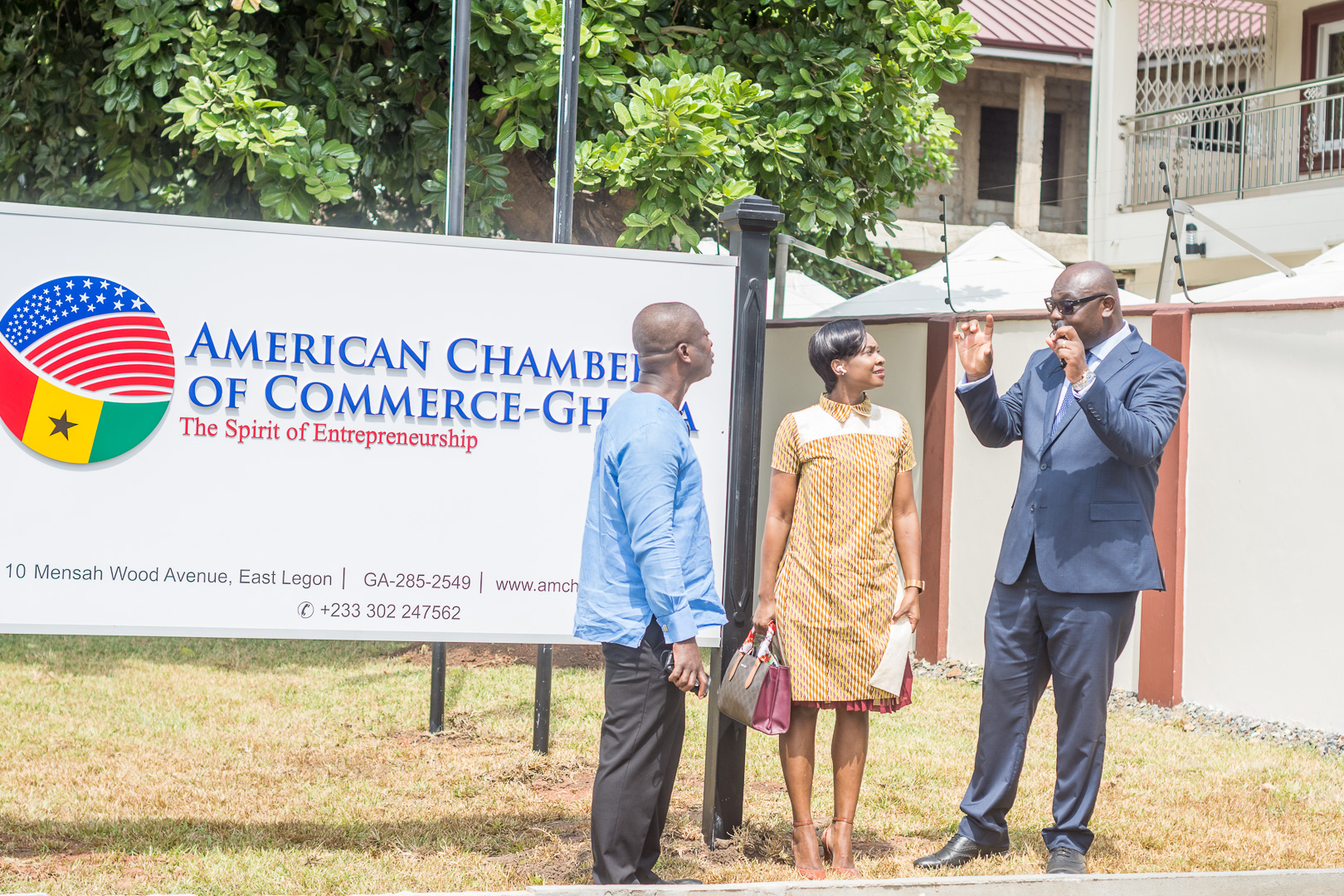
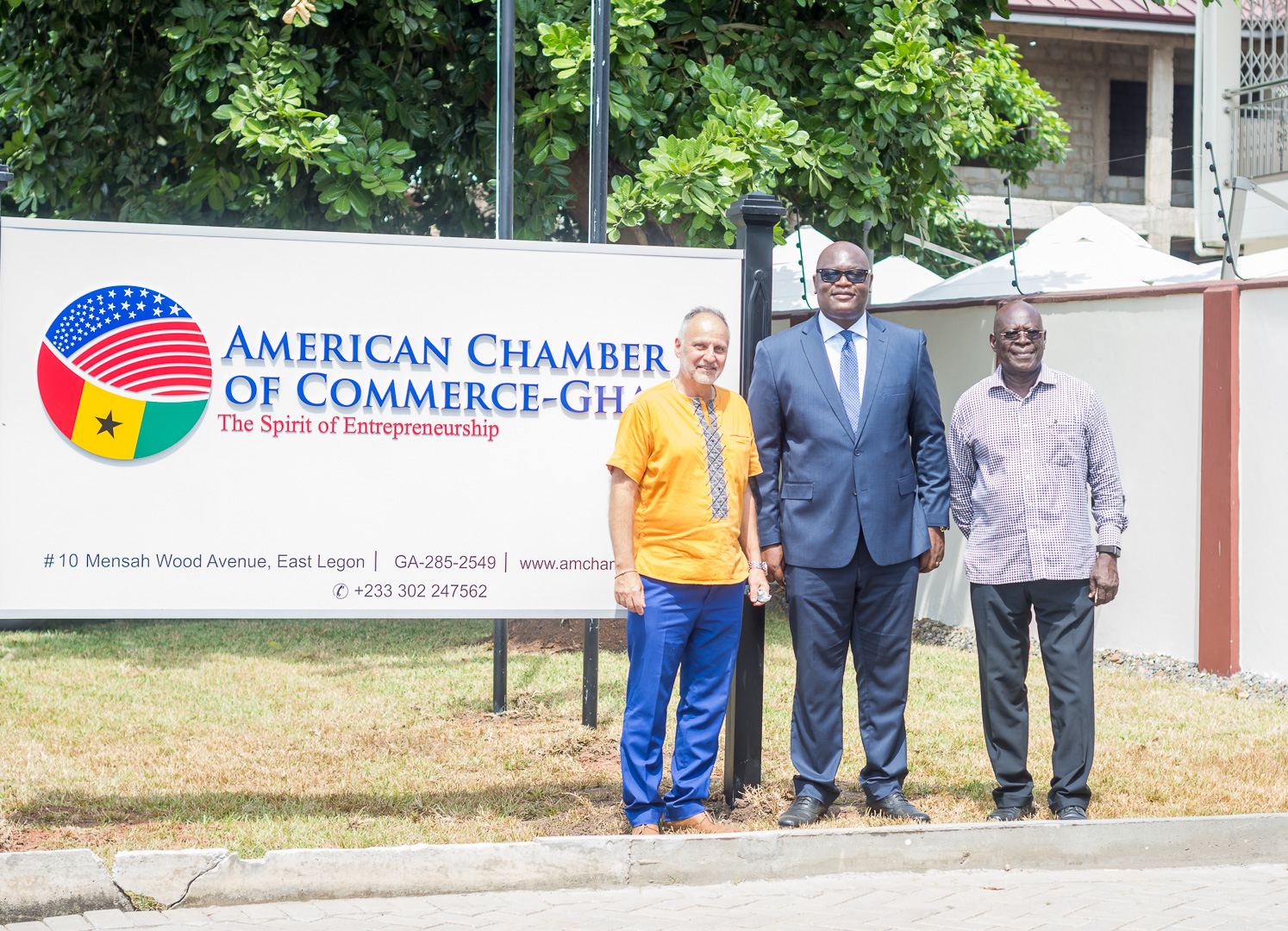
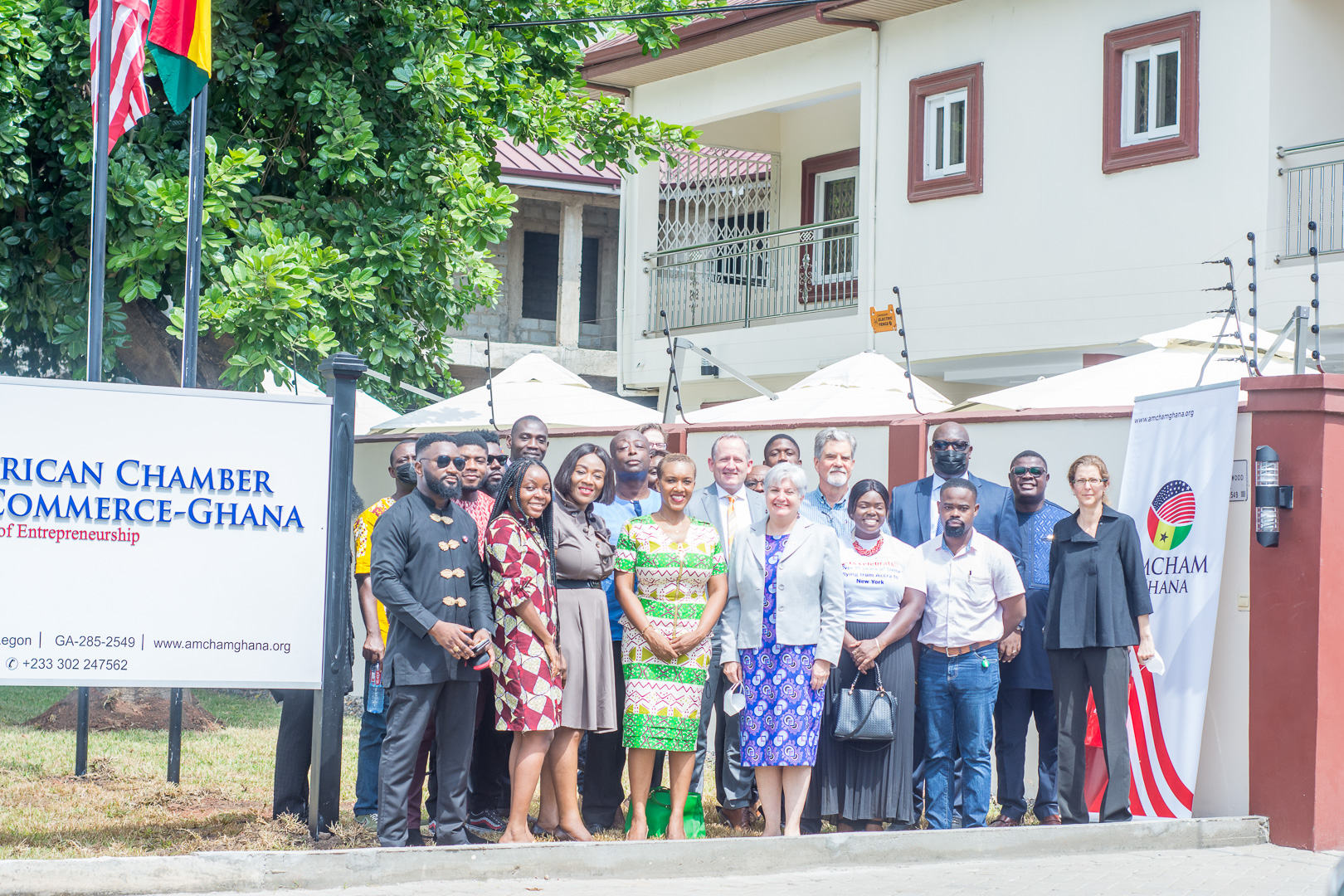
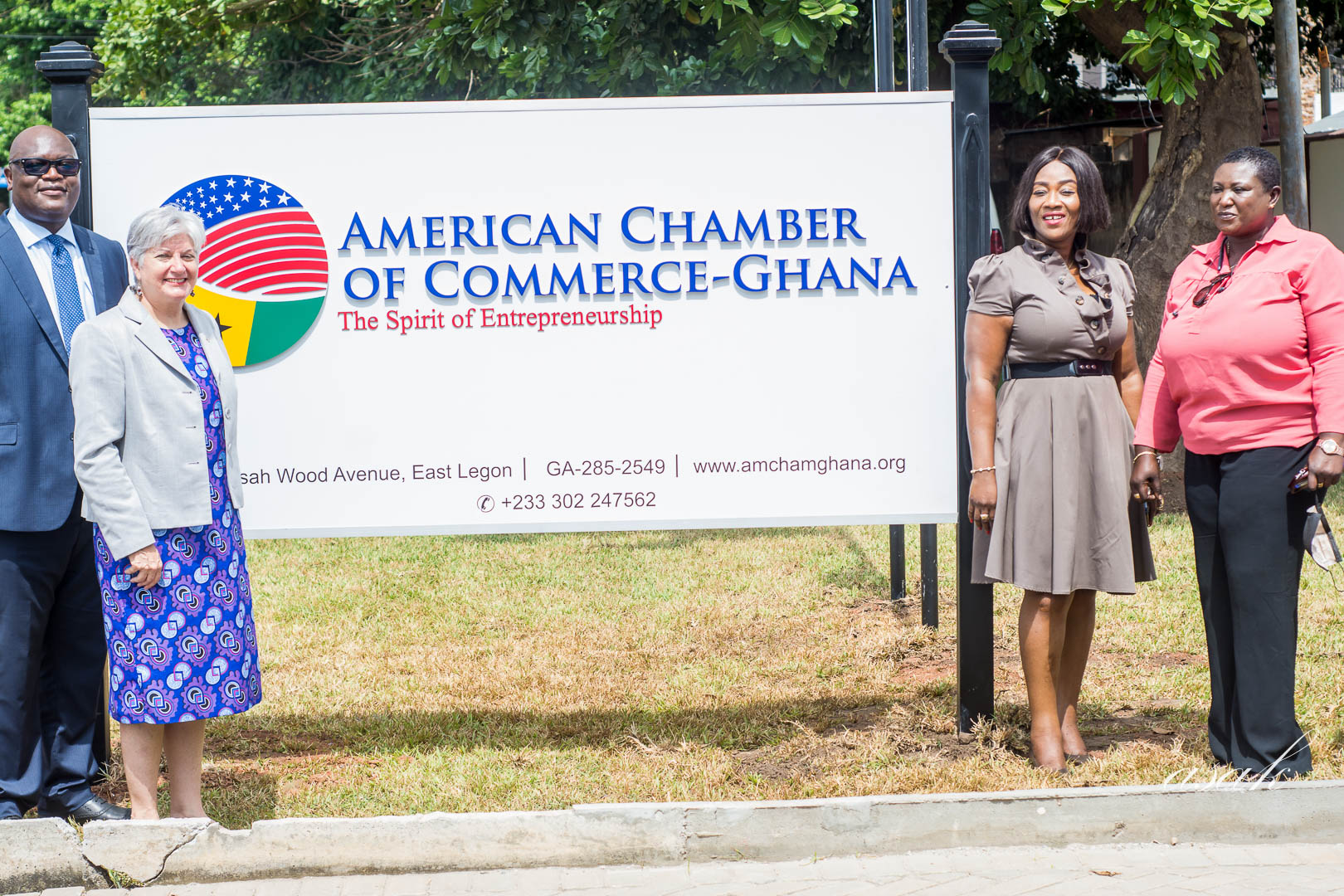
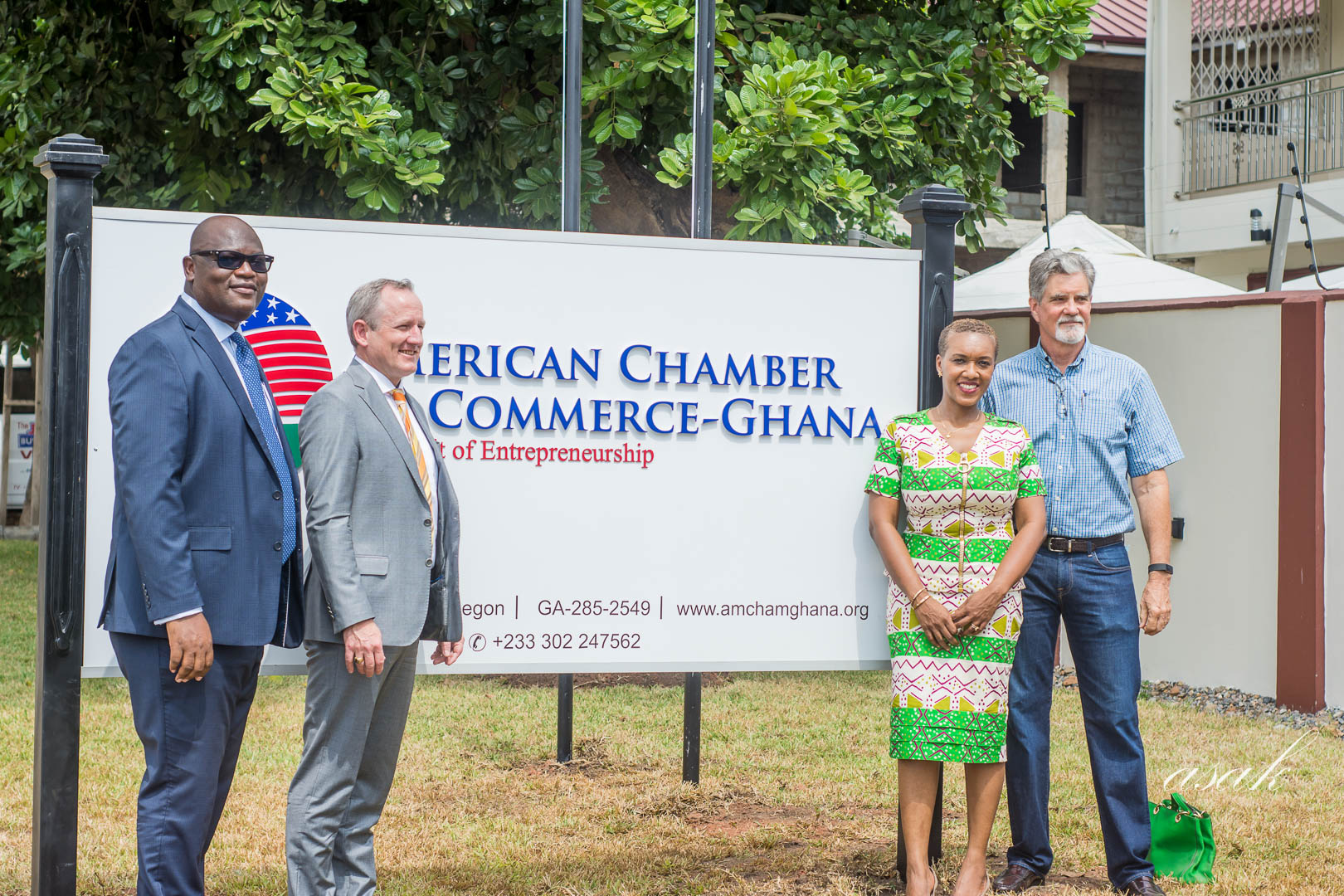
The United States Ambassador to Ghana, Stephanie Sullivan, on Friday, 17 December 2021, commissioned the new AmCham Ghana secretariat at no. 10 Mensah Wood Avenue, East Legon, Accra. 

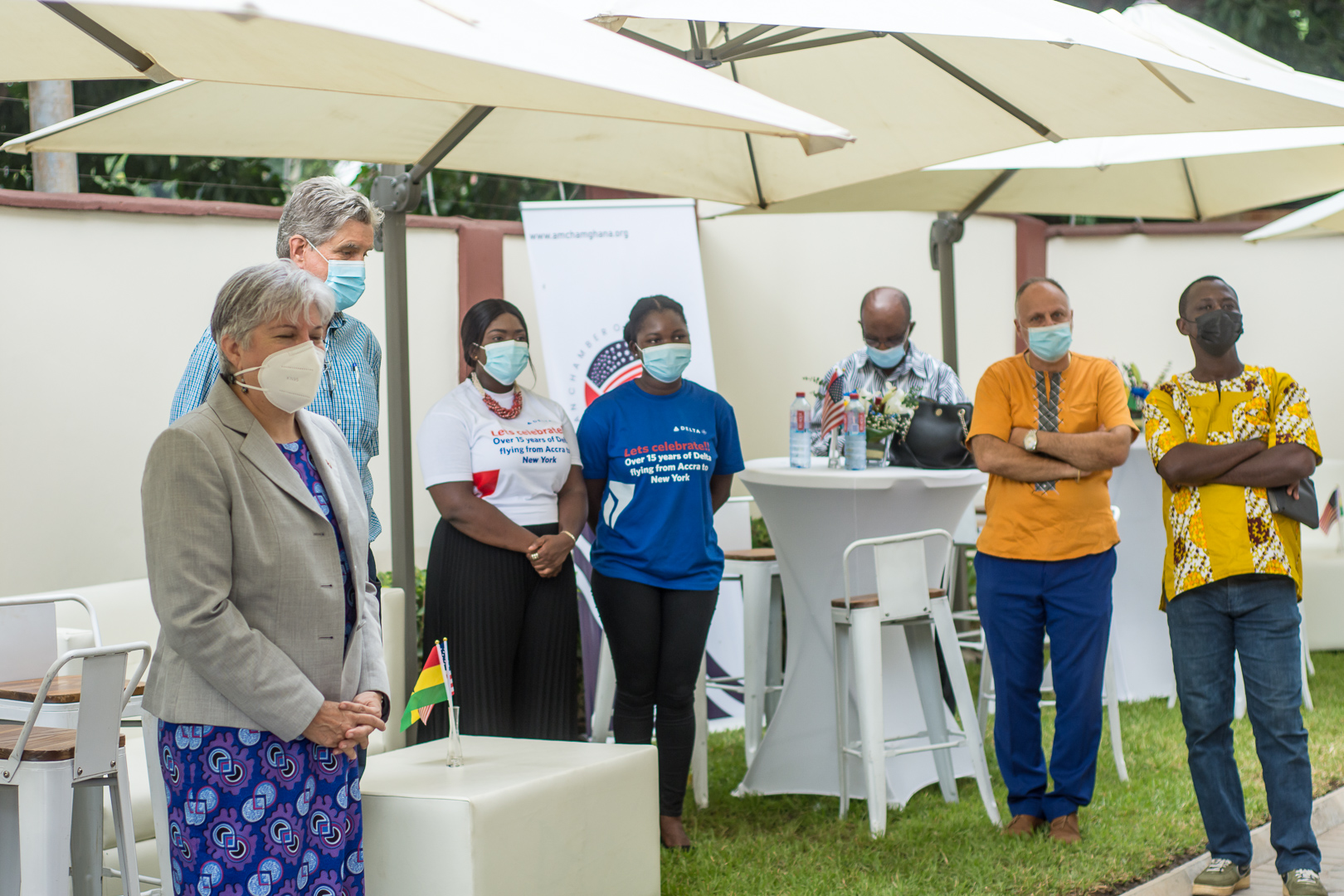
Also present at the commissioning were AmCham Ghana President, Ayesha Bedwei Ibe, Executive Secretary, Simon Madjie, Counselor for Commercial Affairs at the U.S Embassy in Ghana, Dean Matlack, Former AmCham Ghana President, William Ohrt, some Chamber members, associates, and staff.

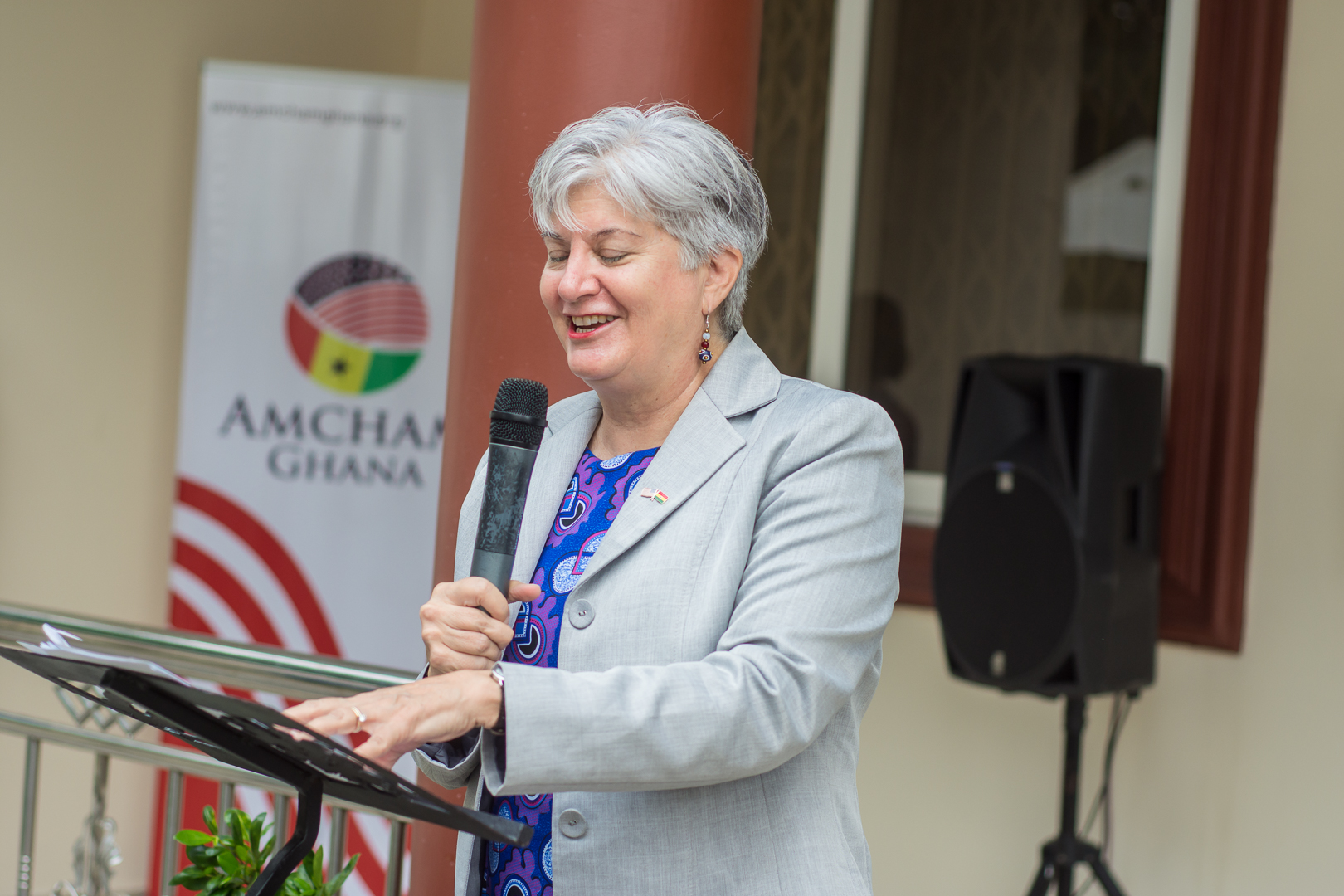
Speaking at the event, Ambassador Sullivan noted that, ”AmCham Ghana has its eye on the future as it looks to position itself for success in Africa’s rapidly changing business environment.”  ”AmCham plays an important role in attracting and keeping those companies in Ghana,” she added.

The new AmCham Ghana secretariat hosts the newly created African Continental Free Trade Area (AfCFTA) Resource Center aimed at proving U.S. companies an in-depth understanding of the implementation of the AfCFTA agreement as well as helping them navigate opportunities presented by the continental trade pact.

Commenting on the Resource Center, the Ambassador noted that Africa’s economy continues to develop and opportunity is ripe for the AfCFTA to deliver on its promise to expand intra-regional trade and capture new foreign direct investment. ”And with this new Resource Center, Ghana will be there to help American companies navigate those opportunities,” she added.

Our President, Ayesha Bedwei Ibe, during her remarks, expressed her appreciation to members and associates for their continued support and noted that as part of the Chamber’s effort to boost trade between Ghana and the United States, AmCham will hold forums targeted at helping Ghanaian businesses invest in the United States.

Virtual Meeting on Business and Cybersecurity: Emerging Cyber Threats

Many people think that cyber security refers to the software and monitoring that protect their email, operating system, network, and printing devices from malicious attack or data theft. Admittedly, this is a large and important part of cyber security for businesses. But management and employees also play a significant role in making sure your company is protected.

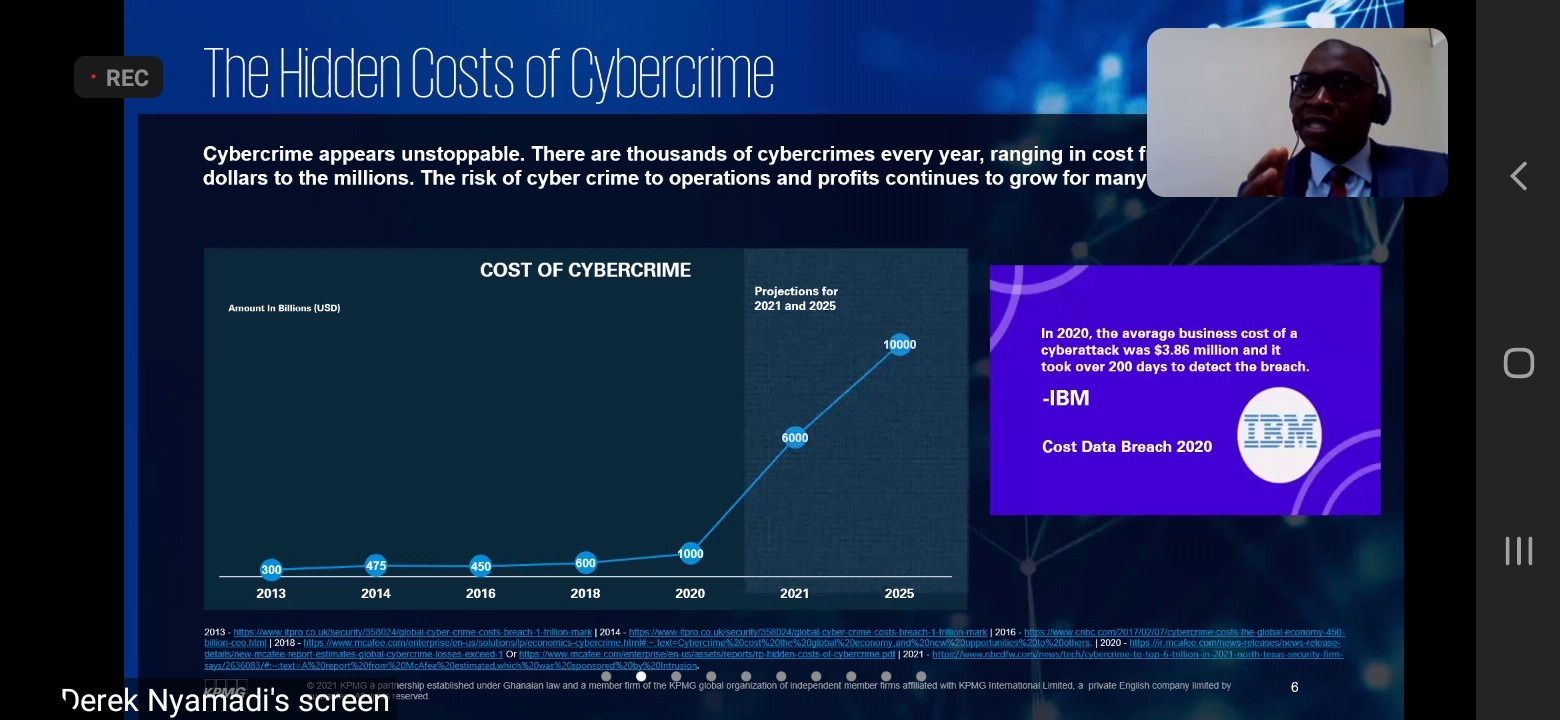
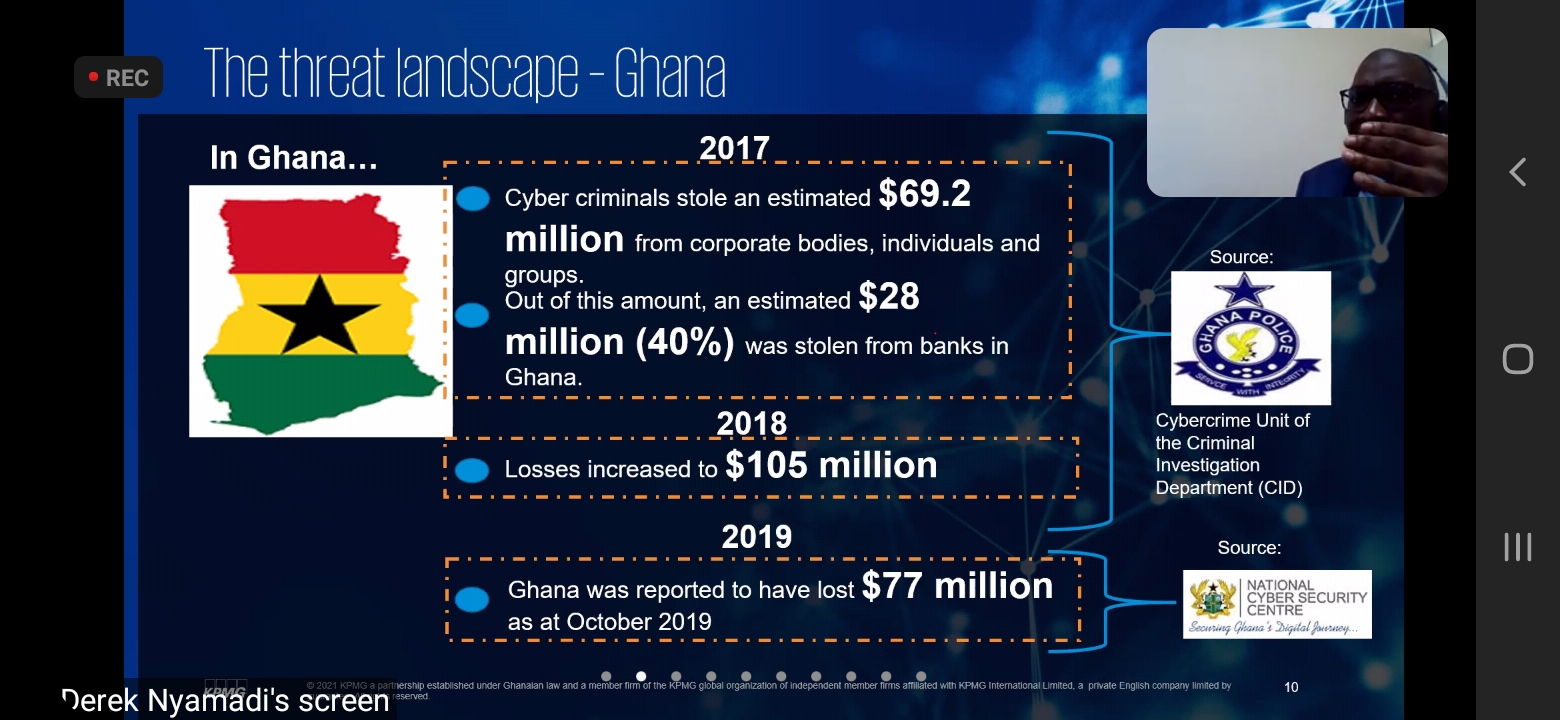
In this month of cybersecurity awareness, AmCham Ghana, on October 27, 2021, collaborates with one of the leading business advisory firms KPMG for a virtual meeting on Emerging Cyber Threats in the business environment. Speakers at this event were the Associate Director for the IT Advisory unit of KPMG,  Samuel Aluko, and Information Protection and Business Resilience Manager, Chris Owusu-Ansah.

According to the KPMG Cyber Security Catalogue, cyber risk is an everyday business consideration in the way that threats in the real world have always been.

Discussions focused on the cyber threat landscape, cyber resilience, key cyber considerations for business, and regulatory requirements and standards.

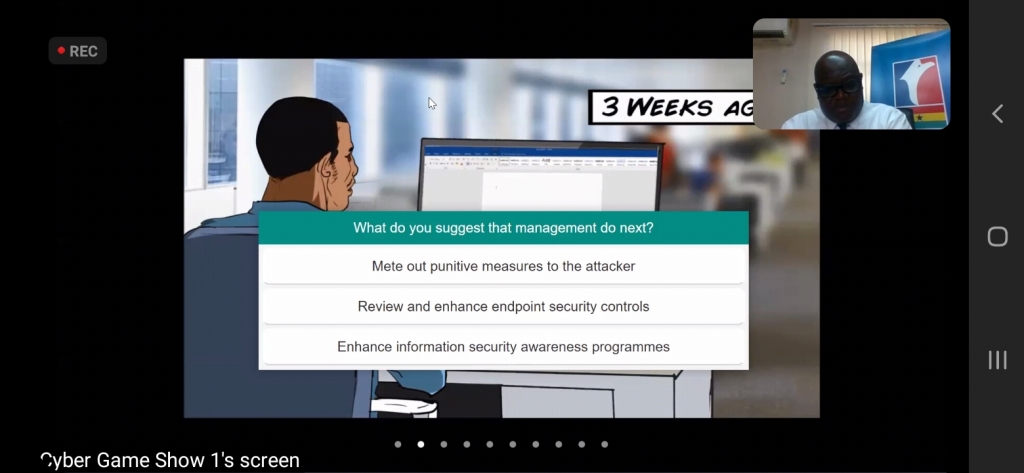
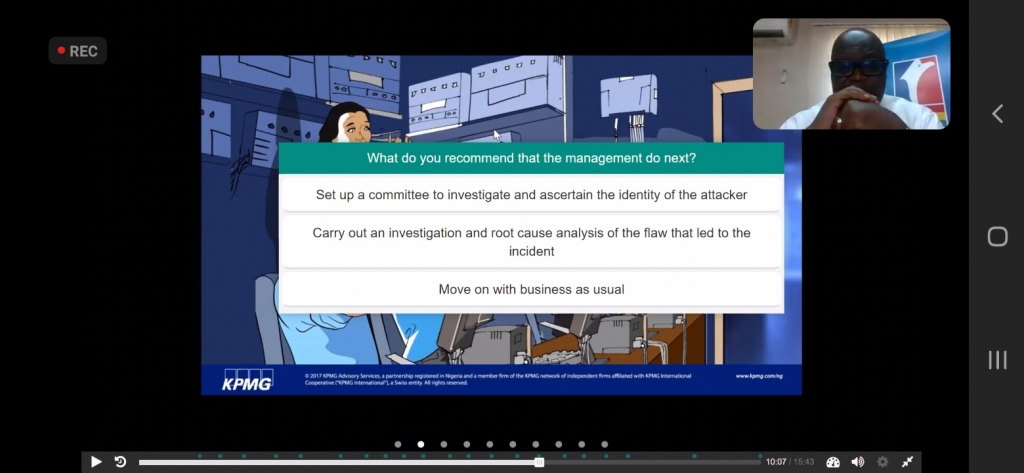
The event also featured a cyber game that shared light on cyber risks and what management can do to address these risks.

Kindly watch the full meeting below for an insight into everyday cyber threats that businesses are exposed to and what can be done to avoid or mitigate its impact.

AmCham Hosts The Maiden Money Series Featuring Standard Chartered Bank

The chamber hosted the maiden AmCham Money Series featuring Standard Chartered Bank Ghana, to discuss among other issues, the effects of coronavirus on the country’s economy, investing during and post COVID-19, and the $1 billion SC bank financing for companies.

The event was the first of series of webinars to be hosted by the chamber to provide critical information to help businesses mitigate the impact of the pandemic.

Speakers at the first AmCham Money Series included Jojo Bannerman, Head of Financial Markets Sales at SC Ghana Limited, Xorse Godzi, the Country Head for Commercial Banking at SC Ghana Limited, and Setor Quashigah, Head of Wealth Management at SC Ghana Limited.

Jojo Bannerman highlighted the country’s economic sectors that have been impacted by the pandemic. Though he cited the Fiscal Gap of GHS 11.4bn (2.9% of GDP) and the worsening of Fiscal Deficit from -4.7% to -6.6% (SCB Research -7.8%; IMF -6.4%), the disruptions in global supply chains and the shortfalls in petroleum receipts of GHS 5.679 bn (assume 30 $/bbl average price) as some of the negative impacts of the virus. He mentioned there were some gainers.

He said with the new trend of working from home, companies have had to acquire gadgets and data plans for employees. This has positively impacted the business of companies operating the Information & Communication sector, he said.

Other gainers include the food value-chain and retail sales, which picked in March 2020 due to panic buying that preseeded the partial lockdown.

Mr. Bannerman also said companies are adopting what is termed the new normal by shifting to telework (Work from home/ Flexi-Work schedules), education & online certification, and digital commerce and marketing (accelerate the use of digital payment solutions).

Xorse Godzi, the Country Head for Commercial Banking at SC Ghana Limited, shared the bank’s response to the pandemic in terms of relief. The Standard Chartered Bank Group made available at least USD 1 billion financing commitment at preferential rates to pharmaceuticals and medical supplies companies, healthcare providers such as hospitals and pharmacies, and non-medical companies that can support the fight against the virus.

Local clients of the bank can also access this fund, according to Xorse, over USD 10 million has been approved with additional potential opportunities of over USD 20 million.

In response to the President’s Address and Bank of Ghana interventions, the bank has reduced interest rates and offered repayment tenor extensions for relevant existing clients. They have also put a freeze on fees for relevant transactions within Retail Banking.

Standard Chartered Bank Ghana is also supporting vulnerable communities in Ghana to mitigate the impact of the pandemic.

Head of Wealth Management at SC Ghana Limited, Setor Quashigah, talked about investing during and post COVID-19. She Shared tips on growing wealth and advised investors to know their risk profile, invest for the long term, and be disciplined; stay the cause. Mrs. Quashigah also said properties and family finances must be protected through insurance.

You need a plan to invest. According to Setor, you must assess your financial position to know your net worth, be mindful of your periodic obligations, invest only the part of the Net Liquid assets you do not need in the short term, use income investing strategies to fund your recurrent expenses, build a portfolio of short, medium and long term investments, and diversify.

Mrs. Quashigah also shared some exciting Standard Chartered Bank products, learn more here https://www.sc.com/gh/invest/

AmCham Ghana Holds the 2020 Economic Outlook Forum

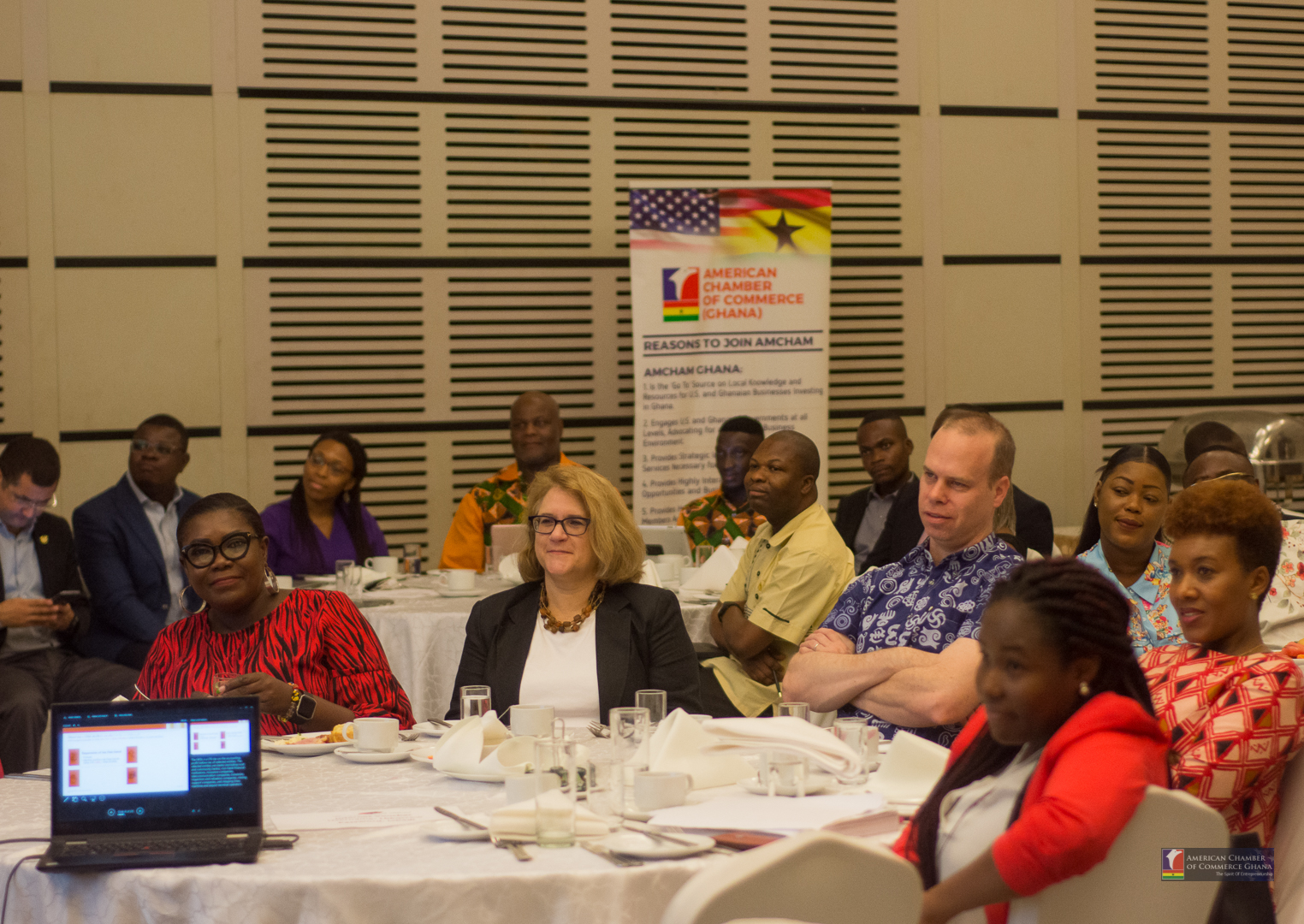
The American Chamber of Commerce, Ghana, on Friday, January 10,  held the 2020 Economic Outlook Forum to provide members with insights on the 2020 Budget Statement of the Government of Ghana, the implications of tax and fiscal policies on businesses as well as highlight compliance with existing and emerging legal and regulatory policies.

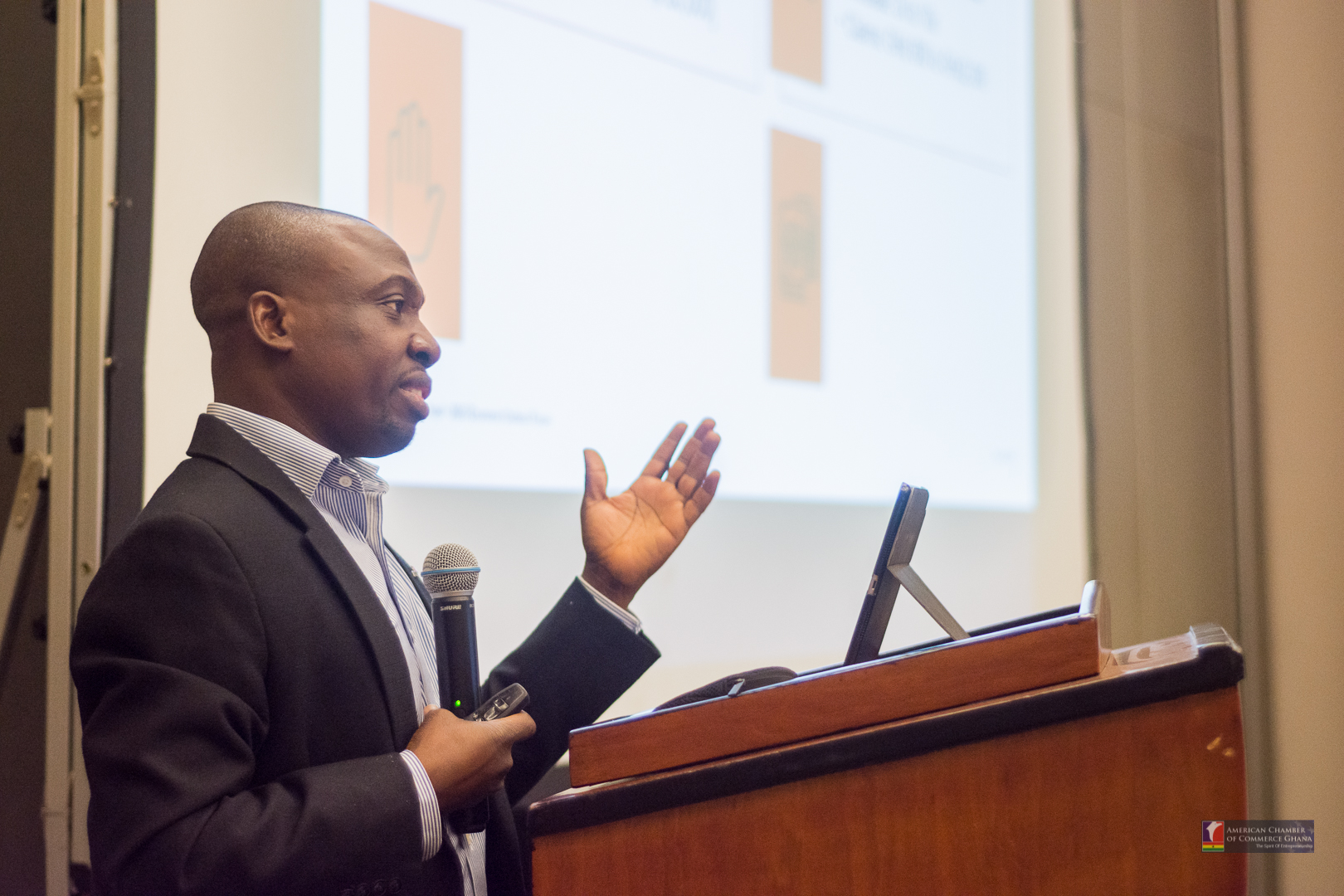
Abeku Gyan-Quansah, Tax Partner at PwC, presented Ghana’s 2020 Economic Outlook with emphasis on the 2020 Budget Statement and its impact on business, the state of the economy, the new companies act, and the proposed tax exemption bill.

Mr. Gyan-Quansah, in his presentation, noted that the Government of Ghana expects to achieve a real GDP growth (including oil) of 6.8%, an end of period inflation of 8%, and an overall fiscal budget deficit of 4.7% in 2020. He stated that the government’s expenditure for 2020 is estimated to be GH¢84.5 billion, and its total revenue is estimated to be GH¢67.1 billion resulting in a deficit of GH¢17.4 billion.
According to him, although from experience, governments are prone to overspend in an election year, the overall fiscal deficit in 2020 is expected to remain within the 5% threshold imposed by the Fiscal Responsibility Act (2018) which requires fiscal deficit to be up to 5%.

He mentioned that of the GH¢67.1 billion revenue expected in 2020, the government intends to generate GH¢51.5 billion from taxes alone (GH¢26.6 billion from income and property tax, GH¢19.1 billion from taxes on goods and services and GH¢5.8 billion from international trade tax). He cautioned that given that Ghana’s economy is largely informal and the fact that 2020 is an election year, the government will pursue companies rather than individuals to be tax compliant in 2020.

He also stated that the government’s anticipated GH¢26.6 billion revenue from direct taxes represents a 20% increase from the revenue generated in 2019. And to achieve this growth in revenue, it is likely the government will introduce new taxes in addition to existing measures. The new measures, he said, could include:

  • increase in the tax-free band for individuals to ensure that the minimum wage for 2020 is tax-exempt;
  • increase in personal reliefs such as marriage relief, child education relief, personal educational relief, and old age relief;
  • renewal and extension of the National Fiscal Stabilization Levy (NFSL); and
  • a 5% tax on the accounting profit before tax of selected entities;
  • a requirement for taxpayers to disclose their aggressive tax planning arrangements under the relevant Base Erosion and Profit Shifting (“BEPS”) Action Point.

For indirect taxes, Mr. Gyan-Quansah noted that the government intends to introduce new policy measures in addition to existing ones to achieve its 2020 revenue target. The new policy measures include:

  • the renewal and extension of the Special Import Levy for five years;
  • strengthening the regulatory framework for taxation of the digital economy;
  • Value Added Tax (VAT) exemptions for fund management companies; and
  • the Automative Manufacturing Development Policy which offers three to ten years of tax holidays as well as VAT and Special Import Levy exemptions for businesses in the automotive industry for vehicles.
He explained further that the government will introduce tax-related administrative measures to enhance revenue mobilization. According to him, the tax administrative measures include:

  • a Revenue Administration Regulation which includes a voluntary disclosure procedure to waive penalties on voluntary disclosure by taxpayers and an Alternative Dispute Resolution to resolve tax disputes between taxpayers and tax administration;
  • reforming the Ghana Revenue Authority to make it more efficient and productive; and
  • developing a comprehensive revenue policy and strategy.

He added that Ghana now has a Tax Exemptions Bill with clear procedures for obtaining tax exemptions, but the bill is yet to be passed into law, although the government had intended to pass it in June 2018. He, therefore, called on parliament to speed up processes to pass the bill. He also noted that the Tax Exemptions Bill, if passed into law, will repeal any existing enactment related to tax exemptions except for enactments in income tax and the VAT.

Constance Ameyartey, Chartered Secretary, PwC, briefly educated members of the chamber on major changes in the new Companies Act 2019 (Act 992). She noted that, apart from companies operating in regulated industries, the new Companies Act grants companies the option to file a registered constitution upon registration with the Registrar of Companies. She added that the Companies Act 2019 (Act 992) also ensures easy identification of the actual legal form of a registered company.

She also explained that under the new Companies Act, a person appointed a director of a company must among other things consent in writing, should not be an ex-convict or found culpable for any criminal offense within the preceding five years. According to her, the new Companies Act also outlines specific qualifications and duties for secretaries that companies must comply with. Also, the new Act stipulates that auditors can be appointed by a company for six years and can be reappointed after another period of six years. She further explained the provisions under the new Companies Act on beneficial ownership, dealing with major transactions, and unclaimed dividends.
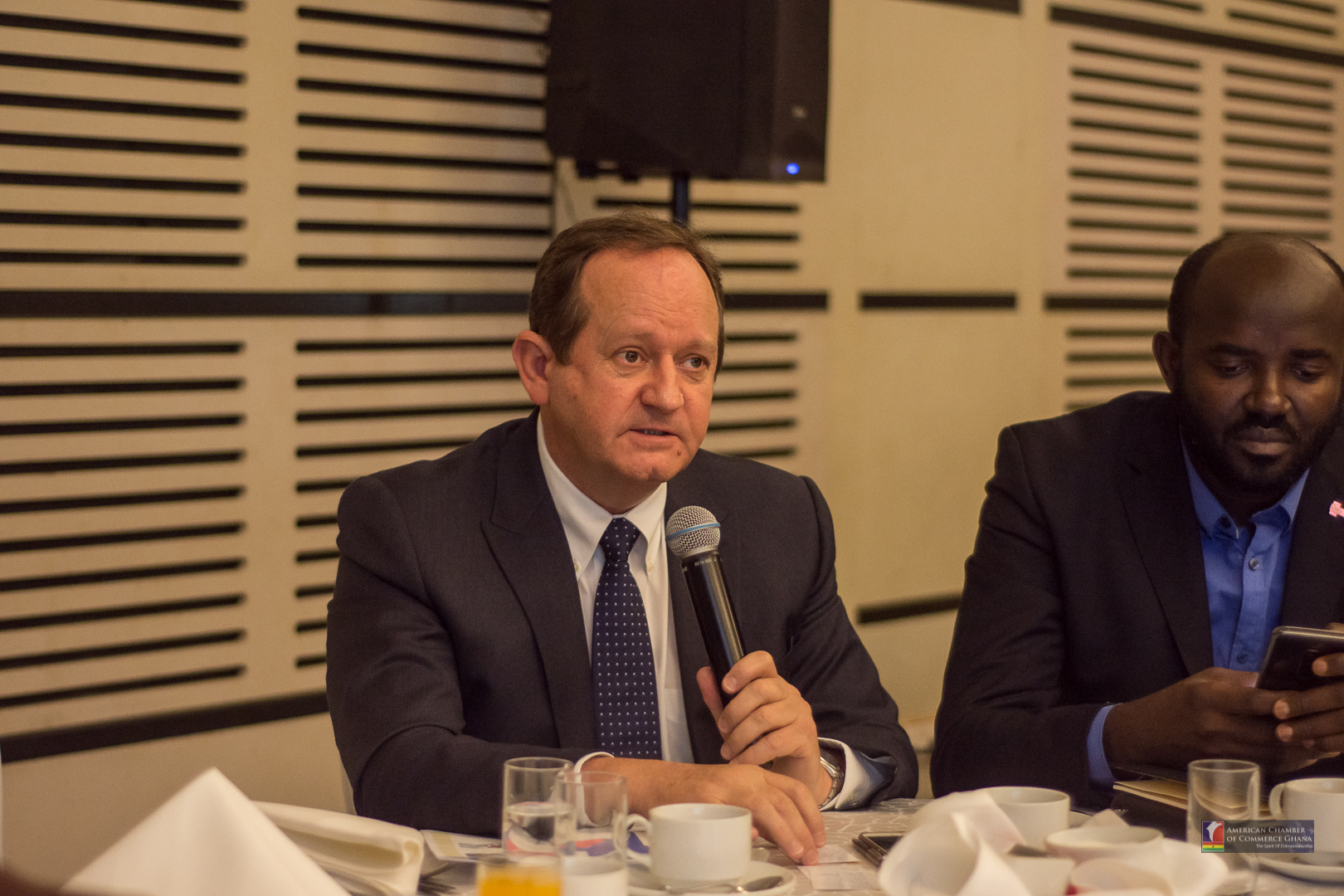
Finally, Mr. Gyan-Quansah cautioned members of the Chamber to comply with all tax regulations in the country with particular emphasis on payments and revisions of annual returns with Ghana Immigration Service; PAYE reconciliation and payment of Quarter 1 taxes; statement of estimated tax payable and payment of Quater1 taxes; income tax returns and transfer policy return; employer’s annual tax deduction schedules and individual income tax return for employees; and annual returns at the Registrar General’s Department.

After the presentation, members of the Chamber asked questions on the stability of the Ghanaian currency, revision of tax laws to help support local companies, protection of minority shareholders, and the role of directors under the new Companies Act.


[unitegallery 2020EOF]

Amcham Ghana Creates Platform for Dialogue Between University of Buffalo, Ghanaian Teachers and Chamber Members

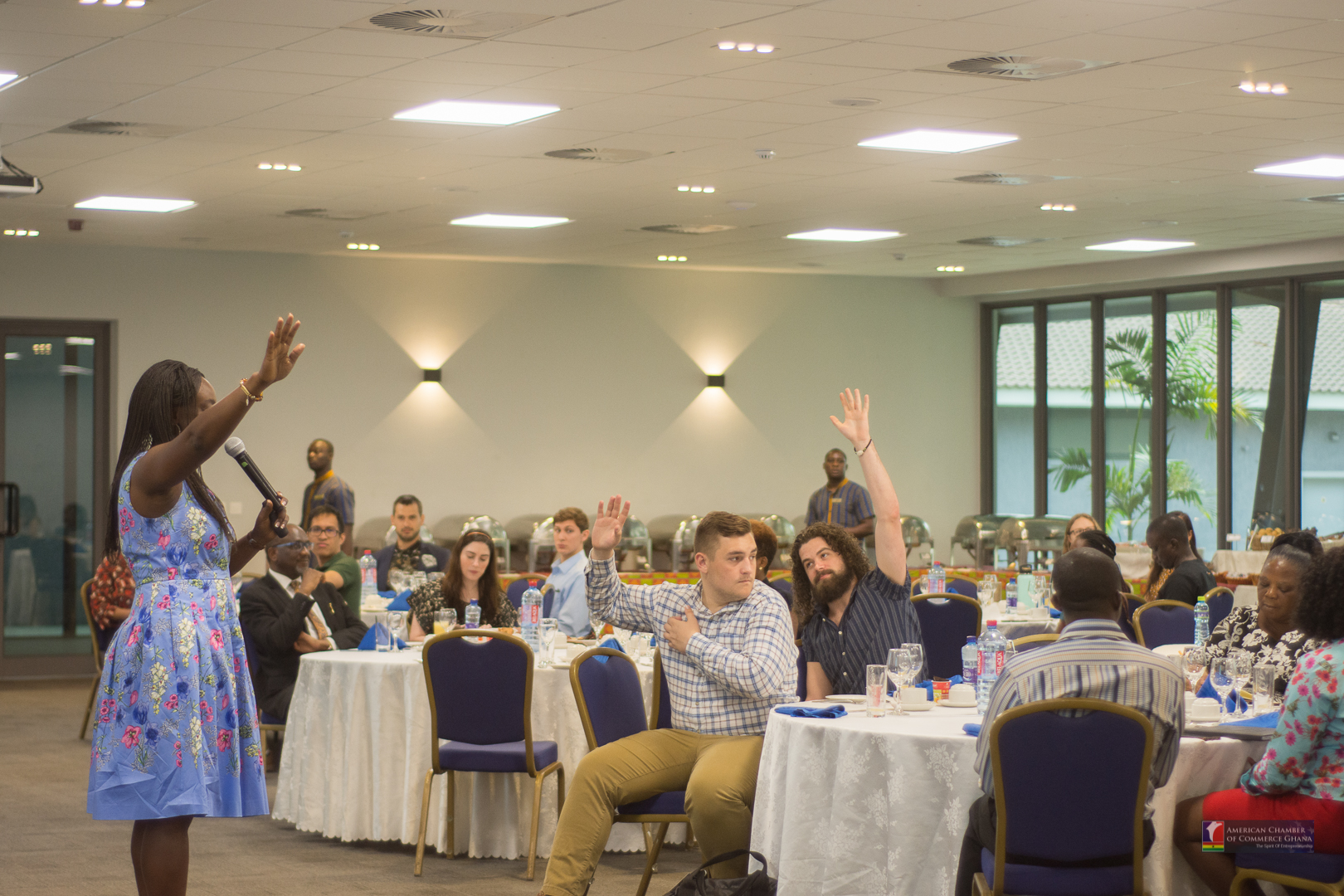
As part of the Chamber’s mandate to promote educational and cultural ties between the United States and the Republic Ghana, the American Chamber of Commerce, Ghana, on Monday, 13th January 2020 hosted students and faculty from the University of Buffalo (UB) School of Management, New York, as part of the University’s Social Innovation and Entrepreneurial Leadership Program.

The meeting provided a platform for engagement between the UB School of Management, members of the Chamber, and teachers from two Senior High Schools in Ghana (Accra Academy; and Presbyterian Senior High School, Osu) to exchange knowledge on educational opportunities, and entrepreneurship and the business environment in Ghana.

Ayesha Bedwai, President of AmCham Ghana, in her opening remarks, highlighted the changes in Ghana’s entrepreneurial landscape, and the growth in the agricultural, information communication technology and the creative arts industries.

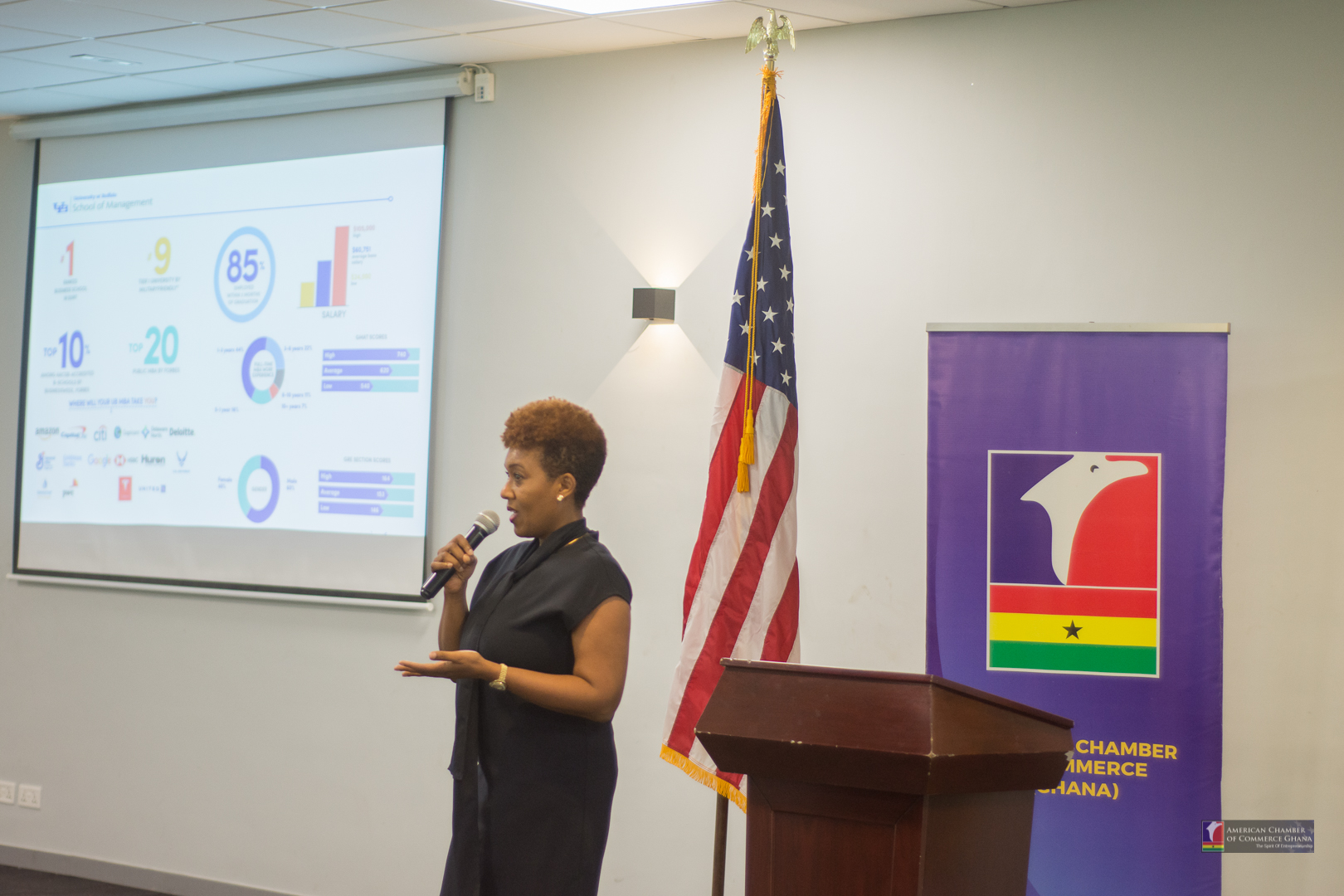
Dorothy Siaw-Asamoah, Faculty Director, Global Programs at the UB School of Management, gave a brief overview of the activities of the UB School of Management in Ghana, including medical outreaches in different parts of the country and trips to Senior High Schools and tourist sites. Students from the UB School of Management also gave a presentation on the school which covered alumni engagement, global experiences, core curriculum, collaborative degrees, action learning, global community, business trips, career preparation, mentorship, and funding for students.

Questions raised after the presentation were on enrollment in the UB Schools of Management, the number of international students in the school, funding for students, opportunities in UB for Senior High School students in Ghana, career development challenges of students in Ghana, and the quality of mentorship for students.

Ayesha Bedwai, in closing the meeting, commended the UB School of Management for the multi-dimensional nature of their activities and stressed the importance of student engagement and career advisory services.

[unitegallery UBM20]
AmCham Ghana Meet With Pyxera Global and Jaipur Rugs To Discuss The Future Of Weaving In Ghana

AmCham Ghana met with Pyxera Global and Jaipur Rugs to discuss opportunities in Ghana’s weaving industry and means to promote and preserve craftsmanship in the sector, and also connect it to the global supply chain under the African Artisan Community Engagement and Export Initiative.

Under-resourced artisan communities face constant challenges that pose a significant risk to their long-term stability. They confront the impacts of globalization, climate change, and technological advances.

Specifically, communities of weavers across the African continent are under threat. While woven fabric holds with its cultural identity and connection, local demand for these cloths are in significant decline, and demand for high-quality woven fabrics within the countries where they are produced is extremely low today, not in small part because of low-cost Chinese imports or other machine-produced and less expensive options.

To address the challenges faced by weaving communities while taking advantage of the rising global demand for artisan products, the African Artisan Community Engagement and Export Initiative (AACEE) partners – AmCham Ghana,  PYXERA Global Ghana, Association of Ghana Industries,  and Jaipur Rugs, propose a highly unusual approach—the replication or adaptation of the framework of a scaled handicraft enterprise in India to Africa.

This broad effort seeks to transform weaving communities from producers of handicrafts into hubs of entrepreneurial excellence. Beginning in Ghana and Ethiopia, weavers in the AACEE program will participate in skilling activities, receive contracts for the delivery of specific woven products, and be linked into high-value global supply chains.

Jaipur Rugs is a 40-year-old, fully-scaled artisan enterprise that works with 40,000 women weavers in India, as well as with entrepreneurs across the rug supply chain, and with luxury handicraft
buyers in dozens of countries. Jaipur Rugs will serve as a knowledge partner, sharing their proven model for scale, as well as insights and connections to potential retail and wholesale export markets.

Executive Secretary of AmCham Ghana, Simon Madjie, assured that the chamber is ready and will provide the necessary support to ensure the success of the  African Artisan Community Engagement and Export Initiative.


Investment Meeting With Burger King General Manager – Africa Division, EMEA  

AmCham Ghana Exec. Secretary, Simon Majie had an investment meeting with Robert Lu, General Manager – Africa Division, EMEA at Burger King Corporation and other investors in Accra.

Robert Lu is in Ghana to engage with Burger King franchise owners, to prospect for the expansion of the brand and explore means to improve the supply chain for effective service delivery in Ghana.  Lu is also looking to get new franchisees to introduce Tim Hortons and Popeyes brands to the Ghanaian market.

Burger King currently has three restaurants in Accra and want to increase that number significantly in the next five years. Lu cited the country’s current favorable business climate as the reason for Burger King’s renewed interest in expanding its business in Ghana.

Tim Hortons Inc. (known as Tim Hortons Cafe and Bake Shop in some countries) is a fast-food restaurant chain, specializing in coffee and donut items. It is Canada’s largest quick-service restaurant chain; as of December 31, 2018, it had a total of 4,846 restaurants in 14 countries. The company has its headquarters in Toronto.


The company was founded in 1964 in Hamilton, Ontario, by Canadian hockey player Tim Horton (1930–1974) and Jim Charade (1934–2009), after an initial venture in hamburger restaurants. On August 26, 2014, Burger King agreed to purchase Tim Hortons for US$11.4 billion; the chain became a subsidiary of the Canadian holding company Restaurant Brands International, which is majority-owned by Brazilian investment firm 3G Capital. Learn more

Popeyes is an American multinational chain of fried chicken fast food restaurants founded in 1972 in New Orleans, Louisiana and headquartered in Miami, Florida. Since 2008, its full brand name is Popeyes Louisiana Kitchen, Inc.and it was formerly named Popeyes Chicken & Biscuits and Popeyes Famous Fried Chicken & Biscuits. It is currently a subsidiary of Toronto-based Restaurant Brands International.

Popeyes serves chicken dishes in mild and spicy flavors and offers sides such as red beans and rice, Cajun fries, mashed potatoes with Cajun-style gravy, Cajun rice, macaroni & cheese, and coleslaw. In addition to fried chicken, other entree items include a chicken-and-sausage jambalaya and po’ boy sandwiches. Learn more