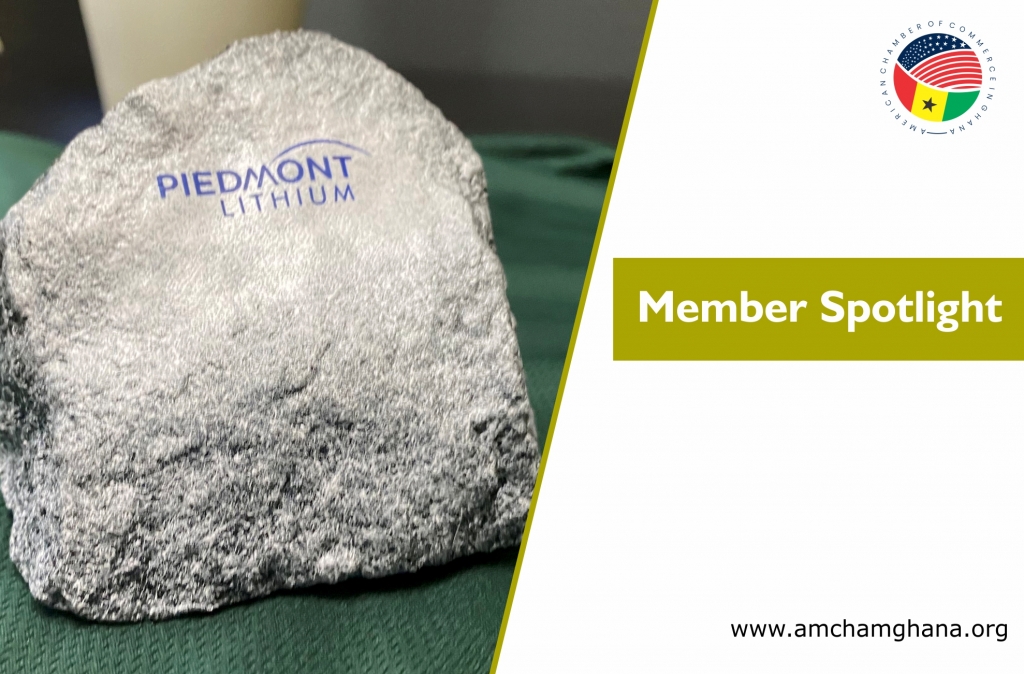

Piedmont Lithium, a Platinum AmCham Ghana, is on target to become the only integrated producer of lithium hydroxide from spodumene ore in the United States. With assets located in the mineral-rich, world-renowned Carolina Tin Spodumene belt in North Carolina.
In July this year, Piedmont entered into a conditional binding agreement with IronRidge Resources to fully fund and fast track the Ewoyaa Lithium Project, part of IronRidge’s Ghanaian Cape Coast Lithium Portfolio (CCLP), to production.
Piedmont President and CEO Keith Phillips, hinted in a recent statement that spodumene production at Ewoyaa in partnership with Atlantic Lithium could begin as early as 2024. This is expected to feed the lithium hydroxide plant – LHP-2.
The company recently reported the results of a Preliminary Economic Assessment (“PEA” or “Study”) for a proposed merchant lithium hydroxide plant (“LHP-2”) to expand Piedmont’s planned U.S. manufacturing capacity to 60,000 t/y of lithium hydroxide. The LHP-2 PEA results demonstrate the potential for Piedmont Lithium to expand its lithium hydroxide manufacturing business using spodumene concentrate from market sources, including under existing offtake agreements with Sayona Quebec and Atlantic Lithium. Get the full report here

Piedmont has developed a more stable and sustainable Lithium production solution designed to provide a significantly smaller footprint. They have a responsibility to be good stewards of the land, our planet, our environment, and our community. Working in the most sustainable way possible is their number one priority because they understand what they produce is directly related to positively impacting the sustainability of our planet by helping to reduce global carbon emissions for future generations.
Piedmont Lithium supplies metals and minerals used to build “green energy” innovations and conventional consumer and industrial products. From producing Lithium-ion battery metals to minerals used in everyday consumer products, using sustainable technologies throughout their operations.

Piedmont Lithium continues to develop its Corporate Social Responsibility position including identifying key values that reflect its continual commitment to supporting global efforts. Their part in the process includes pinpointing hazards, analyzing risks, and implementing standards for mining operations and supply chain activities as well developing internal safety standards and guidelines to mitigate the risks and hazards associated with its entire value chain. Learn more

 By By Albert Ludwig Botchway, AmCham Communications