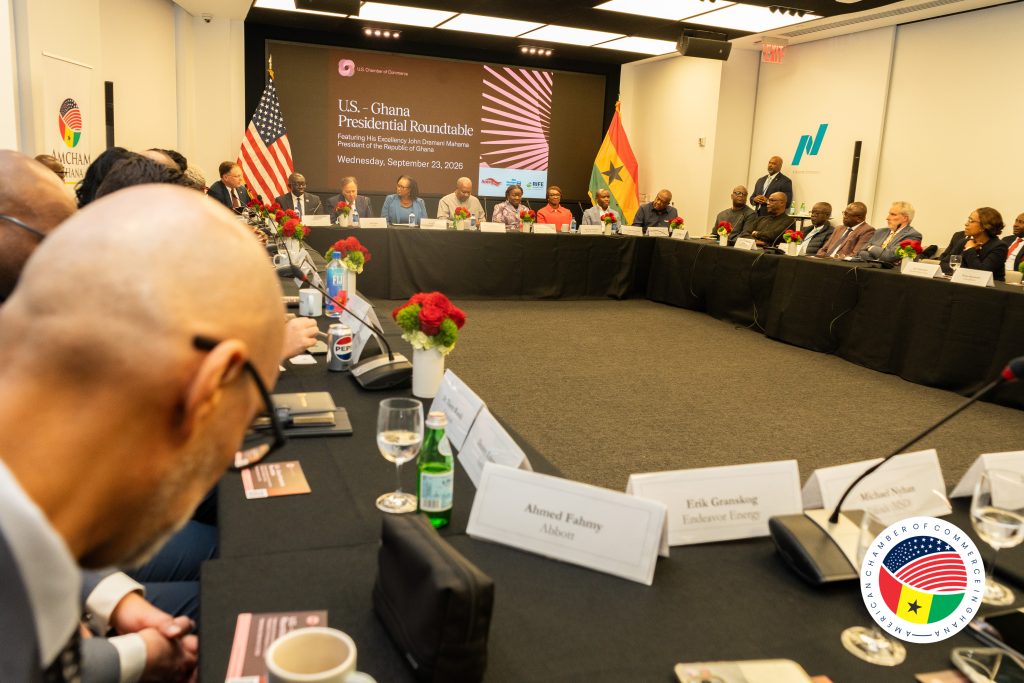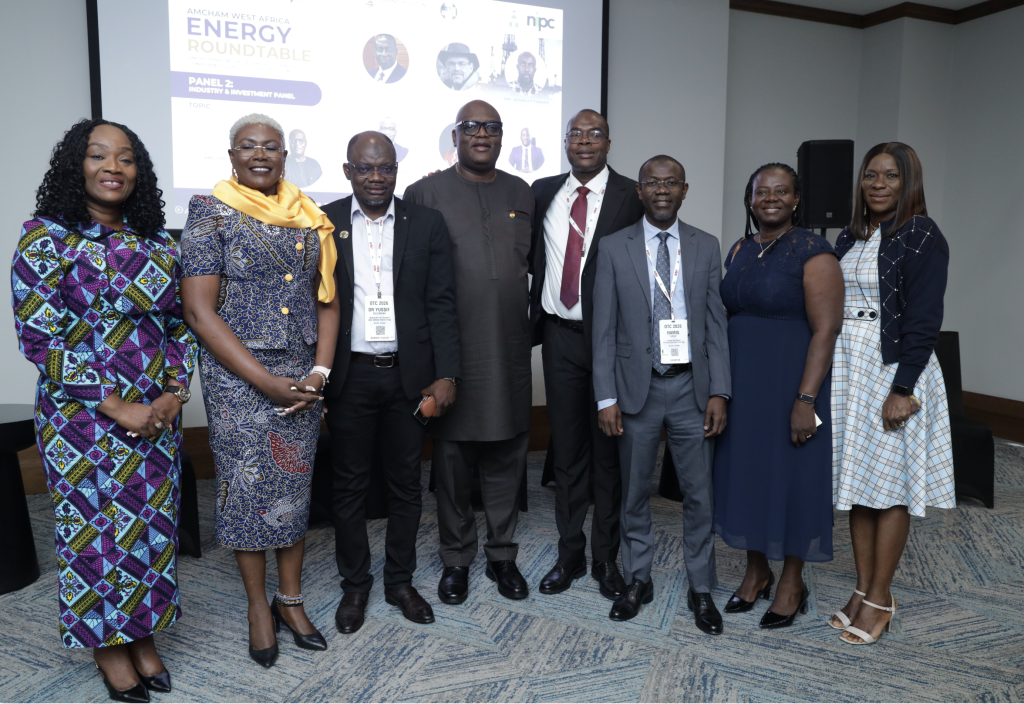

The AmCham West Africa Energy Roundtable, held on the margins of the Offshore Technology Conference (OTC 2026) in Houston, Texas on Wednesday, 6 May 2026, brought together senior government officials, national oil companies, international operators, service companies, and financial institutions from Ghana, Nigeria, and the U.S. private sector to examine one central question: how does West Africa convert its energy potential into durable investment and long-term value?
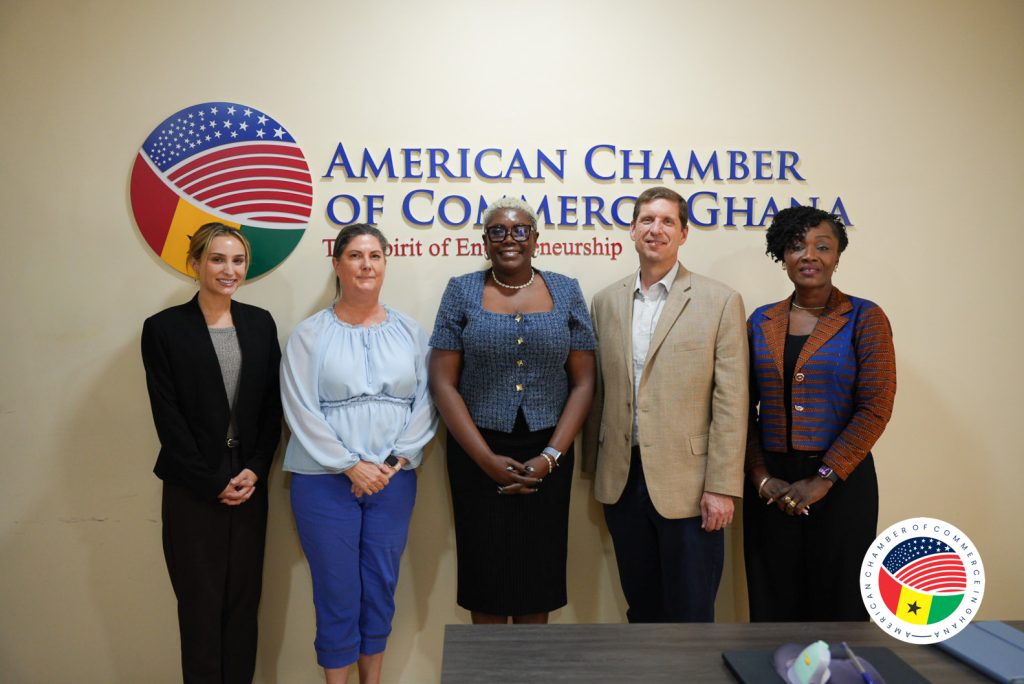
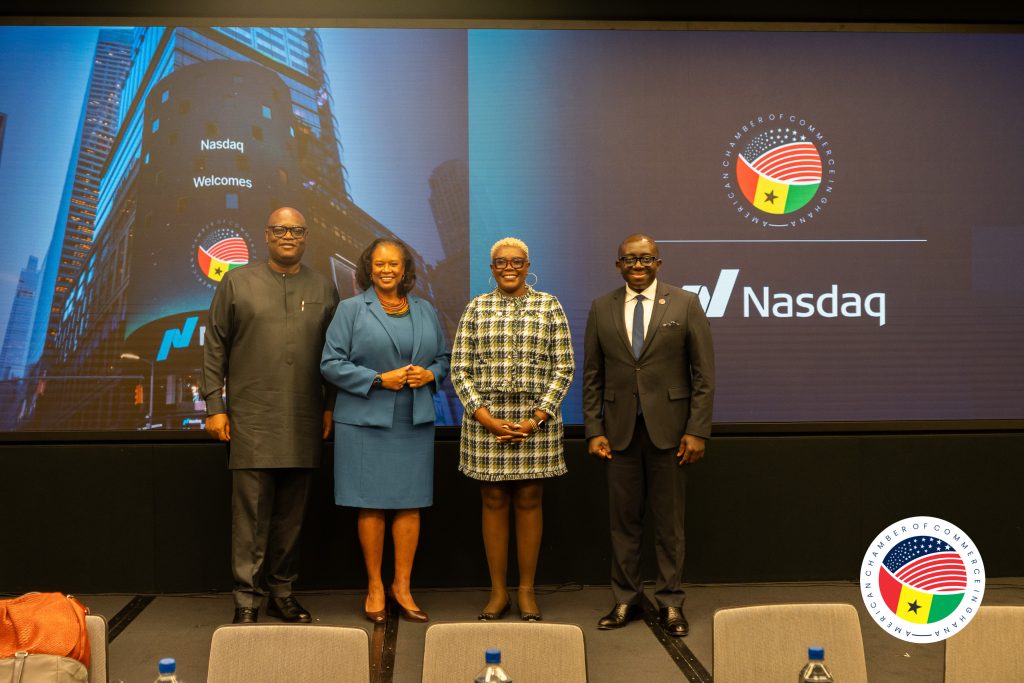
The event was co-hosted by Doris Kafui Afanyedey, Chief Executive Officer of the American Chamber of Commerce Ghana, and Margaret Olele, Chief Executive Officer and Executive Secretary of the American Business Council Nigeria — a partnership that reflected the growing coordination between West Africa’s two leading AmCham platforms. Co-organising partners included the Ghana Investment Promotion Centre (GIPC), the Ghana-Houston Chamber of Commerce, and the Nigerian Investment Promotion Commission (NIPC).
A Moment of Strategic Opportunity
The roundtable was moderated by Mr. Simon Madjie, Chief Executive Officer of the Ghana Investment Promotion Centre, and Mr. Joe M. Mensah, Senior Vice President and Head of Ghana Business Unit at Kosmos Energy LLC. Together, they guided a high-level conversation grounded in candour: West Africa’s energy significance is rising precisely because global energy markets are fragmented, supply routes are disrupted, and governments worldwide are reassessing energy security. The region’s deepwater capability, growing gas reserves, Atlantic-facing export routes, and established producers position it well — but, as panellists emphasized, relevance alone does not attract capital. Capital is disciplined, and it flows to environments where contracts are stable, infrastructure is in place, and execution risk is manageable.
Ghana’s Investment Landscape
Ing. Dr. Robert Kofei Larkey, Deputy CEO (Technical) of Ghana National Gas Limited, outlined a compelling near-term investment pipeline. Priority projects include a second gas processing plant, a new transmission compressor station to boost throughput across the national network and expanded pipeline infrastructure connecting Ghana’s western producing corridor to industrial demand centres in the east. The Voltarian Basin inland exploration programme was flagged as a frontier opportunity for investors willing to take early-entry exploration upside.
Mr. Hamis Usuf, Deputy Chief Executive of the Ghana National Petroleum Corporation (GNPC), reinforced the institutional commitment to attracting the right capital partners,noting that GNPC’s mandatory participation role in all upstream petroleum operations positions it as a capable and commercially oriented partner, not merely a regulatory presence.
Mr. Joe Mensah of Kosmos Energy cited the landmark fiscal stability arrangement negotiated with the current administration, regulatory continuity through 2040 in exchange for a two-billion-dollar investment commitment, and lower domestic gas prices as a direct example of how responsive government engagement unlocks capital. The result: a commitment to drill annually going forward. When incentive terms align with investor risk, capital responds.
Nigeria: Scale, Reform, and Maturity
Mr. Abayomi Salami, Director of Policy at the Nigerian Investment Promotion Commission, outlined Nigeria’s energy reform agenda, including the gas-to-power programme, decentralised renewable energy initiatives, and the government’s ambition to raise electricity access from 40% to 90% by 2030, requiring a tenfold increase in generation capacity. He described the investment environment as increasingly structured and promotion-ready, with NIPC actively facilitating entry for credible investors.
Sopiribo (Sops) Ideriah, Global Operations Leader at SLB, provided a seasoned investor’s perspective on what it takes to finance West African energy assets, emphasising the importance of fiscal predictability, the quality of local partnership, and the critical link between consistent drilling activity and meaningful local content development.
Cecilia Umoren, Chairman of the Women in Energy Network Nigeria, made a compelling case for deliberate inclusion, noting that research consistently demonstrates that companies with women in leadership deliver stronger bottom-line results. She called on both governments and private sector actors to treat gender diversity not as a social programme but as a commercial imperative.
Local Content: Quality Over Quantity
Craig Bebee, Senior Business Development Leader at Halliburton, and Eng. Benedict Tandoh, CEO and Managing Director of BBS Engineering Limited, offered complementary perspectives on the Ghana local content experience. Halliburton’s commitment to Ghana is real, Bebee noted, but investment in local facilities and personnel requires the certainty of sustained activity. Tandoh described the structured joint venture model in which BBS has been progressively building technical capacity, with Halliburton engineers embedded in live projects, enabling genuine knowledge transfer over time.
Chijioke Uwaegbute, PWC Leader for Oil and Gas in Nigeria, brought a financing and governance lens to the discussion, underscoring that the most fundable companies are those that invest in governance quality, audited financials, and management credibility, not just asset ownership.
Closing Commitment
The roundtable concluded with a commitment to produce a position document articulating West Africa’s collective energy perspective for submission to the U.S. State Department and relevant federal bodies. Participants left with a shared understanding: the opportunity window is real but not permanent. Other regions are competing. The countries and companies that move with clarity, discipline, and speed will attract the partnerships that matter.
AmCham Ghana will continue to advance this agenda through its Policy Advocacy and Trade and Investment pillars and looks forward to deepening U.S.–Ghana commercial ties in the energy sector.
 By By Albert Ludwig Botchway, AmCham Communications