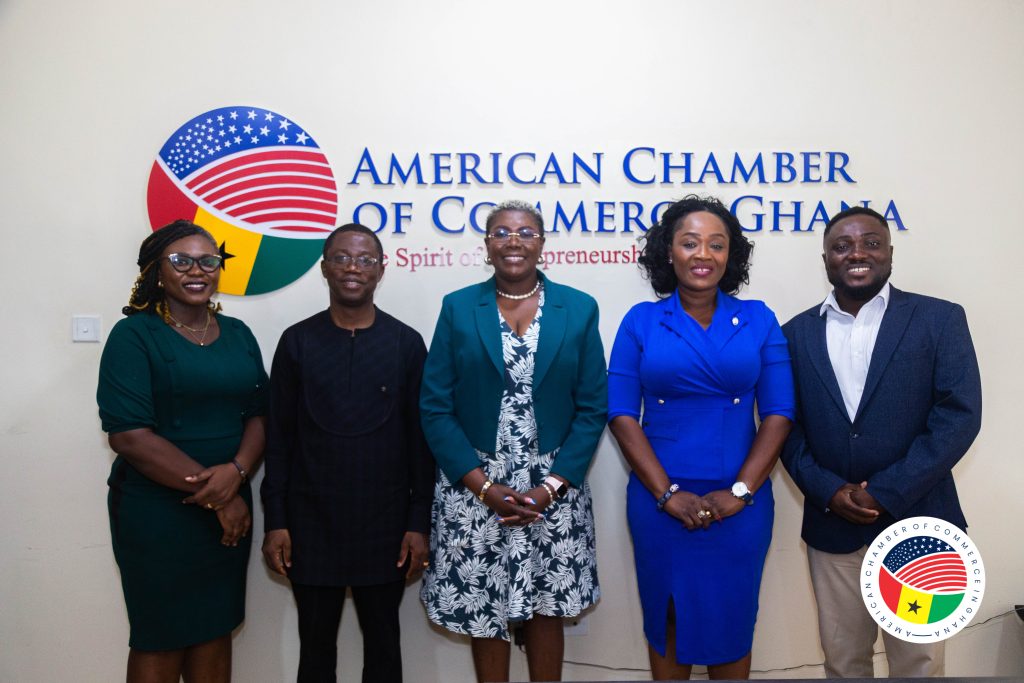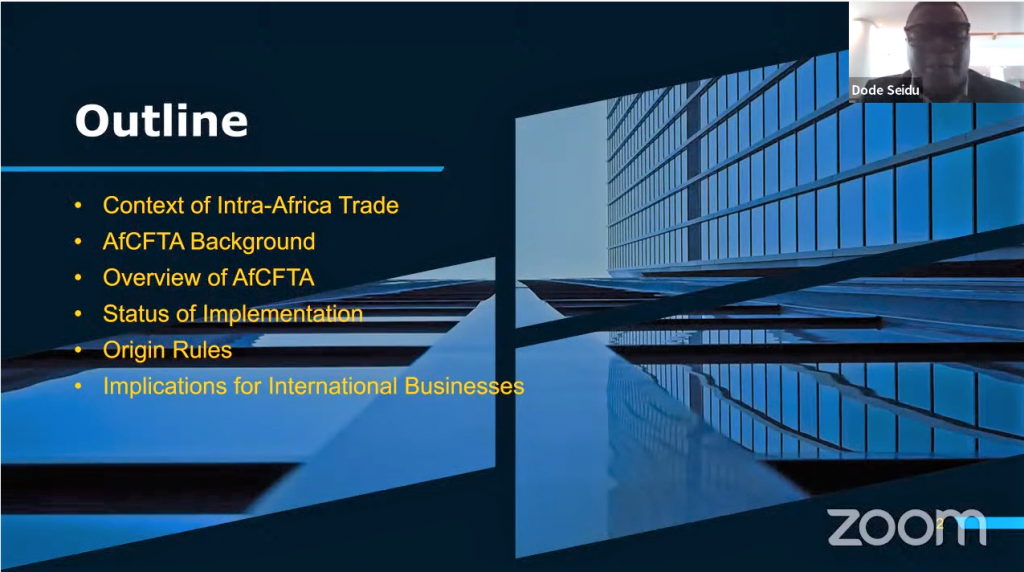

The AmCham AfCFTA Resource Centre, under the auspices of the Ameican Chamber of Commerce, Ghana, on Tuesday, March 8, hosted Dode Seidu, a trade advisor and AfCFTA consultant for the first edition of the webinar series on the implications of African Continental Free Trade Area agreement for international businesses.
The event provided an overview of the trade agreement and updates on its implication. Our speaker also touched on the Rules of Origin and its benefits for International Businesses and provided insight into AfCFTA in the context of intra-Africa trade.
The African Continental Free Trade Area (AfCFTA) agreement creates the largest free trade area in the world measured by the number of countries participating. The pact is said to connect 1.3 billion people across 54 countries with a combined gross domestic product (GDP) valued at US$3.4 trillion.
The trade agreement aims to create a single market for goods and services, facilitated by the movement of persons to deepen the economic integration of the African continent. So far, 28 countries have made Tariff Offers that have been certified by the AfCFTA Secretariat as having met the minimum threshold requirement of 90% of the tariff lines and ready to commence trading under AfCFTA.
As to the implications for international business, the mutual recognition of standards, licensing, and certification of service suppliers will make it easier for businesses and individuals to satisfy the regulatory requirements of operating in each other’s markets. Also, the dispute settlement mechanism provides a rule-based avenue for the resolution of any disputes that may arise between State Parties in the application of the agreement.
Watch the full event below.

 By By Albert Ludwig Botchway, AmCham Communications