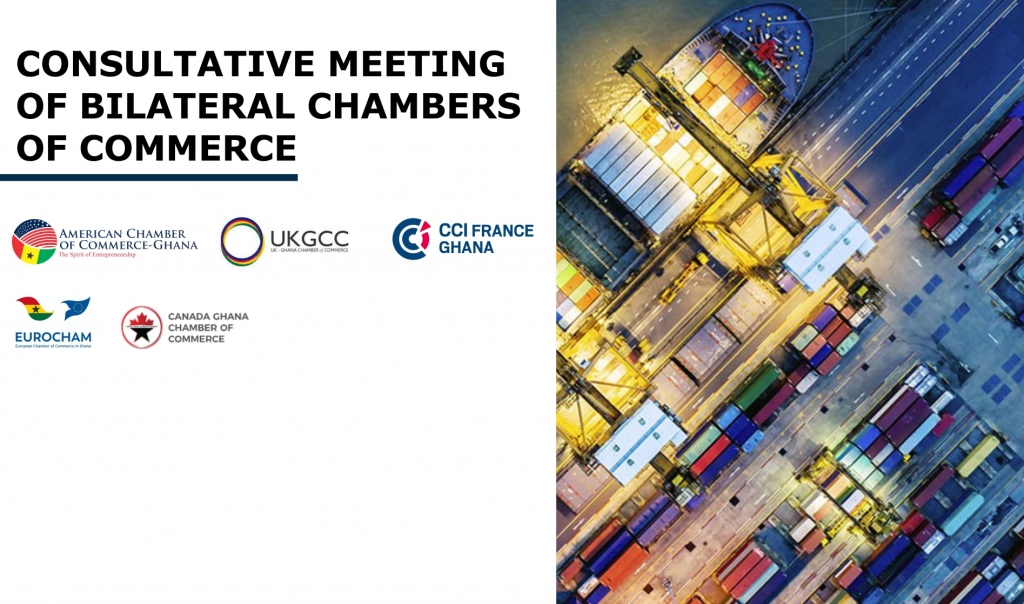

Ghana remains attractive to significant foreign direct investment (FDI). Major multinational companies are in Ghana due to its relative peace, strong democratic culture and good governance, rule of law, educated workforce, and welcoming population. Ghana’s leadership on the international economic stage is epitomized by the hosting of the Africa Continental Free Trade Agreement (AfCFTA) Secretariat in Accra, bolstering the country’s position as a major commercial hub for the continent.
The undersigned, a group of bilateral trade associations representing the interest of international and local companies operating in the country, having invested significantly, employing mainly Ghanaians, and paying taxes, wish to draw the government’s attention to the following which threatens the country’s position as a leading and favorable destination for business and investment. We are also not oblivious of the current economic challenges and the proposition that all must contribute their share to the solution. However, we are convinced that given the right incentives and the desired operational flexibility with less interference, the private sector shall provide the needed resources for Ghana’s long-term growth and prosperity.
The matters of great interest to the bilateral trade associations include the following:
- The Government has our unbridled support in its negotiations with the International Monetary Fund (IMF) and we endorse the initiatives to mobilize domestic revenue for the country’s development. Our member companies are all in the formal sector and known large taxpayers. They are, however, deeply concerned about the perceived predatory nature and outright harassment by Ghana Revenue Authority (GRA) officials in the conduct of audits and the resulting imposition of penalties as part of efforts to collect more taxes from companies that are already large taxpayers. Our member companies expect greater consultative opportunities in the development and rollout of tax reforms.
- In our opinion, a partial or full recovery from the current challenges is largely dependent on the private sector creating more jobs and hence, paying more taxes. In this regard, we urge the government to harmonize all legislation, rules, and regulations to spur coherent private sector participation in the economy. While our member companies fully support and encourage local content development and participation, for example, its implementation must not threaten or undermine the existing ecosystem. The rigidity of localization regulations is threatening investments in the mining, energy, and digital/communications sectors.
- Our members are unsettled by delays in payment for the supply of government goods and services as well as the seeming challenges with contract sanctity and the perceived lack of transparency and interference with government-to-business contracts. Smart investment chases a business environment grounded in consistency and predictability. The pool of would-be investors is small, and they talk to one another. Word spreads fast when business conditions deteriorate, causing a ripple effect that can impede investment for years to come.
- We stand in solidarity with the efforts to stabilize the depreciating currency which has lost more than 50% of its value against the major currencies in 2022. We want the Bank of Ghana (BoG) to maintain an open and fair line of communication with investors on the issue of repatriation of profits and the availability and management of foreign exchange for businesses to import essential inputs for manufacturing. Further, the BoG must also publicly communicate the modalities on its outright cessation of providing foreign exchange for some critical imports to avoid likely shortages. On this point, it is worth noting that South Africa had to halt the imposition of its import tariff on poultry to avert a food crisis. Poultry remains a cheap source of protein for many in the country.
- We intend to collaborate more closely with local trade groups on matters of mutual concern particularly on using more local content in manufacturing.
Signed:
Simon Madjie
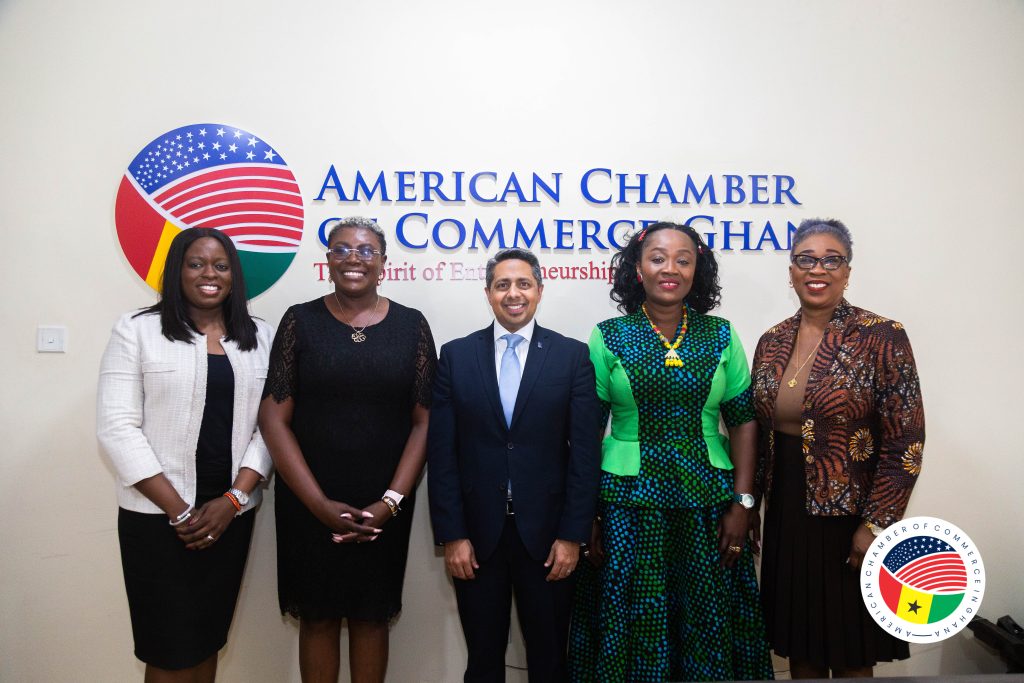
American Chamber of Commerce in Ghana (AmCham Ghana)
Adjoba Kyiamah
UK-Ghana Chamber of Commerce (UKGCC)
Armelle Sae-Jeanne
Chamber of Commerce and Industry France Ghana (CCIFG)
Nicolas Gebara
European Chamber of Commerce in Ghana (EUROCHAM Ghana)
Edwina Atta-Sonno
Canada Ghana Chamber of Commerce (CANCHAM Ghana)


 By By Albert Ludwig Botchway, AmCham Communications