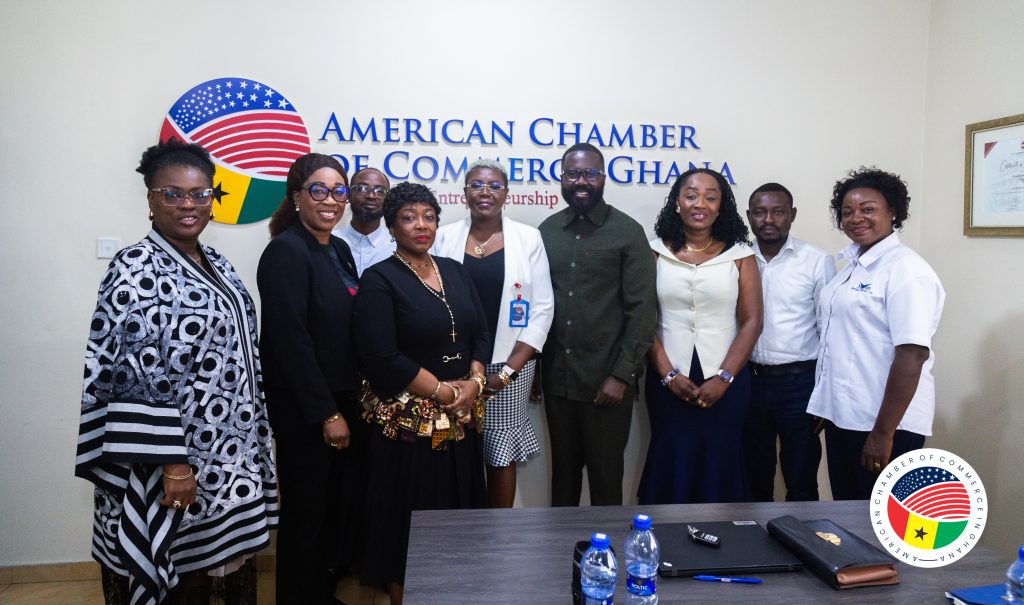

The American Chamber of Commerce Ghana’s Health, Hospitality, Logistics, Transport and Aviation Sector Committee convened on 23 June 2026 at the AmCham Ghana Secretariat, bringing together industry leaders from across these sectors to examine the barriers most affecting Ghana’s competitiveness as a business, tourism, and investment destination. The meeting was chaired by Emmanuel Antwi, Country Lead for Johnson and Johnson Innovative Medicine, whose expertise in the healthcare and life sciences sector shaped a discussion that was grounded in both commercial reality and public interest. Members worked through a wide range of concerns, from the high cost of intra-Africa air travel and logistics bottlenecks to gaps in healthcare coverage and the rising cost of doing business in the hospitality sector. What united every conversation was a shared conviction that Ghana has the potential to become West Africa’s leading hub across all these sectors, and that closing the gap between that potential and the current operating reality requires deliberate, evidence-based engagement with government and regulators.
Connectivity emerged as the meeting’s most persistent theme. Members noted that it is, in many cases, cheaper to fly from Accra to a European city than to a neighbouring West African capital, a situation driven by unresolved traffic rights agreements, limited route competition, and a compounding tax burden on air tickets. At Kotoka International Airport, committee members raised concerns about the pace and communication surrounding ongoing infrastructure changes, stressing that operational decisions affecting airlines and passengers must be accompanied by transparent, timely stakeholder engagement. For Ghana to fulfil its ambition as a regional aviation hub, members agreed, infrastructure development must be matched by policies that actively encourage carrier competition and keep travel accessible for the business travellers and tourists the country is working hard to attract.
On healthcare, the committee welcomed recent indications that the National Health Insurance Scheme will expand reinvestment coverage for critical illnesses, including cancer, and discussed the growing urgency of addressing mental health conditions, which members noted are having a measurable impact on workplace productivity and employee wellbeing across both the public and private sectors. In the hospitality space, the conversation turned to the cost pressures facing operators, with members highlighting how the accumulation of utility costs, taxes, and regulatory fees is making Ghana a more expensive destination relative to regional competitors, and potentially undermining the progress made through years of international tourism promotion. Both discussions pointed toward the same conclusion: Ghana’s ability to retain visitors, workers, and investors depends not just on attracting them but on ensuring that the systems they rely on, healthcare, accommodation, infrastructure, are affordable, functional, and consistently improving.
On logistics and trade, members described a business environment in which customs procedures, valuation practices, and cross-border administrative requirements continue to add cost and delay for companies moving goods across the region. Despite Ghana’s commitments under the African Continental Free Trade Area agreement, practical barriers to regional commerce remain significant, and the committee agreed that stronger customs coordination and greater transparency in trade facilitation are essential to making AfCFTA work on the ground. Looking ahead, the committee identified engagements with regulatory agencies, transport authorities, and trade facilitation institutions as priorities for the coming months, and emphasised that the most effective advocacy will be grounded in sector-specific data and evidence. Members were encouraged to contribute their documented experiences so that the committee can bring credible, well-supported positions to every policy conversation.
AmCham Ghana Health, Hospitality, Logistics, Transport and Aviation Sector Committee
AmCham Communications Office
www.amchamghana.org
 By By Albert Ludwig Botchway, AmCham Communications