
The American Chamber of Commerce Ghana has called for a renewed focus on transformational reforms, technological innovation, and stronger public-private sector collaboration to drive Ghana’s long-term economic growth.
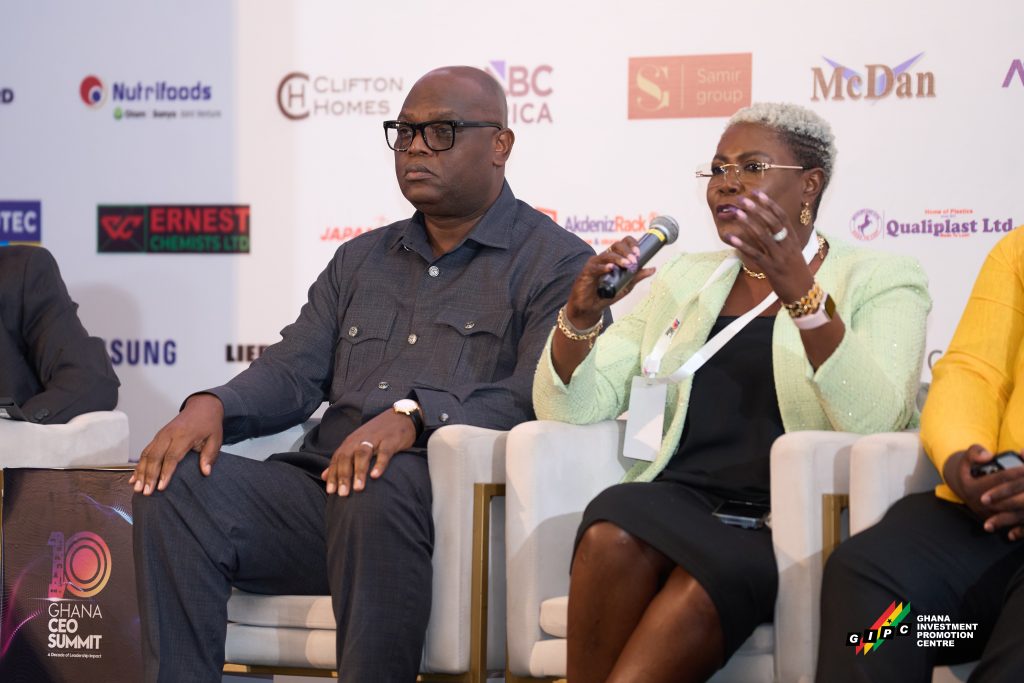
Speaking at the CEO Summit, Doris K. Afanyedey, Chief Executive Officer of AmCham Ghana, emphasized that while the country has made significant progress in achieving macroeconomic stability, stabilization alone is not enough to deliver sustainable development. “While Ghana has successfully managed macroeconomic stabilization, stabilization is not transformation,” she noted. “The next phase must focus on sustained reforms that translate economic stability into large-scale transformation and prosperity.”
Key areas identified for reform include reducing the country’s dependence on commodities, broadening the tax base, and addressing import-driven consumption patterns that continue to expose the economy to external shocks. AmCham Ghana also encouraged government to publish a clear transformation and reform calendar to enable the private sector to align investments and actively support implementation efforts.
She further emphasized the critical role of technology in driving Ghana’s economic future. While acknowledging the country’s achievements in digital innovation through initiatives such as the Ghana Card and mobile money ecosystem, she urged policymakers to accelerate efforts in emerging technologies, particularly Artificial Intelligence (AI). The CEO noted that, AmCham Ghana’s membership includes leading global technology companies such as Oracle, IBM, Google and Microsoft, whose expertise could support the development and execution of a national AI strategy.”We are yet to be called to contribute to Ghana’s AI agenda,” she remarked, stressing the importance of leveraging available private-sector expertise to position Ghana competitively in the rapidly evolving digital economy.
Commenting on Ghana’s recent introduction of an electronic visa system, AmCham Ghana observed that countries across Africa are increasingly leveraging technology to improve public services and enhance economic competitiveness, underscoring the need for Ghana to maintain momentum in its digital transformation journey. She admitted that the country has produced several ambitious national development frameworks over the years, including Vision 2020, Ghana Beyond Aid and Ghana CARES. However, she argued that the challenge has often been less about ideas and more about execution, institutional capacity and sustained political commitment. “Many of the ideas Ghana has developed have become blueprints for countries that are advancing rapidly today. The gap is not vision; it is implementation,” she stated.
To unlock sustained investment and economic growth, AmCham Ghana proposed structured engagement between government, chambers of commerce, and bilateral business organizations to identify barriers to investment and develop practical solutions across sectors. She further stressed that transformation should not be viewed solely as a policy agenda but as a leadership culture rooted in responsiveness, accountability and service excellence.
The discussion also highlighted the importance of transparency, ethical business practices and compliance with international standards, including the Foreign Corrupt Practices Act (FCPA), as essential elements for attracting sustainable foreign direct investment and strengthening investor confidence.
CEO Summit 2026 brought together government officials, business leaders, investors and development partners to explore strategies for accelerating Ghana’s economic transformation and enhancing the country’s competitiveness in a rapidly changing global economy.

 By By Albert Ludwig Botchway, AmCham Communications