AmCham Executive Secretary Interacts With Members Of African American Association of Ghana

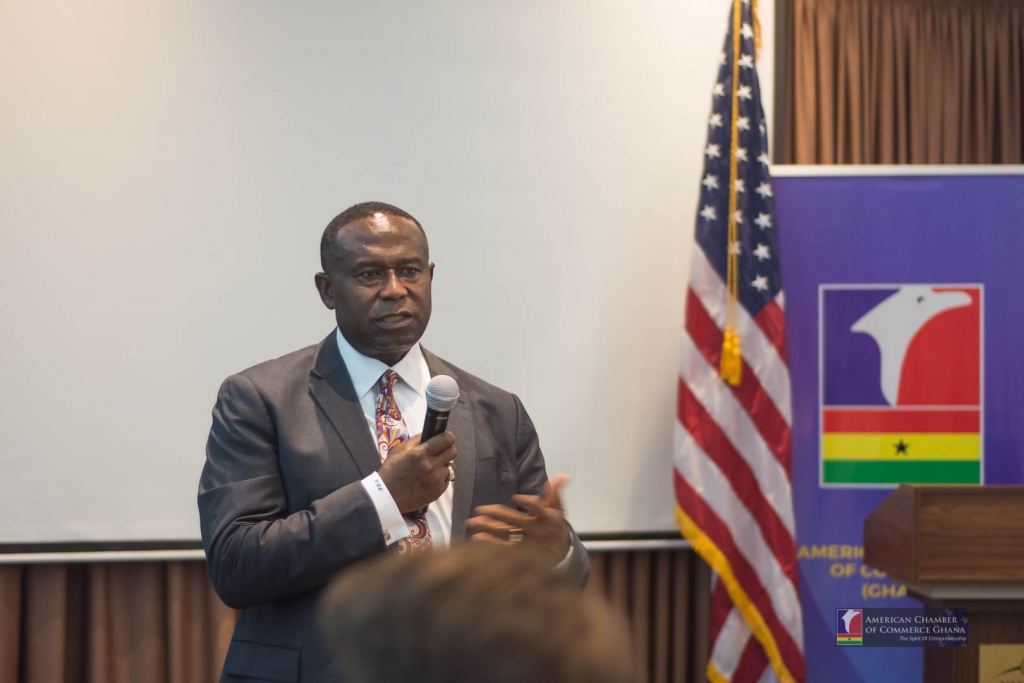
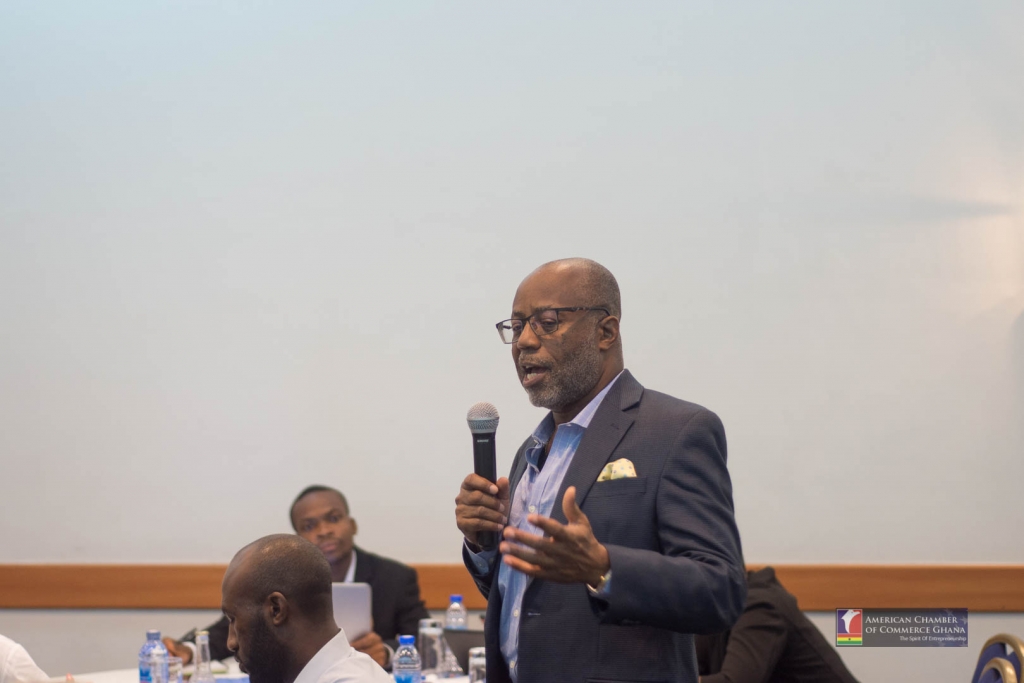
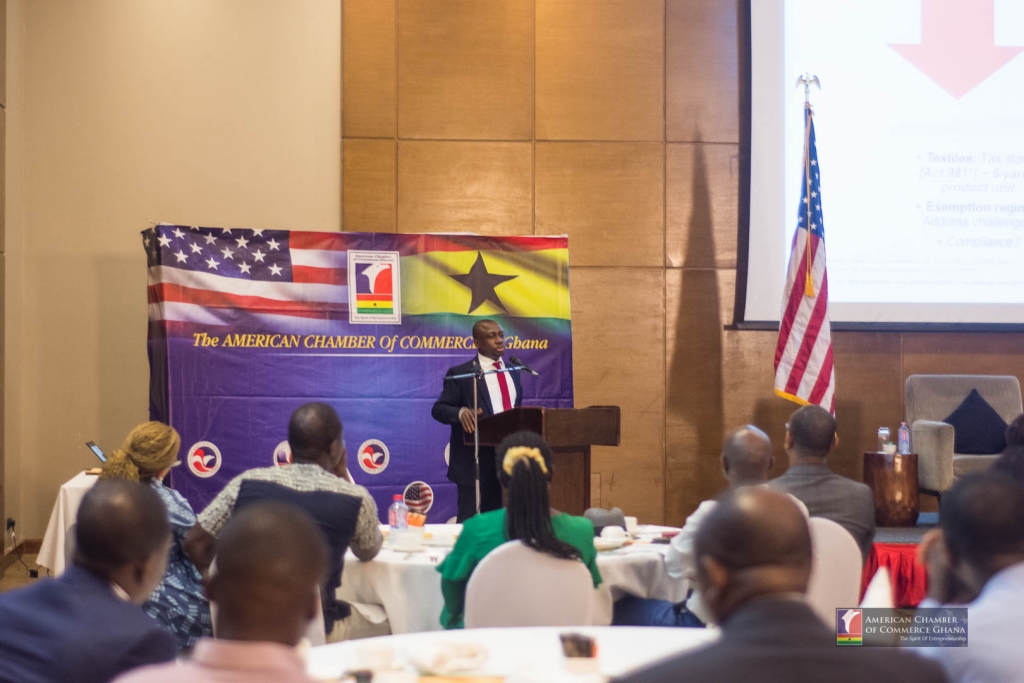
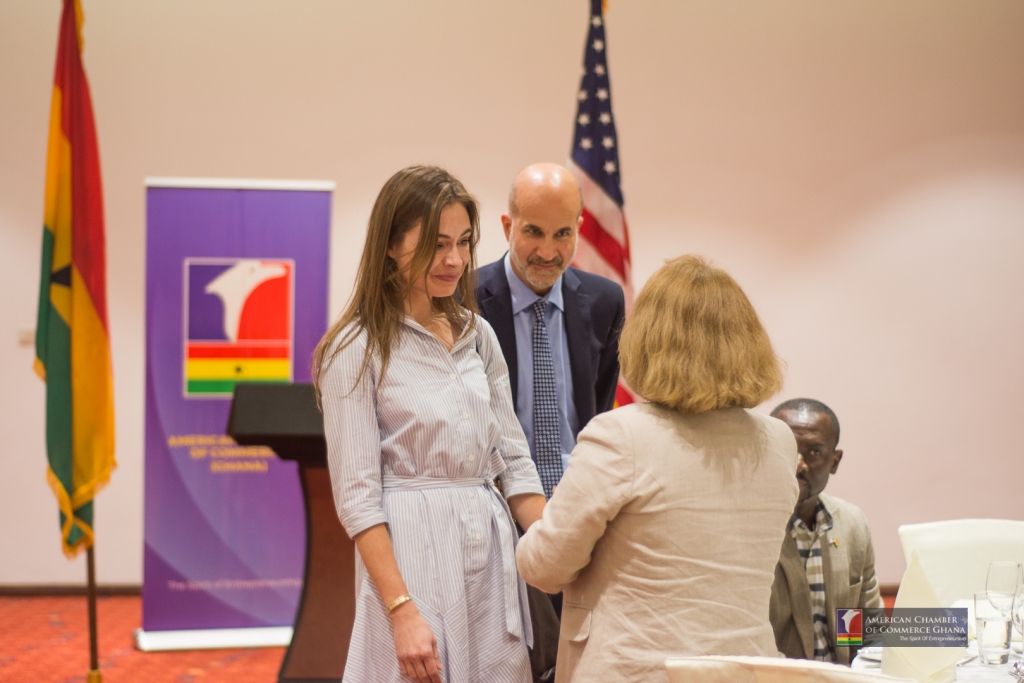
AmCham Ghana Executive Secretary, Simon Madjie interacted with members of the African American Association of Ghana at the W.E.B Du Bois Center in Accra.

The Association is a community of African-Americans residing in Ghana and have determined the need to establish a permanent means to promote the cultural, social, spiritual and economic well-being and re-integration into Ghanaian society.

AAAG wants to be recognized as a preeminent community vehicle for the cultural, social, spiritual and economic re-integration of African-American and other people of African descent returning from the Diaspora into the Ghanaian society.

The Association is looking at ways to encourage African Americans living abroad to invest in the Country.


AmCham Ghana Welcomes Three New Members

The American Chamber of Commerce, Ghana is a community of progressive businesses, a community that has been growing steadily through the years. The Chamber is honored to announce QG GHANA HOTEL HOLDING LIMITED -MOVENPICK HOTELJLD & MB LEGAL CONSULTANCY and HASMAN TECHNICAL SERVICES as new members.

Set in an urban oasis within the city centre business district, this contemporary 5 Star hotel is only 7km from the airport where you will receive a warm Ghanaian welcome and complimentary airport shuttle. A tranquil home away from home, the Mövenpick Ambassador Hotel Accra provides an atmosphere of ease and convenience where guests can be perfectly in control of their time whilst taking advantage of everything on their doorstep. The Accra Financial Centre, World Trade Centre, International Conference Centre and Government Ministries are all close by.

Throughout the hotel, guests discover their dynamic African art collection showcasing over 2,500 pieces of original Ghanaian art, creating an enthralling visual display and an immersive cultural experience.

Located within the Central Business District, 260 rooms and suites, largest five star hotel in Accra, state-of-the-art meeting and conference facilities, largest in the city pool, Spa and Fitness Center. Learn more…


JLD & MB Legal Consultancy (“JLD & MB”) is an internationally recognised corporate and commercial law firm ranked in the top tier of Ghanaian law firms. They provide an integrated and results-focused service to clients across a wide range of sectors. As an acknowledged leader in the Ghanaian legal environment.

They provide innovative and solution-oriented advisory services across several Practice Groups and have received international recognition for their lawyers and work in a number of sectors including Oil, Gas and Petroleum, ​Energy and Natural Resources, Banking and Finance, Capital Markets and Mergers and Acquisitions​.

JLD & MB provides an integrated and progressive business and corporate law service with a multi-disciplinary team of lawyers. Their primary objective is to produce work to the highest international standard, and pride ourselves on seamless delivery of client services, multi-jurisdictional experience and extensive research expertise. Learn more…


Hasman Technical Services Ltd. is a Ghanaian-owned firm that provides technical services to the Power Generation, Gas, and Oil infrastructure Industries.

While our center of operations is located in Ghana, we have the capability and experience to serve clients throughout West Africa.

The expertise and skills which they obtained throughout the years allows them to focus on project planning, new unit construction and installation, operation and maintenance, commissioning, and outage execution.

Being mindful of the importance of power, be it electrical, gas or oil, to the businesses and the society as a whole, Hasman strive to go beyond being simply a service provider and take the extra step to becoming a client’s business partner for life. They aim at crafting connections with their clients by fulfilling our vision and missions. Learn more…
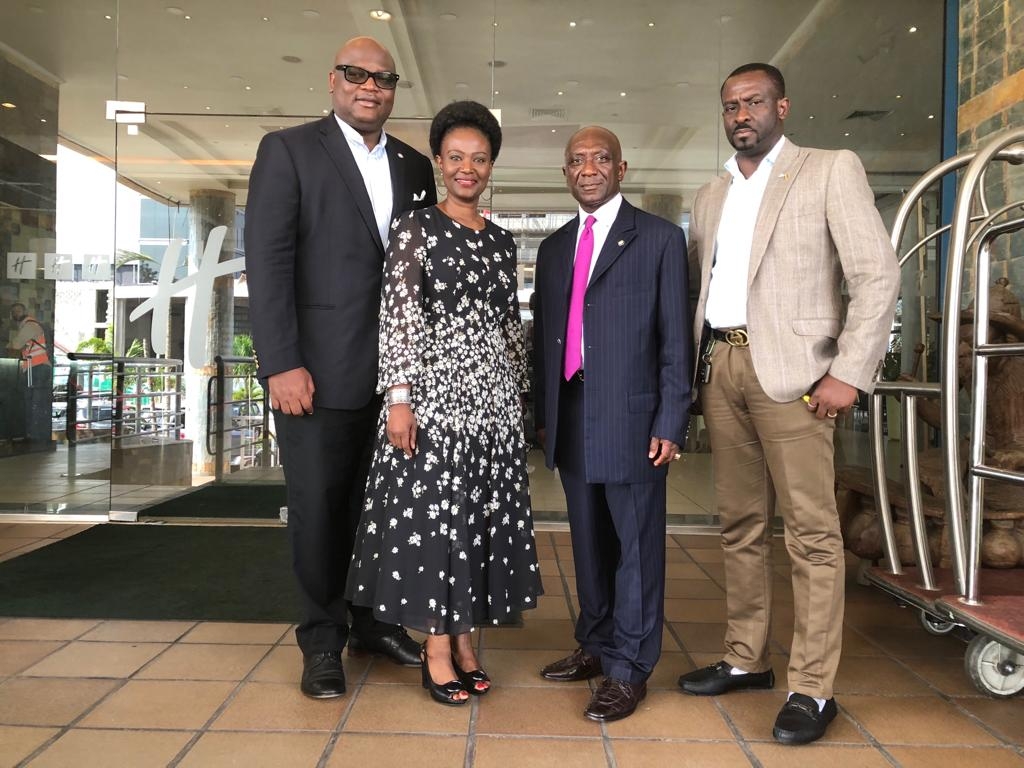
AmCham Ghana Exec. Secretary Meets CEO of Nigeria’s American Business Council

Executive Secretary of the American Chamber of Commerce in Ghana, Simon Madjie on Thursday, August 8, 2018 met with the visiting CEO of the American Business Council in Nigeria, Margaret Olele in Accra. The two discussed ways their Organizations can work together to drive U.S investment into West Africa.

Ghana and Nigeria are considered the two largest economies in West Africa and the relationship between the two countries is a crucial one for the Region. Trade ties are particularly important and the two resolved to engage Governments of the two countries to improve business environment, to promote the Region as the best place to invest.

Mr. Madjie and Mrs. Olele also shared best practices to develop their respective Chambers and discussed ways in which AmCham Ghana and the American Business Council in Nigeria can better work together.

The American Chamber of Commerce (Ghana) was formally established in August 1997 as the American Chamber of Commerce, Ghana (AMCHAM), and an affiliate of the US Chamber of Commerce. The Chamber is a voluntary association of professional and business people, working to create an environment where business can thrive between Ghanaian and American.

The American Business Council in Nigeria, which is also an affiliate of the US Chamber of Commerce, was incorporated by the Nigerian Corporate Affairs Commission in February, 2007, as a non-profit making company limited by guarantee to promote the development of commerce and investments between the United States of America and the Federal Republic of Nigeria.

Investor State Dispute Resolution within the Scope of Article 181(5) Of the 1992 Constitution of the Republic Of Ghana

By FAISAL ESENAM GBADEGBE

At a time where the World Bank has reported that Ghana’s economy is estimated to grow at a rate of 8.3 percent, which will be one of the fastest in the world, it is safe to conclude that the Republic of Ghana is the next port of call in the sub Saharan region for investors. In light of the International Law principles of legality and good faith, investments must be made bona fide within the confines of the law of the host state.

Accordingly, the Constitution of Ghana, for the purposes of protecting the public purse, clearly spells out what ought to be done by the government of Ghana when it enters into international business transactions. Most often, both the investors and government officials fail to comply with the Constitutional provision which requires that international business transactions entered into by the government of Ghana ought to be approved by the Parliament of Ghana. A failure to seek Parliamentary approval for such transactions will result in the Supreme Court of Ghana concluding that the transaction is null and void.

In a world where the protection of investments made in developing countries is of utmost concern to investing countries, the natural consequence will be for the investor to commence arbitration proceedings at neutral venue pursuant to a bilateral investment treaty or contract. In cases where the investor party is successful and secures an arbitral award against the Republic of Ghana, the emerging trend has been for the investor party to enforce such awards against Ghana outside the territorial jurisdiction of Ghana. This paper seeks to briefly highlight the principle of legality of investments and how that may adversely affect an investor’s claim against the Republic of Ghana.


Rationale and Policy of Article 181 of the 1992 Constitution of Ghana

Article 181 of the 1992 Constitution of Ghana takes its origin from article 133 of the 1969 Constitution of Ghana.  It is without doubt that the purpose of the framers of the original 1969 provision was to ensure transparency, openness by requiring parliamentary consent in relation to debt obligations contracted by the state. This original provision of the 1969 Constitution was maintained unchanged in the 1979 Constitution as Article 144. However, over the years with the influx of investors into Ghana, the need for a refinement of the provision arose. The growing need at the time, was for a legal regime which could curtail corruption by ensuring that government officials were prevented by a Constitutional measure from entering into dubious and overpriced contracts. Consistently, the framers of the 1992 Constitution expanded the scope of the long-standing provision on the giving and raising of loans, found in the previous Constitutions, to include another category, namely, ‘an international business or economic transaction to which the Government is a party.’

Under the hierarchy of the laws in the Republic of Ghana, which is unambiguously stated in article 11 of the 1992 Constitution of Ghana, the Constitution is the supreme law of Ghana. Consequently, the Ghanaian legal jurisprudence is clear that in situations where the Constitution prescribes a particular mode in which a particular act, conduct or transaction must be performed, a failure to conform to the Constitutional prescription renders that act, conduct or transaction null and void.

It is therefore not surprising that, in the case of The Attorney General v Faroe Atlantic Co. Ltd, in which the relevant matter of contention was whether a power purchase agreement (PPA) between the respondents and the Government of Ghana could be declared null and void for lack of compliance with article 181(5) of the 1992 Constitution, the Supreme Court held that compliance with the Constitutional provision was mandatory.  Due to the simple, straightforward and narrow interpretation above-mentioned given to the provision in the Faroe Atlantic case, the Supreme Court in the case of The Attorney General v. Balkan Energy Ghana Ltd and 2 others shed further light on Article 181(5).This case presented two issues to the Court for resolution.

The first was whether a Power Purchase Agreement (PPA) between the Government of Ghana and Balkan Energy (Ghana) Limited was an international business transaction within the meaning of Article 181(5). The second was whether the arbitration agreement contained in the PPA was an international business transaction within the meaning of 181(5). In dealing with the first question, the Court held that the phrase ‘international business and economic transaction to which the Government is party,’ did not only encompass agreements between entities resident abroad and the Government but it also potentially included a transaction between the Government and an entity resident in Ghana. This addressed the reality that given the complexity of contemporary international business transactions, it is assured that there will be transactions of obvious international nature which may have been concluded with the Ghana Government by entities incorporated within Ghana.  In such cases, the court was of the view that ‘the substance, rather than the form’ should prevail. Therefore, whenever it could reasonably be inferred that the transaction is international in nature the provision must apply. This could be likened to the ‘foreign control’ test used in ICSID arbitration for determining the nationality of corporate parties to a dispute.

In defining the word ‘international’, it was held that a business is considered international within the confines of Article 181(5), where the nature of the business forming the subject matter of the transaction, when it has a significant foreign element. Accordingly, the party, other than the government, to the transaction should have foreign nationality, reside in different countries, or, in the case of companies, have its place of central management and control outside Ghana. The word ‘significant’ resonates with the purpose of Article 181(5) as the framers did not have in their contemplation, subjectively or objectively, transactions of ordinary commerce. Thus, in a contract between the Government and a Ghanaian resident for the sale of cars, the fact that cars have to be imported would not be significant enough in terms of the purpose of Article 181(5), to justify characterizing such a transaction as an international business transaction. As to the meaning of ‘business’, it was held that where a transaction is commercial in nature, or pertains to, or impacts on, the wealth and resources of the country, it represents a business or economic transaction within the meaning of Article 181(5). Consistently, after setting out the above definitions the Supreme Court held that the PPA in that case was an international business transaction.

Worthy of note is the fact that, these two cases have served as the landmark cases with regards to Article 181(5) and once the interpretation given to the provision applies to a given set of facts or circumstances, the Supreme Court strictly applies the provision.

In the subsequent case of Amidu (No 1) v Attorney General, Waterville Holdings (BVI) Ltd & Woyome (No 1), the Supreme Court further held that where Article 181(5) is breached, a mere restitutionary remedy cannot be awarded, because doing so would conflict with the provisions of the Constitution. Notably, in the case of, Amidu (No 2) v Attorney General, Isofoton SA & Forson (No 1), the Supreme Court went further to hold that an international business transaction, to which the Government is party, should not cease to be treated as such under Article 181(5) simply because the activities concerned were to be financed under a loan agreement that had already been approved by Parliament.

In light of the above decisions of the Supreme Court regarding the meaning and effect of Article 181(5), it can therefore safely be proposed that with regards to the purpose and mandatory nature of the Constitutional provision, Article 181(5) of the 1992 Constitution of Ghana can be likened to the international law norm against public corruption. In this regard, it is clear that Article 181(5) of the 1992 Constitution of Ghana reflects the internationally recognized principle of proscribing corruption of public officials.


The effect of the Supreme Court interpretation of Article 181(5) of the 1992 Constitution on bilateral investment treaties.

Ghana has over the years since its independence signed twenty-eight bilateral investment treaties, with eight currently in force. The bilateral investment treaties currently in force include those signed between the Republic of Ghana and China, Switzerland, the United Kingdom, Malaysia, Germany and Denmark respectively.

Ghana in the internationalist law sense, is not a monist but a dualist state, therefore, by virtue of Article 75 of the 1992 Constitution although the President has the power to execute treaties, agreements or conventions in the name of the state, any such undertaking shall be subject to ratification by an Act of Parliament supported by votes of more than one-half of all the members of Parliament.

In the case of John Akparibo Ndebugre v Attorney General and two others (Writ No J1/5/20) the Supreme Court held that the parliamentary ratification of contracts, like treaties,  entered into by the executive is intended to ensure transparency and prevent abuse by executive power when it comes to the execution of contracts relating to the resources of Ghana.

On that account, after the needed ratification by Parliament, bilateral treaties would be deemed to be part of the laws of Ghana by virtue of Article 11(1) (b) of the 1992 Constitution. However, under the hierarchy of laws found in Article 11 of the 1992 Constitution, domesticated bilateral treaties do not supersede the 1992 Constitution of Ghana.  Consistently, the interpretation of Article 181(5) given by the Supreme Court in the cases discussed above will apply identically to bilateral treaties and in effect, any international business transaction entered into which is in the form of a contract between an investor from a contracting state and the government of Ghana will still need the necessary parliamentary approval.


Article 181(5) and the legality of Investments

The investor’s conduct in certain cases can be fundamental to a tribunal’s jurisdiction, especially with respect to allegations of serious illegality or misconduct by the investor. This is due to the reasoning that it is only just, fair and equitable that investor–state dispute resolution is unavailable with regards to investments that are inherently illegal as a matter of host State law or international public policy; or were procured only as a result of illegality or misconduct. The legality requirement therefore means that an economic transaction that might qualify factually and financially as an investment may still fall outside the jurisdiction of an international arbitral tribunal because legally it is not an investment.  According to the Fraport v Phillipines case, the primary way for legality to become a prerequisite for the exercise of jurisdiction by an ICSID tribunal is through the inclusion of an express requirement to that effect in the bilateral investment treaty.

For example, Article 1(2) of the Ghana – Malaysia BIT provides that ‘The term “investments” referred to in paragraph 1(a) shall only refer to all investments that are made in accordance with the laws, regulations and national policies of Contracting Parties.’ As a result, investments obtained illegally, fraudulently, or through any other improper means would be deemed not to constitute an investment within the scope of the treaty’s protections.
Furthermore, as noted in the Fraport v Phillipines II award, a number of tribunals have recognized the implicit legality requirement. Under this, irrespective of whether the applicable treaty contains an express legality requirement, only investments that are lawfully made can obtain the protections of an investment treaty; which includes investor-state arbitration. In SAUR v Argentina, the tribunal held that whether or not the parties to the BIT ‘mention or neglect to mention the requirement, that an investor act in accordance with host state law is not a relevant factor’. In Phoenix Action V Czech Republic, the tribunal stated that it ‘ha[d] to prevent an abuse of the system of international investments protection under the ICSID Convention, ensuring that only investments that are made in compliance with the international principle of good faith and do not attempt to abuse the system are protected’. In order for a State to raise a successful objection to jurisdiction for violations of domestic law or principles of international law the state must prove: (1) the illegal or intentionally wrongful conduct of the investor and; (2) whether the conduct is material enough to defeat jurisdiction.

The failure of international arbitral tribunals to give effect to a mandatory provision of the Constitution has the effect of undermining lofty foundational principles, such as accountability and transparency, on which the article is based.

There is also the added consideration that, estopping Ghana on such basis, will defeat international public policy as government officials may connive with investors and enter into agreements in order to bypass the necessary constitutional requirements which exist to maintain balance and are designed to ensure accountability, openness and transparency. Accordingly, a failure to comply with Article 181(5) of the 1992 Constitution of Ghana renders agreements that fall within its scope illegal and unenforceable.


Conclusion

At such a time in Ghana’s growth, when investor confidence is most needed, requisite steps should be taken by the government to ensure that the right balance is struck between the policy reason underlying Article 181(5) and the need for a conducive and an expeditious environment promoting a thriving investor environment which the country aspires to achieve.


Author’s Profile :  FAISAL ESENAM GBADEGBE

-Kwame Nkrumah University for Science and Technology, LLB ,2015

-Georgetown University, LLM International Business and Economic Law, International Arbitration and Dispute Resolution Certificate , 2018

-Associate, Chartered Institute of Arbitrators, 2018

-Barrister and Solicitor of the Supreme Court of the Republic of Ghana, 2017

A young enthusiastic lawyer with a keen interest in Transactional Law, Litigation and issues related to Investor State Dispute Resolution.

Sensitization on the New Corporate Insolvency Bill

Ghana Association of Restructuring & Insolvency Advisors (GARIA), held a two day event on 9th and 10th August, 2018 to sensitize the business community on the New Corporate Insolvency Bill. This event was held at the Accra Marriott Hotel.

Speakers at the event included Felix Addo, Anthony Oteng-Gyesi, Vicky Bright, Vish Ashiagbor and Jacob Saah. The speakers took participants through the history of the New Corporate Insolvency Bill, Ghana’s current rank on the Ease of Doing Business – Africa and World rankings and provided an overview on Insolvency and Restructuring
in Ghana.

The first legislation on insolvency in the Gold Coast was passed as the Gold Coast Bankruptcy and Insolvency Ordinance in 1857. This ordinance was replaced with new ordinances until 1962 when Professor Gower recommended the Insolvency Act, 1962 (Act 153), which was later passed.

Currently, GARIA was assigned the task of reviewing the Bodies Corporate (Official Liquidations) Act 180 and submitted its recommendations to a Committee of Experts on Company Law under the Chairmanship of Justice, Prof. Justice Date-Bah. The draft bill is presently in final drafting stage at the Attorney-General Department.

Click for more information on the New Corporate Insolvency Bill.

Tanink Ghana : Setting Standards

In 1998, Tanink Group was incorporated and authorised to carry on business as general merchants and manufactures representatives. Tanink later acquired the dealership of O&K Mining of Germany, manufacturers of mining excavators. Through magnificent management of O&K Mining, the franchise quickly became the leader of mining excavators in Ghana.
In the year 2000, CASE (France) and Astra Vehicoli (Italy) appointed Tanink as their sole agents due to the outstanding management of O&K. In 2005 Tanink had invested well over $4.0M in the construction of an modern showroom/warehouse complex to better position itself in Ghana’s automotive industry.

Tanink’s drive for success has never been in doubt with strict management of finances and a loyal staff. They have been able to grow at a pace that allows them to look at the market differently and invest in numerous other business avenues that will allow Tanink to exceed what it is now. They are not just a business, they are a family and moving forward they promise to continue to treat clients, both old and new with the same amount love and respect.

Exploring Probono Programs for Impact in Ghana

American Chamber of Commerce, Ghana and the Canada Ghana Chamber of Commerce hosted Pyxera Global to explore probono programs for impact in Ghana.

The meeting was to dialogue on how corporate institutions could collaborate to assist SMEs meet their business needs.

Through Global Pro Bono programs, employees provide professional services to social-mission driven clients in communities in which the employees do not live or work on a regular basis. Projects are intended to provide economic and social benefit to the local organization and community while building leadership competencies, creating market insights, and spurring innovative thinking for the participating employee.

Pyxera Global uses the unique strengths of corporations, governments, social sector organizations, educational institutions, and individuals to enhance the abilities of people and communities to solve complex problems and attain mutually beneficial goals. With a quarter century of experience in more than 90 countries, their team is passionate and dedicated to navigating challenges and pinpointing purposeful global engagement opportunities for our clients and partners.

Pyxera hopes to use this collaboration to harness corporate expertise to boost the performance of SMEs in the country.

Learn more.

Newmont Sponsored Breakfast Meeting With Visiting Governor of Nevada

Thursday, July 26th, 2018. The American Chamber of Commerce in Ghana, Newmont Mining Corporation and the Ghana Chamber of Mines held a private breakfast meeting with the visiting Governor of Nevada, Gov. Brian Sandoval. The breakfast meeting which was hosted at the U.S. Ambassador to Ghana’s residence was to interact with the Governor and his ‘Nevada in Africa Trade Mission’ delegation.

U.S. Ambassador to Ghana, Robert P.  Jackson in his opening remarks said, excellent is a constant word he uses anytime he is asked about the United States relationship with Ghana. “When people ask me about the relationship with Ghana, I characterized it in several ways, but excellent is the constant word that I use.” The ambassador said.

He took turn to share some developmental projects being undertaken in Ghana with assistance from the United States. The Ambassador mentioned the ECG Concession Agreement which seeks to introduce private sector participation to improve efficiency and service delivery. He also talked about some entrepreneurship and agricultural projects, and touched on health as well. On health, the Ambassador mentioned the construction of chief’s compounds which provides health services to people in rural areas.

“Ghana can also be proud about its democracy and it is a real star of African democracy.” Ambassador Jackson made this statement whiles commenting on Ghana’s democratic achievements. AmCham Ghana President, Mr.  Joe Mensah reiterated this during his remarks saying, it is one of the main reasons investors choose Ghana.

Mr. Joe Mensah also said the singular objective of the Chamber is to embrace the American companies coming in to do business, help them and work at creating an enabling environment for business to thrive.

He said that, the coming in of the Governor and the delegation is welcomed. “We are quite excited about it because we think, this will take the relationship to the next level as we continue to see the trade gap between the United States and Ghana narrowed.” He added.

This is Nevada’s first ever trade mission to Africa, and Governor Brian Sandoval opened his remarks by stating that history was being made. “I feel like I am standing in a moment of history because this is Nevada’s first ever trade mission to Africa, and Ghana.”

Governor Sandoval went on to say the key reasons for embarking on the trade mission is to give Nevada a global foot print and also, to diversify the State’s economy.  He said Nevada was the worst hit during the 2008 recession with unemployment hitting 14% and a $2 million dollar budget deficit.

As part of diversifying Nevada’s economy, the Governor said the State has seen the influx of companies such as Apple and Tesla, the two he said are building a huge data center and a battery factory respectively.  Top among them is Switch, a company the Governor said is building the world’s largest data center of over 5 million sq. ft. in Nevada.


These and other investments he said has helped Nevada recover from the recession with a 10% reduction in unemployment and half a billion dollar budget surplus from a 2 million dollar deficit. The governor also said the State is carrying out some infrastructure projects such us the widening of Las Vegas highway systems.

“If you move in around here, you automatically get a 10% raise because you don’t have to pay no income tax.” The Governor said the tax system in Nevada serves as a great incentive for investors.

Other speakers at the event were Alwyn Pretorius, Senior Vice President, Africa at Newmont Mining Corporation and Robert Ahomka-Lindsay, Ghana’s Deputy Minister of Trade and Industry. The two spoke on the relevance of mining to the Ghanaian economy and the readiness of the Ghanaian government to collaborate and work with developmental partners respectively.

The private breakfast meeting also witnessed a panel discussion on the “State of Mining in Ghana – Challenges and Opportunities.” Panelists discussed how citizens can be best made to feel the positive impacts of mining, local content, the menace of gallamsay and responsible mining.

Also present at the event were Ghana’s Ambassador to the United States, His Excellency Dr. Barfuor Adjei-Barwuah CEO of GIPC, Yofi Grant, business executives from AmCham member companies and officials from the Ghana Chamber of Mines. The event was sponsored by Newmont Ghana.

The event gallery in below.

[unitegallery private_1]

G4S | A Leading Integrated Security Solutions Company in Ghana

In this edition, we put the spotlight on G4S Ghana. G4S Security Services Ghana Limited is the leading integrated security solutions company in Ghana. The company has world-class expertise in the areas of protective security, manned guarding, secure mobility services, executive alarm monitoring and response, vehicle tracking, risk consultancy and security surveys.

G4S provides flexible and effective integrated security plans and solutions centred on their clients’ needs. This flexibility is mirrored in commercial proposals that provide cost effective solutions based on economies of scale derived from accurate pre-planning and efficient resource management.

They specialise in outsourced business processes and facilities in sectors where security and safety risks are considered a strategic threat. They use their global expertise and local knowledge in the assessment and management of security and safety risks for buildings, infrastructure, materials, valuables, people and society.

G4S develop long-term strategic partnerships with customers in key sectors where they can help them to deliver their own business objectives through either increasing their revenues, reducing costs, managing risks, protecting critical assets or improving their service delivery to the customers they serve. They do this by understanding the environments in which their customers operate, the pressures they face and the things that matter to them most.

G4S Ghana employs over six thousand people and has been awarded Top Employer status for the 2nd year running.

Micheal Concar, Director of Sale and Marketing at G4S shared with us company principles that has made them number one in the industry.

G4S Plc has G4S Security Services Limited as its main operating company in Ghana.   Contact information is listed below for the Head office based in Accra.

G4S Security Services (Ghana) Limited
31 Second Labone Street
Labone
Accra
GHANA
West Africa

Tel:

(+233) 0302 779570

(+233) 0244 313871

(+233) 0544 123447

administration@gh.g4s.com

Accra Marriott Hotel | Leading Global Lodging Company Joins AmCham

A leader in the global lodging industry, Marriott International, Inc. which opened recently in Accra as Accra Marriott Hotel has joined the American Chamber of Commerce in Ghana.

The company has more than 6,500 properties across 127 countries and territories, and the Accra facility which located opposite Kotoka International Airport has 208 well-appointed rooms, 3 enticing dining venues, 800 sqm of meeting space, a pool and fully equipped fitness center. Accra Marriott Hotel is the number one premium business hotel in the Airport City and the wider Accra Area.

The hotel is equipped with facilities to enable you host a special occasion in their 17,000 square feet flexible event space. Their largest venue, the Nkrumah Ballroom, can accommodate up to 650 guests. Accra Marriott Hotel elevates your stay with complimentary breakfast and a free and fast Wi-Fi connection in all guest rooms.

Accra Marriott Guest rooms range from Deluxe Guest room which has 1 King size bed or 2 double size beds. Club rooms comes with Concierge lounge access and a Guest room with 1 King size bed or 2 double size beds. The Junior suite of the hotel comes with a King size bed and a Sofa bed, with the ultimate, the Presidential suite which comes with 1 Bedroom Suite with a King size bed and a Sofa bed. 

Their restaurant features a wide range of tasty local and international  meals with a Bar-B-Q and picnic area. Accra Marriott provides state-of-the-art business facilities and innovative spaces such as The Greatroom, which allows guests to seamlessly blend work and play. The hotel provides sophisticated spaces and experiences that keep the mind balanced, sharp and inspired, making it the ideal “Gateway to West Africa” whether on business or on leisure.

We welcome Accra Marriott to the chamber of commerce in Ghana and urge you to take advantage of the hotel’s prime location in the heart of Airport City and in close proximity to Accra’s buzzing city centre. Learn more about Marriott Accra Hotel.